

This article is an in-depth expert contribution from our content cluster. Discover the complete overview on our main page: WordPress to Next.js Migration →
Migration Strategies in the Era of Autonomous Agents
Why sub-second load times, semantic HTML, and decoupled API architectures today convince not only Google but also AI shopping assistants, SearchGPT, and Perplexity – while monolithic legacy sites suffer progressive visibility drops.
- Strategic Growth Lever: A professional WordPress migration is not merely an IT maintenance expense, but a strategic growth accelerator. It slashes editorial lead times by up to 80% and ensures strict compliance with GDPR, NIS-2, and the European Accessibility Act (BFSG).
- Measurable ROI & TCO Reduction: Structured relaunch initiatives pay for themselves within 9 to 14 months by eliminating fragile plugin subscription stacks, minimizing agency dependencies, and driving conversion rates through top-tier Core Web Vitals.
- Security Through Modern Architecture: Decoupling the frontend (Headless with Next.js or Astro) isolates backend systems from public traffic, eliminates server downtime, and prepares enterprise data structures for autonomous AI search engines.
Introduction: The Expensive Legacy of Outdated Systems
Across countless mid-sized enterprises, a silent cost and security liability sits quietly on corporate web servers: organically accumulated legacy websites running on outdated CMS versions, bloated visual page builders from the 2010s, dozens of unmaintained plugins, and fragile Legacy Code. For years, IT and marketing departments operated under the convenient assumption: "Never change a running system." But in the dynamic web and AI ecosystem of 2026, this mindset has inverted into an expensive pitfall: retaining outdated infrastructure incurs a continuous, hidden tax on business efficiency.
A modern B2B website is no longer a passive digital brochure. It is the central engine of your commercial pipeline: primary sales funnel, lead generator, talent recruitment portal, and the authoritative grounding source for generative AI search engines such as Google AI Overviews, Perplexity, and ChatGPT Search. Legacy architectures constrain corporate growth across multiple fronts simultaneously: loading times exceeding 4 seconds double the bounce rate on paid advertising campaigns, rigid editors consume hundreds of marketing hours annually, and unpatchable plugin vulnerabilities expose corporate data to malicious exploitation.
Yet, the executive decision to initiate a comprehensive website relaunch or an engineered WordPress migration is frequently delayed. Management often views migration projects as unpredictable budget risks with opaque agency scopes. In discovery sessions, we frequently hear the question: "Can't we simply let the existing system run for another year?" Our software architects offer an unambiguous answer: While the legacy server might still technically respond, maintaining an obsolete platform is almost always the most expensive financial strategy over a 3-year horizon.
In this authoritative guide tailored for Managing Directors, CIOs, and Marketing Executives, we bypass superficial industry buzzwords. We focus directly on actionable financial metrics: a transparent Total Cost of Ownership (TCO) model, realistic milestone roadmaps, mathematical ROI projections, and clear guidance on when decoupled headless architectures represent the optimal choice for your organization.
- Introduction: The Expensive Legacy of Outdated Systems
- Chapter 1: The Drivers of Migration – Why Act Now?
- Chapter 2: Cost Factors in Detail (TCO Analysis)
- Chapter 3: Realistic Scheduling & Migration Roadmap
- Chapter 4: The ROI – When Does the Investment Pay Off?
- Chapter 5: Technical Architecture for Decision Makers (Decoupled & Edge)
- Conclusion: Investment in Digital Future Readiness
Chapter 1: The Drivers of Migration – Why Act Now?
The urgency to modernize a content management system rarely originates from purely visual preferences. In practice, regulatory mandates, severe performance bottlenecks, and operational friction force executive action. Ignoring these warning indicators jeopardizes enterprise revenue, legal compliance, and organic search equity.
1. Cybersecurity, NIS-2 Directives, and GDPR Compliance
Outdated CMS installations resemble an unlocked warehouse in digital space. Automated vulnerability crawlers probe the internet constantly for unpatched security flaws in obsolete WordPress cores, abandoned theme frameworks, and legacy plugins. A successful intrusion creates catastrophic business impact: from rogue phishing deployments and customer database exfiltration to complete corporate server encryption.
Regulatory scrutiny has intensified substantially. Under the European NIS-2 framework and stringent GDPR enforcement, executive leadership faces direct liability for significant cybersecurity negligence. A web platform that can no longer receive vendor security patches violates the legal requirement to maintain "state-of-the-art" technical safeguards under Article 32 GDPR.
Cybersecurity Reality Check
More than 70% of compromised content management systems were running outdated core releases or vulnerable third-party plugins with known CVE patches at the time of breach. Migrating to a version-controlled, automated, and decoupled infrastructure represents the single most effective risk mitigation strategy.
2. Core Web Vitals, INP, and Advertising Conversion Losses
With Google's full implementation of Core Web Vitals and the critical Interaction to Next Paint (INP) responsiveness metric, technical performance directly dictates business revenue. Monolithic legacy themes frequently load megabytes of unused JavaScript and bulky CSS stylesheets, freezing the browser's main thread on every user click.
The bottom-line consequences are measurable: industry benchmarks consistently demonstrate that lowering page load duration from 4.5 seconds to 1.2 seconds boosts B2B lead conversion rates by 25% to 40%. Simultaneously, ad spend efficiency improves because Google Ads Quality Scores correlate directly with landing page latency. Marketing teams running paid campaigns on slow legacy sites effectively waste up to a third of their acquisition budget.
3. Editorial Agility and Time-to-Market
In many corporate marketing teams, updating website content has deteriorated into an agonizing bottleneck. Does your staff require two days to launch a simple product landing page because legacy page builders crash or require external agency tickets for minor layout changes? Modern block-based architectures (Gutenberg) or decoupled headless systems empower non-technical editors to assemble responsive, on-brand landing pages in under 30 minutes.
Slashing this Time-to-Market not only preserves thousands of euros in outsourced developer retainers, but allows sales and marketing to capitalize instantly on spontaneous market opportunities, product announcements, and trade show campaigns.
4. Statutory Accessibility: European Accessibility Act (EAA / BFSG)
With the legal enforcement of the European Accessibility Act (BFSG), commercial web properties must comply with European accessibility standards under EN 301 549 and WCAG 2.1 AA/AAA. Monolithic legacy themes almost universally fail accessibility audits: missing keyboard navigation hooks, broken ARIA roles, substandard color contrasts, and invalid heading structures create immediate exposure to regulatory fines and legal warnings. Modern migrations embed accessibility compliance directly into semantic components.
Chapter 2: Cost Factors in Detail (TCO Analysis)
Determining the real cost of a CMS migration cannot be reduced to a single fixed price tag. Experienced IT decision-makers evaluate projects through the lens of initial Capital Expenditure (CAPEX) versus ongoing Operational Expenditure (OPEX). Only a comprehensive 3-to-5-year lifecycle calculation reveals the true economic return.
Cost Analysis: One-Off Project Cost (CAPEX) vs. Ongoing Operations Cost (OPEX)
- Architecture & UI/UX Strategy: Audience journey mapping, accessible wireframing, component design systems, and compliance audits (20–30% of project budget).
- Database Extraction & Sanitization: Scripted content extraction, removal of legacy shortcode residue, and media library deduplication.
- Frontend Engineering & APIs: Modular block engineering or Next.js/Astro frontend development with ERP, CRM, and DATEV integrations.
- QA, Testing & SEO URL Mapping: Complete 301 redirect architecture, automated broken link validation, cross-device testing, and accessibility verification.
- Enterprise Hosting & Edge CDN: Resilient cloud infrastructure with automated snapshot backups, global edge caching, and isolated staging environments.
- Maintenance & Patch Automation: Regular core updates, proactive security monitoring, visual regression testing, and automated dependency patching.
- Licensing Consolidation: Strategic reduction of bloated individual plugin subscriptions into unified enterprise tooling.
- Continuous Optimization: Periodic performance audits, CRO split testing, and dedicated first-level editorial support.
A common executive oversight is treating the status quo as a zero-cost option. In reality, maintaining an obsolete web platform generates massive hidden expenses: emergency agency interventions for minor text tweaks (often billed at €150–€250/hour), urgent malware cleanup bills, lost high-value sales inquiries from slow page response times, and editorial friction typically tally up to €15,000–€35,000 in annual hidden waste for mid-sized firms.
"The most expensive migration is always the one that has to be executed twice. Skimping on technical architecture and thorough data sanitization during the initial build will inevitably double your expenses in remedial bug fixes, data recovery, and lost Google rankings."
Avoiding Hidden Cost Traps
When evaluating fixed-price agency proposals, vigilance is crucial. Below-market quotes routinely omit critical technical requirements, triggering costly change requests halfway through execution:
Missing 301 URL Mapping
If legacy URLs are not permanently mapped 1:1 to new page paths via server-side 301 headers, your website can lose up to 80% of its organic Google visibility overnight. Recovering lost rankings often takes several quarters.
Unchecked Legacy Data Imports
Blindly copying entire legacy database dumps transfers thousands of broken attachments, orphaned images, and obsolete shortcodes into the new architecture. A professional migration methodically cleanses the entire content database.
Lack of Editorial Onboarding
Even the most advanced CMS is ineffective if internal teams cannot operate it fluently. Without recorded walkthroughs, custom block libraries, and user documentation, teams quickly revert to inefficient workarounds.
Pro-Tip: Wildcard Redirects & Automated Link Auditing
Prior to development, perform a complete URL inventory using Google Search Console and Screaming Frog. Immediately post-launch, execute automated verification scripts comparing all legacy URLs against production HTTP status codes to guarantee zero 404 dead ends.
Chapter 3: Realistic Scheduling & Migration Roadmap
A professional CMS migration for a mid-sized enterprise website (50 to 500 pages) is a structured software engineering initiative. Realistic delivery timelines span 12 to 20 weeks. Agencies promising complete custom relaunches in "under 14 days" almost exclusively deploy generic prefabricated themes without custom architecture or SEO safety nets.
-
Phase 1: Content & SEO Audit (Weeks 1–3)
Comprehensive inventory of all indexed URLs, organic performance benchmarking, identification of low-value pages for content pruning, mapping the future information architecture, and establishing technical scope.
-
Phase 2: UI/UX Engineering & Design System (Weeks 4–7)
Development of accessible Figma wireframes and interactive prototypes in full corporate branding. Definition of design tokens, typography scales, WCAG AAA color contrasts, and executive stakeholder sign-off.
-
Phase 3: Technical Engineering & API Integration (Weeks 8–13)
Provisioning isolated staging environments, developing custom modular Gutenberg blocks or decoupled Next.js/Astro frontends, connecting CRM/ERP backends, and configuring CI/CD automation pipelines.
-
Phase 4: Automated Content Migration & Sanitization (Weeks 14–16)
Programmatic database extraction, cleaning legacy markup, batch image conversion to next-gen WebP/AVIF formats, generating complete 301 redirect maps, and conducting manual QA across key revenue pages.
-
Phase 5: Quality Assurance & Compliance Gates (Weeks 17–18)
Automated end-to-end testing, Core Web Vitals verification (Lighthouse score 95+), statutory accessibility checks, GDPR consent validation, and zero-downtime DNS deployment dry runs.
-
Phase 6: Zero-Downtime Go-Live & Staff Enablement (Weeks 19–20)
Seamless DNS cutover via Cloudflare Edge, real-time error log monitoring, immediate IndexNow and Search Console XML sitemap submission, followed by hands-on editorial team workshops.
Chapter 4: The ROI – When Does the Investment Pay Off?
The Return on Investment of an enterprise CMS migration is quantifiable through concrete accounting principles. Capital recovery originates from two primary drivers: direct operational expense reductions and incremental gross margin generated by elevated lead conversions.
The standard formula for calculating project payback duration:
Payback Period (Months) = Total Investment (CAPEX) / (Monthly Operational Savings + Monthly Net Lead Margin)
Müller GmbH & Co. KG
150 Employees | B2B Precision Machinery | Legacy System: Typo3 (Installed 2018)
Initial Situation Prior to Migration
- Heavy dependence on external agency retainers (€450/month for minor copy and catalog edits).
- Mobile loading latency of 4.8s resulting in an 85% bounce rate across paid Google Ads campaigns.
- Lack of responsive mobile layouts causing ongoing erosion of top-3 organic rankings for core keywords.
- Repeated security warnings and vulnerability alerts due to deprecated PHP and CMS core versions.
Project Investment
Comprehensive custom relaunch featuring a modular Gutenberg design system & decoupled API architecture
Financial Return After 12 Months
Result: Full financial payback on the €28,500 investment achieved within just 8 months. From the second year onward, the modernized digital asset produces an ongoing net commercial gain exceeding €40,000 annually.
Scenario Projections by Enterprise Traffic Tier
The financial leverage generated by performance optimization scales with your monthly visitor traffic and Customer Lifetime Value (CLV):
ROI Projections Across Traffic Tiers
- Typical Investment: €18,000 to €32,000 one-off.
- Conversion Uplift: +15% to +30% via sub-1.2s page loads.
- Maintenance Savings: approx. €3,600 to €6,000 annually.
- Payback Horizon: Average 9 to 14 months.
- Typical Investment: €40,000 to €85,000 one-off.
- Conversion Uplift: Drastic reduction in Cost Per Acquisition (CPA -35%).
- Maintenance Savings: approx. €12,000 to €24,000 annually via CI/CD pipelines.
- Payback Horizon: Average 4 to 8 months.
Chapter 5: Technical Architecture for Decision Makers (Decoupled & Edge)
While executive leaders do not write code, understanding modern architectural principles is essential for making sustainable capital allocation decisions. Modern web engineering has evolved past monolithic architectures where editorial admin interfaces, SQL databases, and public web rendering contend for resources on a single fragile server.
1. Headless & Decoupled Frontend
Clean separation between content editing and public asset delivery: editors use the intuitive WordPress administration backend, while the public frontend is rendered as an ultrafast Next.js or Astro application distributed across global edge nodes. Peak speed, zero server lag.
2. Automated CI/CD & Staging
No more risky live-server modifications: code revisions pass through automated continuous integration pipelines (GitHub Actions) and are validated in isolated staging sandboxes before deploying to production domains without downtime.
3. Zero-Trust & Edge Security
The administrative CMS backend is hidden from public web access, protected behind IP whitelists, Cloudflare Zero Trust, and mandatory multi-factor authentication. Static edge frontends eliminate attack surfaces for SQL injections or PHP exploits.
4. Structured Data & GEO-Readiness
Comprehensive implementation of Schema.org JSON-LD microdata, validated Open Graph protocols, and clean feeds tailored for autonomous AI agents, SearchGPT, and Google AI Overviews. Content is accurately understood and cited by AI models.
Adopting this 4-pillar architectural foundation permanently decouples your digital infrastructure from legacy vulnerabilities. Your marketing staff works comfortably within a familiar editorial workflow, while your prospective clients experience instantaneous page loads and flawless uptime.
Quick-Check: Your Roadmap to a Seamless CMS Migration
Conclusion: Investment in Digital Future Readiness
An enterprise-grade WordPress migration represents much more than a routine software version update. It is a strategic milestone to eliminate historic technical debt, streamline marketing operations, and convert your corporate website into a high-yield commercial asset. The long-term cost of inaction – cyber breaches, lost sales from latency friction, and internal editorial paralysis – rapidly exceeds the capital required for a modernized platform within just a few quarters.
Execute your relaunch with strategic discipline: demand transparent TCO evaluations, mandate isolated staging testing, and partner with software engineering specialists who combine deep architectural rigor with commercial business acumen.
Are you planning a website relaunch or CMS migration?
Let us evaluate your existing web infrastructure and calculate the measurable ROI potential of an engineered modernization.
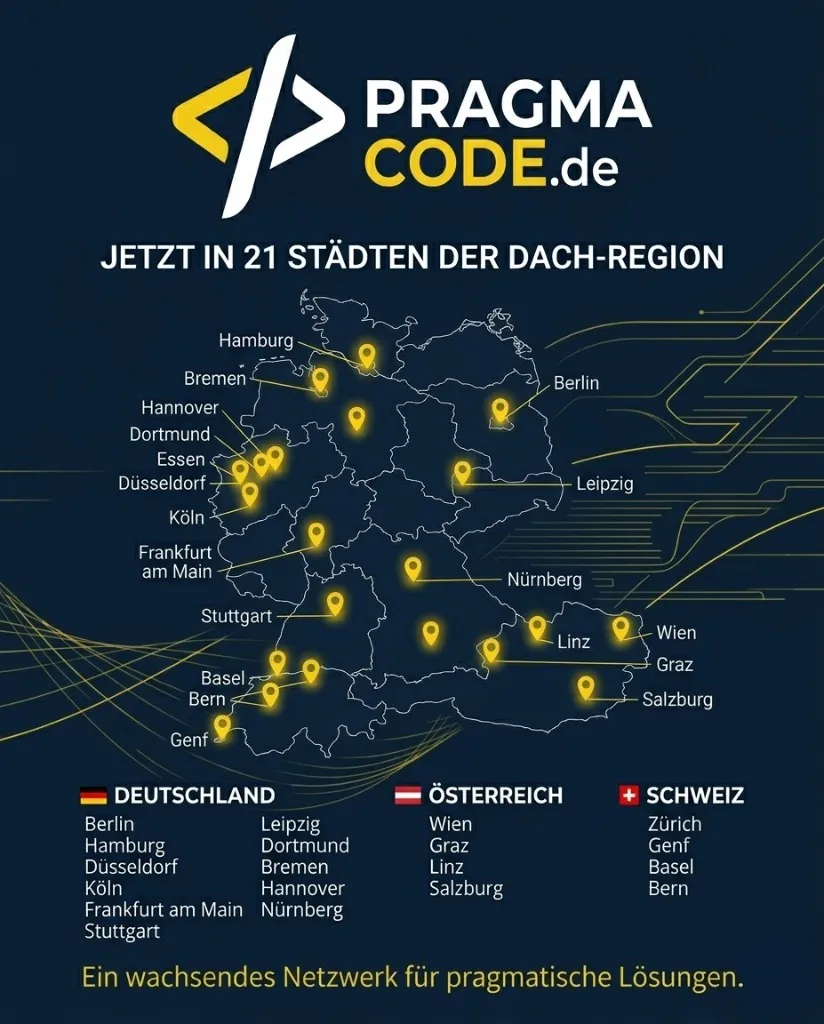
Schedule a Free Initial ConsultationOur Regional Expertise
We are your digital partner – regionally anchored and successfully scaling across borders.
WordPress migration for your business?
I deliver this for small and mid-sized businesses: at a fixed price agreed upfront, working directly with the person who builds it. Process, scope and pricing are on the service page.
See service & pricing Or request a free intro callExtended Specialized Glossary
ROI (Return on Investment)
Business metric used to evaluate the efficiency and profitability of an investment. It directly measures the return on an investment relative to its total cost.
TCO (Total Cost of Ownership)
Holistic estimation of all direct and indirect expenses associated with an IT system across its complete lifecycle – including design, development, licensing, hosting, maintenance, and editorial overhead.
Time-to-Market
The timeframe required from the initial marketing or product concept to live deployment on the web. Modern decoupled architectures slash this phase from weeks to minutes.
Legacy Code
Outdated software source code, obsolete monolithic architectures, and unmaintained plugins that are error-prone, vulnerable to cyberattacks, and costly to maintain.
Staging Environment
An isolated, production-identical testing environment where code updates, database migrations, and third-party integrations are validated safely before live deployment.
Headless CMS
Decoupled web architecture where content management (backend) is separated from visual presentation (frontend). Data is delivered securely and rapidly via modern REST or GraphQL APIs.
301 Redirect
Permanent HTTP server-level redirect routing legacy URL paths to new destinations. Vital for preserving historic search rankings and link equity during a migration.
Core Web Vitals
Google's standardized real-world performance metrics measuring user experience (loading performance LCP, layout stability CLS, and responsiveness INP).