


While static HTML offers minimalistic code simplicity, it quickly turns into an innovation bottleneck and expensive cost trap in modern business operations. Discover why migrating to a modern WordPress ecosystem or headless architecture maximizes time-to-market and future-proofs your digital growth.
This article is an in-depth expert contribution from our content cluster. Discover the complete overview on our main page: WordPress to Next.js Migration →
From Rigid Code Silos to AI-Ready Content Engines
In the era of Generative Engine Optimization (GEO), multimodal AI agents, and rapid market cycles, handcrafted static HTML files act as a severe structural bottleneck. Modern CMS ecosystems combine sub-second headless frontends with agile content governance and automated metadata pipelines.
- Developer Independence: Marketing and sales teams launch campaigns and landing pages in minutes instead of days – without IT support tickets or manual FTP file editing.
- SEO, GEO & Compliance Advantage: Automated Schema.org markup, image compression (WebP/AVIF), and accessibility standards (EAA/BFSG) secure top rankings.
- Scalable Future-Proofing: Seamless evolution from classic WordPress to high-performance Headless & Edge architectures (powered by Next.js or Astro).
Introduction: From Rigid Code to Digital Agility
Since its invention by Tim Berners-Lee, the World Wide Web has undergone an evolution comparable to the Industrial Revolution. In the beginning, the web was an archive of static documents. HTML (Hypertext Markup Language) was the paper we wrote on. If you wanted to change something, you had to rewrite the paper. For the early 2000s, this was acceptable. User expectations were modest, competition was manageable, and marketing cycles were measured in quarters, not hours.
In today's digital landscape, a corporate website is no longer a digital shop window that you decorate once and let gather dust for years. It is the core of your brand communication, your most productive sales representative, and often the very first touchpoint with potential clients. In this environment, "Time-to-Market" is the critical currency. If your marketing team requires a new landing page for a spontaneous campaign, you cannot afford to wait three business days for an engineer to manually edit HTML tags.
Nevertheless, an astonishing number of medium-sized enterprises cling to legacy architectures: static HTML pages maintained by a single person. The reasons are frequently historical or rooted in the misconception that having "no CMS" automatically translates to "superior security."
In this comprehensive deep dive, we examine why this model is obsolete. We analyze the technical, operational, and strategic reasons for adopting a modern Content Management System (CMS) like WordPress. We detail how a structured migration works, which pitfalls to avoid, and how WordPress unlocks genuine business scalability.
- Introduction: From Rigid Code to Digital Agility
- Chapter 1: The Problem of "Hand-Coded HTML" – A Cost-Benefit Analysis
- Chapter 2: Why WordPress? A Look into the Ecosystem
- Chapter 3: The Migration Process – A Technical Guide
- Chapter 4: SEO, Performance, and Myths
- Chapter 5: The Future – Headless CMS and Hybrid Approaches
- Chapter 6: Business Case and ROI
- Conclusion: Set Sail Anew
Chapter 1: The Problem of "Hand-Coded HTML" – A Cost-Benefit Analysis
The "Developer Dependency Loop"
The greatest drawback of static websites is not technical, but organizational: the rigid dependency on specialized engineering talent for non-technical routine tasks. Consider a standard process inside a company operating a static HTML website:
Detection & Communication Friction
Marketing spots an outdated phone number or address in the footer. An email is dispatched to internal IT or an external agency.
Ticket Backlog & Delay (4 to 24 Hours)
The request is queued. Prioritization, confirmations, and resource scheduling delay a trivial one-line update for hours or days.
Manual Code & FTP Deployment
A software developer opens an FTP client, downloads source files, searches through dozens of static HTML files, and pushes the change.
Cost Trap & Retainer Invoicing
Support billing for maintenance hours. Across 50 individual pages without template systems, effort and error rates multiply rapidly.
This scenario represents an expensive misallocation of valuable resources. A highly compensated developer performs a trivial copy change. Worse still: when this modification must be replicated across 50 separate pages without a centralized templating engine, the overhead explodes.
The Marketing Nightmare: Lack of Experimentation
Modern digital marketing thrives on rapid A/B testing and iterative optimization. Does headline A generate more conversions than headline B? Does the yellow CTA button outperform the blue one? On a static HTML website, running such experiments requires custom coding. The inevitable result: experiments are abandoned before they start.
Websites that are difficult to update rarely get updated. This leads to "Content Stagnation". Search engines and generative AI bots recognize that your domain has not published fresh insights for months, gradually downgrading its topical authority. Competitors publishing weekly guides and case studies outrank you, turning your static site into an active competitive liability.
Strategic Insight:
"The true cost of a website is not measured in hosting fees, but in the opportunity costs of missed growth. Every campaign that fails to launch because technical hurdles are too high is permanently lost revenue."
Scalability Driven Into a Wall
As your organization expands, you need a newsroom, a knowledge base, a recruitment portal, or an integrated B2B customer area. In pure HTML, every new page demands copying markup manually. Navigation menus across existing pages must be synced. Footers must be updated in bulk. Beyond 20 subpages, maintenance becomes exponential overhead where a single unclosed <div> tag can corrupt the layout of your entire web presence.
Chapter 2: Why WordPress? A Look into the Ecosystem
More Than Just Blogging: WordPress as an Application Framework
A persistent misconception is that WordPress is "just a blogging tool." While that might have been accurate in 2010 — the WordPress timeline documents its evolution — today WordPress powers over 43 % of the entire web, including high-scale platforms for enterprise corporations, media publishers, and global institutions.
WordPress has matured into a comprehensive Application Framework. Through its built-in REST API and WPGraphQL integration, you can utilize WordPress strictly as a headless content hub, feeding any modern frontend (Astro, Next.js, or mobile applications).
The Gutenberg Block Editor & Full Site Editing (FSE)
With the introduction of the Gutenberg block editor and Full Site Editing (FSE), WordPress fundamentally transformed digital publishing. Content creators no longer work in abstract forms, but assemble landing pages from visual, brand-compliant design components. Headlines, multi-column grids, media galleries, call-to-action buttons, and quotes can be rearranged effortlessly via drag-and-drop.
For your editorial teams, what they see during editing matches the live rendered output. No surprises after publishing, no unexpected design regressions.
The Plugin Universe: Functionality on Demand
A major advantage of an established CMS is modular extensibility via plugins. Need enterprise SEO tooling? Deploy RankMath or Yoast. Need two-factor authentication and proactive firewall monitoring? Wordfence or Solid Security. Caching and asset minification? WP Rocket. Dynamic form pipelines with CRM integration? Gravity Forms or Fluent Forms.
In a hardcoded HTML setup, implementing even a simple contact form requires engineering an entire custom pipeline from scratch:
Form Layout & Responsive Design: Handcrafting semantic HTML markup, custom CSS grids, and mobile breakpoints from scratch.
Backend Processing & Logic: Developing custom server-side PHP or Node.js endpoints to parse, sanitize, and validate user input.
SMTP Integration & Deliverability: Configuring transactional mail transport, TLS encryption, and SPF/DKIM authentication protocols.
Anti-Spam & Security: Engineering honeypot fields, rate-limiting rules, CSRF protection, and modern challenge-response verifications.
GDPR Compliance & Opt-in: Setting up encrypted database persistence, double opt-in audit logs, and automated retention deletion cycles.
In WordPress, you configure a vetted plugin, map the required fields, and go live within 10 minutes – fully tested and secure.
User Governance & Accessibility (EAA/BFSG)
In growing businesses, access control is essential. Editors need to draft thought leadership articles without having permission to alter core theme settings. WordPress provides granular role and permission management out of the box. Furthermore, mandatory accessibility standards (European Accessibility Act / BFSG 2025/2026) can be enforced centrally in the theme rather than auditing hundreds of individual static files.
Chapter 3: The Migration Process – A Technical Guide
Migrating from HTML to WordPress is not a simplistic copy-paste task. It is a disciplined software engineering process that requires structured execution. At Pragma-Code, we divide this process into four distinct phases.
Phase 1: Analysis and Componentization
Before writing a single line of code, we analyze your existing HTML website for reusable UI patterns: Is the header consistent across all views? What navigation behaviors are present? How are lead capture forms, testimonials, and case study cards structured? These patterns are isolated into clean "Partial Templates."
Phase 2: Custom Theme Development (The Clean Way)
Automated "HTML-to-WP" conversion tools generate bloated, unmaintainable spaghetti code that breaks upon the first update. The professional standard is developing a lean, tailor-made Custom Theme.
Setup & Core Configuration
Installation of a pristine, hardened WordPress instance free of third-party bloat or unnecessary dependencies.
style.css & Design System Transfer
Precise migration of your existing CSS rules, typography, and design tokens, ensuring your visual branding is preserved 1:1 down to the pixel.
header.php & footer.php
Modular extraction of global zones. Navigation menus, tracking pixels, and footer links are centralized for instant site-wide updates.
front-page.php
Custom creation of the homepage template with dynamic data bindings and modular Gutenberg block sections.
page.php & Dynamic Content Templates
Provisioning robust default templates for all content and category pages with native support for visual block editing.
We replace static HTML text fragments with dynamic WordPress template tags such as
the_title() and the_content(), granting non-technical editors full autonomy.
Phase 3: Advanced Custom Fields (ACF) & Custom Post Types
Standard WordPress includes a title and a content area. But what about structured layouts? Does your "About Us" page feature team profiles with photos, biographies, and LinkedIn links? Here ACF provides the solution. We build customized input masks in the administration panel. Editors interact with clearly defined fields ("Employee Name", "Upload Portrait", "Job Title") rather than unstructured text blocks, guaranteeing absolute separation of design and content.
Phase 4: Content Migration, 301 Redirects & QA
Content is systematically migrated. For compact websites (up to 20 pages), this is performed manually alongside a thorough content audit. For larger portals, we write automated scripts that parse the legacy HTML DOM and ingest records directly into the WordPress database.
Equally critical: configuring automated 301 redirects from all legacy HTML URLs to new permalinks, ensuring your hard-earned SEO authority remains intact. A comprehensive QA review (link audits, form validation, responsiveness, and Lighthouse Core Web Vitals) concludes the rollout.
Chapter 4: SEO, Performance, and Myths
Myth: "Static sites are always faster than WordPress"
Technically, a raw HTML file served directly from a web server's filesystem provides minimal overhead. When PHP code execution and SQL database queries are introduced, server-side processing latency occurs. In theory, that is accurate.
In practice, however, modern architectures reverse this advantage: Enterprise WordPress deployments leverage page caching engines that automatically store compiled dynamic pages as static HTML files in memory or high-speed NVMe storage. When paired with a global Edge CDN like Cloudflare, load times regularly drop below 500 milliseconds, achieving perfect Core Web Vitals scores (100/100).
Furthermore, handcrafted static websites frequently suffer from unoptimized media assets (few teams manually convert and resize every asset into modern WebP/AVIF formats). WordPress automates image compression, responsive srcsets, and native lazy-loading upon upload.
SEO & GEO Powerhouse Through Automation
Modern search engine optimization demands meticulous technical hygiene: Canonical URLs, Open Graph tags for LinkedIn/X, dynamic XML sitemaps, and structured Schema.org markup (JSON-LD). Maintaining these manually across static HTML is inherently error-prone. A single missing tag can lead search engines to disregard valuable pages.
In WordPress, dedicated SEO suites handle technical requirements automatically in the background. Your team focuses on high-impact content, while the platform delivers structured signals for search engines and generative AI agents.
Chapter 5: The Future – Headless CMS and Hybrid Approaches
For enterprises demanding uncompromising edge performance, complete frontend flexibility, and maximum security, a modern decoupled architecture offers the ideal solution: Headless WordPress.
In this setup, WordPress serves exclusively as an intuitive content management hub, while the presentation layer is rendered by a modern frontend framework such as Astro or Next.js.
100% Security & Decoupling
The public frontend is fully isolated from the backend administration panel, eliminating attack vectors against the CMS via public traffic.
Omnichannel & API-First
Manage content once in WordPress and deliver it simultaneously via REST API or GraphQL to web portals, native mobile apps, and digital signage.
Maximum Edge Performance
Modern frontend frameworks generate static pages at the edge (SSG/SSR), guaranteeing blazing-fast sub-second response times worldwide.
Expert Recommendation: The Modular Pathway
You do not need to build a complex headless infrastructure immediately. A customized, lightweight WordPress theme provides an economical starting point – while its built-in REST and GraphQL APIs keep the door open for future headless extensions. Learn more about our approach to WordPress to Next.js migration.
Chapter 6: Business Case and ROI
As a business leader, you evaluate when an investment in a professional CMS migration pays off. Let us examine the direct cost-benefit comparison:
| Cost Center & Criteria | Static HTML Website | WordPress CMS / Headless |
|---|---|---|
| Content Updates & Campaigns | High recurring costs (Engineering hourly rates) | €0 external costs (Autonomous marketing workflows) |
| Feature Extensions | Very high (Every capability coded from scratch) | Low to moderate (Vetted plugins & APIs) |
| Time-to-Market (New Pages) | Days to weeks (Dependency on IT backlog) | Minutes to hours (Modular Gutenberg FSE blocks) |
| SEO & GEO Visibility | High risk of content stagnation | Growth through consistent editorial publishing |
For medium-sized enterprises, Return on Investment (ROI) is typically achieved within 6 to 12 months – solely by eliminating external developer billings for routine copy and media updates. The agility gained by your marketing department and the professional scalability of your web presence provide substantial strategic leverage.
Conclusion: Set Sail Anew
Transitioning from static HTML to a modern CMS marks the vital leap from maintaining a passive brochure website to running an active digital business engine. It is the departure from a rigid technological dead end.
While hand-coded HTML possesses nostalgic purity and simplicity, in a fast-moving marketplace demanding rapid iteration, this rigidity becomes an expensive barrier to growth.
Migrating from a complex legacy CMS rather than static HTML? Explore our comprehensive guide TYPO3 Migration: Process, Packages and Pricing for a structured roadmap on modernizing legacy enterprise systems.
Whether deploying a tailored WordPress theme or an edge-native headless architecture: technology must serve your business – reliably, flexibly, and at peak performance.
Planning Your Switch from HTML to WordPress?
We analyze your existing codebase, preserve your custom design 1:1, and migrate your web presence seamlessly to a high-performance, future-ready CMS.
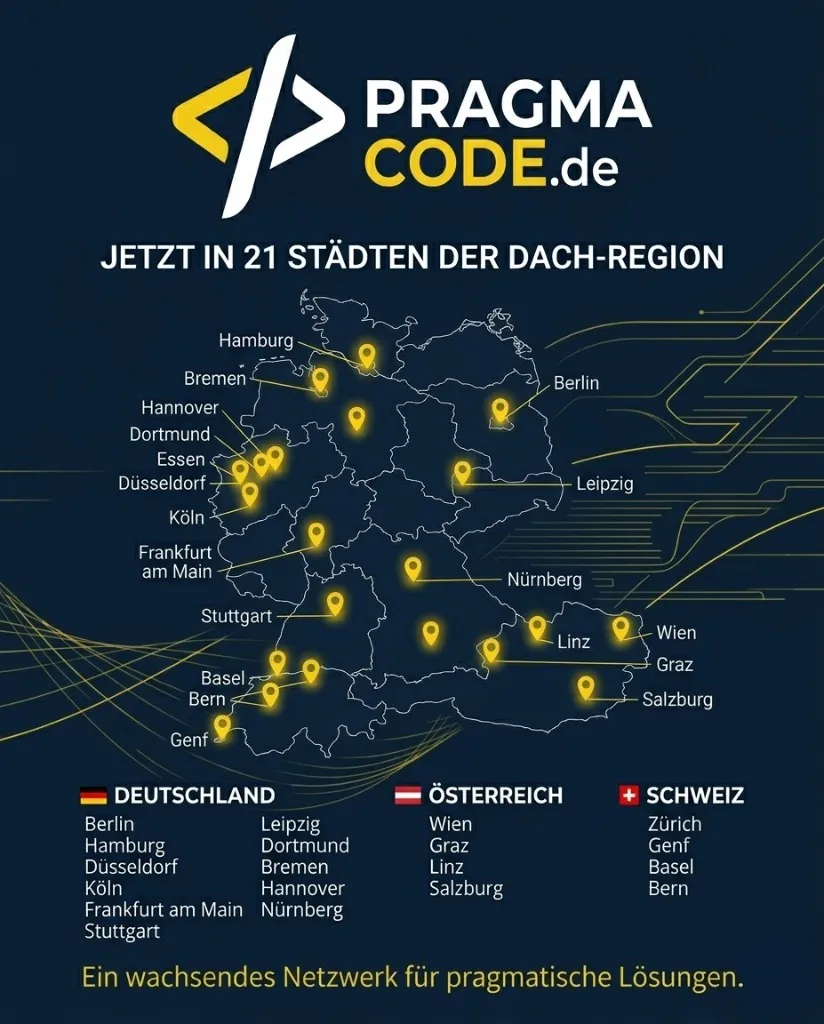
Schedule a Free ConsultationOur Regional Expertise
We are your digital partner – regionally anchored and successfully scaling across borders.
WordPress migration for your business?
I deliver this for small and mid-sized businesses: at a fixed price agreed upfront, working directly with the person who builds it. Process, scope and pricing are on the service page.
See service & pricing Or request a free intro callExtended Specialized Glossary
CMS (Content Management System)
Software for creating, editing, and organizing digital content via an intuitive graphical user interface without requiring programming skills.
Headless Architecture
An architectural approach where the backend (content management via WordPress) is strictly decoupled from the frontend (presentation layer via Astro or Next.js).
REST API
Application programming interface that enables standardized data exchange between WordPress and modern frontend frameworks or mobile applications.
Deployment Pipeline
Automated CI/CD workflow to roll out code changes smoothly to production environments following automated testing and build validation.
Core Web Vitals
Google's core user experience metrics (LCP, INP, CLS) measuring page load performance, visual stability, and interactive responsiveness.
Plugin
A modular software component designed to extend WordPress functionality without modifying core system code.