

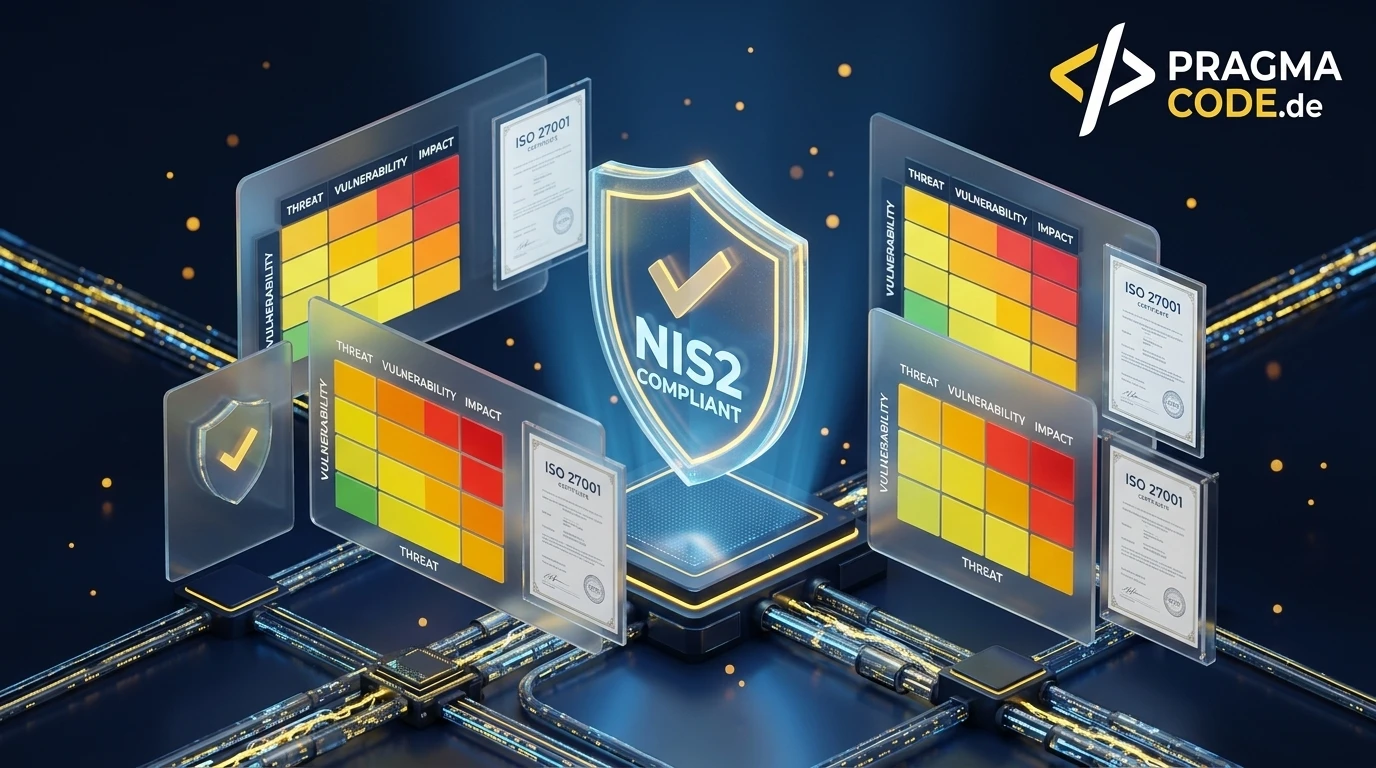
Following the enactment of the EU NIS2 Directive and national implementing legislation such as Germany's reformed BSI Act (BSIG), thousands of mid-sized commercial entities face statutory obligations to execute systematic cybersecurity risk assessments. Discover how to implement these requirements pragmatically, insulate executive leadership from personal liability, and project audit costs accurately.
This article is an in-depth expert contribution from our content cluster. Discover the complete overview on our main page: IT Security, NIS2 & Cyber Resilience →
- Mandatory Statutory Obligation: Regulated mid-market entities ("Important" and "Essential" entities) must operate an auditable cybersecurity risk management process. Mere informal declarations of intent will fail regulatory inspection.
- Personal Executive Liability: Under corporate governance statutes (such as Section 38 BSIG in Germany), managing directors and board members face direct personal financial liability for gross negligence in failing to approve and monitor risk mitigations.
- Strong Synergies with ISO 27001: Companies certified under ISO/IEC 27001 or adhering to BSI IT-Grundschutz already cover a large share of the NIS2 measures – the requirements of Section 30 BSIG overlap substantially with the ISO 27001 Annex A controls. Registration and the statutory reporting deadlines typically remain open. While a standalone "NIS2 certificate" does not exist, accredited ISMS audits serve as authoritative compliance proof.
- 1. Legal Foundations: The Statutory Obligation for Systematic Risk Analysis
- 2. The 4 Critical Risk Tiers in Mid-Market Cybersecurity Audits
- 3. Step-by-Step: The 5 Phases of an Auditable NIS2 Risk Assessment
- 4. NIS2 Regulatory Compliance vs. ISO 27001 Certification
- 5. Cost Breakdown: What Does a Mid-Market NIS2 Audit Really Cost?
- 6. Executive Pitfalls: The Top 3 Director Liability Traps
- 7. Mandatory Technical and Organizational Measures (TOMs)
- 8. A 5-Phase Implementation Roadmap to Audit Readiness
- 9. Quick-Check: Evaluating Your Enterprise Audit Maturity
- 10. Conclusion & Strategic Guidance for Leadership
1. Legal Foundations: The Statutory Obligation for Systematic Risk Analysis
With the transposition of the European NIS2 Directive into domestic law across EU member states (such as the reformed BSIG in Germany), cybersecurity has transitioned from an informal internal IT task into a legally binding corporate compliance duty. Across Europe, tens of thousands of mid-market enterprises—including specialized mechanical engineering suppliers, manufacturing plants, transport hubs, digital vendors, and pharmaceutical facilities—are directly regulated for the first time.
The centerpiece of this regulatory architecture is the statutory duty to perform an exhaustive, documented NIS2 Risk Analysis. The legislation mandates that regulated entities implement "appropriate and proportionate technical and organizational measures (TOMs) to manage the risks posed to the security of network and information systems."
Organizations failing to implement these systems face severe statutory sanctions. For essential entities, fines reach up to 10 million Euros or 2 percent of total worldwide annual turnover. For important entities, financial penalties scale up to 7 million Euros or 1.4 percent of global turnover.
2. The 4 Critical Risk Tiers in Mid-Market Cybersecurity Audits
Professional risk governance evaluates threats using a calibrated matrix comparing likelihood of occurrence against potential operational and financial impact. In a formal NIS2 audit, identified threats are categorized across four operational tiers:
Catastrophic Threat
- Enterprise-wide encryption of production networks and ERP databases via targeted ransomware.
- Irrevocable loss or destruction of central financial records without verified immutable offline backups.
Substantial Risk
- Prolonged outage of identity provider clusters (Active Directory / Entra ID) or corporate VPN gateways.
- Compromise of domain administrator credentials lacking enforced multi-factor authentication (MFA).
Moderate Operational Risk
- Temporary unavailability of non-critical secondary communication platforms or internal documentation wikis.
- Isolated employee credential harvesting attempts without verified lateral network movement.
Residual Exposure
- Outdated formatting within non-operational IT governance guidelines lacking direct security relevance.
- Individual local client hardware malfunctions with verified hot-standby replacement units immediately available.
3. Step-by-Step: The 5 Phases of an Auditable NIS2 Risk Assessment
Executing an authentic risk evaluation requires methodological rigor rather than informal checklists. We recommend following an established five-stage lifecycle aligned with ISO/IEC 27005 and governmental security baselines:
1. Scope Definition & Asset Mapping
Establish a comprehensive inventory of all business-critical workloads, physical OT/ICS machinery, enterprise cloud tenants, and data repositories within a Configuration Management Database (CMDB).
2. Threat & Vulnerability Scanning
Identify realistic threat vectors: advanced persistent threats (APTs), credential stuffing, supply chain backdoors, and automated external vulnerability scans across all public IP blocks.
3. Impact & Consequence Quantification
Calculate realistic financial and operational fallout from core operational disruptions. Establish clear Recovery Time Objectives (RTO) and Recovery Point Objectives (RPO) for each critical system.
4. Mitigation Engineering (TOMs)
Synthesize technical countermeasures: enforce zero-trust identity policies, roll out multi-factor authentication (MFA), isolate network zones, and deploy Endpoint Detection and Response (EDR).
5. Documentation & Board Sign-Off
Compile the formal risk register. Managing directors must review identified risks, formally sign off on residual exposure, allocate mitigation capital, and institutionalize ongoing risk reviews.
4. NIS2 Regulatory Compliance vs. ISO 27001 Certification
A widespread misconception among commercial buyers is demanding an "official NIS2 certificate." In legal reality, the directive does not establish a standalone certification seal. Instead, regulatory agencies inspect whether an enterprise operates a verified Information Security Management System (ISMS). Here is how statutory compliance aligns with international standards:
Comparison: Statutory NIS2 Compliance vs. Accredited ISO/IEC 27001 Certification
- Legal Nature: Compulsory public law; violations trigger immediate administrative fines and director liability.
- Enforcement: Random spot audits by national cybersecurity authorities or investigations following reported breaches.
- Certification: No standalone government certificate; compliance is demonstrated via self-declarations and audit logs.
- Reporting Duties: Strict mandatory timelines: early warning within 24 hours, comprehensive incident report within 72 hours.
- Scope: Sector-specific criteria based on enterprise headcount (50+ FTE) and turnover (10M €+).
- Legal Nature: Voluntary private-sector industrial standard; increasingly required contractually by corporate buyers.
- Enforcement: Annual surveillance audits and three-year re-certification reviews conducted by accredited registrars (e.g. TÜV, BSI).
- Certification: Globally recognized credential demonstrating verifiable security management to clients.
- Reporting Duties: Focuses on continuous internal process improvement (PDCA cycle) without statutory government reporting.
- Synergies: Covers many of the Section 30 BSIG measures and is strong evidence of conformity; it does not cover registration or reporting duties.
For mid-sized organizations, the strategic pathway is clear: align your internal risk management with ISO/IEC 27001 or BSI IT-Grundschutz. This dual-purpose strategy establishes complete legal defensibility before regulatory bodies while providing an indispensable commercial credential for winning enterprise tenders.
5. Cost Breakdown: What Does a Mid-Market NIS2 Audit Really Cost?
The total capital required to achieve full audit readiness varies significantly based on existing technical debt. Mid-market companies typically invest across three primary budgetary tiers:
Initial Gap Analysis & Formal Risk Assessment (7,500 to 16,000 €)
Evaluation of current infrastructure, automated external vulnerability scans, threat modeling, and formal documentation of the statutory risk analysis. Project duration: 3 to 6 weeks with specialized cybersecurity advisors.
Technical Hardening & Tooling Rollout (10,000 to 35,000 €)
Closing identified security exposures: enterprise EDR/XDR rollout, universal multi-factor authentication (MFA), active directory privilege hardening, DMARC email authentication, and provision of immutable offline backup repositories.
Accredited ISO 27001 Certification Audit (Optional, 9,000 to 18,000 €)
Formal two-stage third-party certification audit by accredited assessment bodies (Stage 1 documentation audit, Stage 2 on-site testing) yielding an accredited three-year certificate.
Expert Tip: Plan Funding Realistically
German SMEs can use the BAFA programme “Förderung von Unternehmensberatungen für KMU” for the consulting part: it subsidises 50 percent (80 percent in the eligible regions of eastern Germany) of a consulting fee of up to 3,500 euros per engagement – i.e. at most 1,750 or 2,800 euros, up to two engagements per year. The guideline runs until 31 December 2026, and the application must be filed before signing the contract. For the technical implementation, check the digitalisation programmes of your federal state. The former federal programme “Digital Jetzt” ended in 2023.
6. Executive Pitfalls: The Top 3 Director Liability Traps
The most consequential innovation of the NIS2 regulatory framework centers on personal leadership accountability. The statute eliminates the traditional defense of delegating cyber risks entirely to internal IT personnel:
Liability Trap 1: The Ban on Liability Waivers
Statutes explicitly render shareholder waivers of liability or indemnification agreements for gross cybersecurity negligence legally null and void. Executive directors face personal financial exposure to corporate damages arising from unmitigated security lapses.
Liability Trap 2: Mandatory Executive Cybersecurity Training
Legislation mandates that company directors participate regularly in certified cybersecurity training to maintain practical competence in threat assessment. Omitting documented training constitutes prima facie evidence of organizational failure.
Liability Trap 3: Defaulting on the 24-Hour Incident Reporting Clock
Upon detecting a major operational security incident, an initial early warning notification must be filed with national oversight agencies within 24 hours. Failing to maintain rehearsed incident response playbooks exposes leadership to direct regulatory enforcement.
7. Mandatory Technical and Organizational Measures (TOMs)
A risk assessment achieves legal validity only when actionable safeguards are engineered to remediate identified exposures. Statutes specify baseline technical domains that require auditable controls:
Universal Multi-Factor Authentication (MFA) & Zero Trust
Universal enforcement of phishing-resistant MFA across all employee profiles, administrative accounts, cloud tenants, and remote access channels (VPN/SSH). Elimination of implicit network trust.
Cryptographically Immutable Offline Backups (3-2-1-1 Rule)
Three copies of critical operational data across two different media, with one copy stored offsite and one copy preserved as an air-gapped, immutable repository protected against ransomware encryption.
Incident Handling & Business Continuity Management (BCM)
Documented emergency runbooks, alternate operational communication channels, and rehearsed disaster recovery procedures validated through practical simulation exercises at least annually.
8. A 5-Phase Implementation Roadmap to Audit Readiness
Mid-sized enterprises should execute a structured five-stage modernization roadmap spanning three to six months to guarantee regulatory defensibility. Registration belongs at the start, not the end: Germany’s NIS2 implementation act (NIS2UmsuCG) has applied since 6 December 2025, the statutory registration deadline expired on 6 March 2026 and the BSI’s grace period on 31 July 2026. Entities in scope that have not registered must do so immediately – failure to register can be fined up to 500,000 euros.
-
Immediately: Applicability Check & BSI Registration
Determine legal classification (Important vs. Essential entity) based on sector and company size (50+ employees, or annual turnover and balance sheet above 10M €). If in scope, register in the BSI portal right away (Section 33 BSIG) using an ELSTER organisation certificate – the deadlines have passed. Start the statutory management training (Section 38 BSIG) in parallel.
-
Month 2: Asset Inventory & Baseline Gap Analysis
Construct a comprehensive CMDB mapping IT/OT assets, external vendor connections, and supply chain dependencies against statutory minimum control baselines.
-
Month 3: Execution of the Formal Risk Assessment
Quantify identified threats using the 4-tier evaluation matrix. Establish risk mitigation priorities, document compensating controls, and secure formal board approval.
-
Month 4–5: Technical Remediations & Control Enforcement
Deploy missing security controls: enforce universal MFA, deploy immutable backup infrastructure, establish 24-hour incident response escalation runbooks, and audit supplier contracts.
-
Month 6: Audit Readiness & Continuous Governance
Maintain audit-ready documentation for evidence requests by the BSI (requested proactively for essential entities). Institutionalize ongoing management review cadences to maintain live risk assessments.
9. Quick-Check: Evaluating Your Enterprise Audit Maturity
Assess your current operational defensibility using this compliance checklist:
Quick-Check: Enterprise NIS2 Compliance Readiness
10. Conclusion & Strategic Guidance for Leadership
The NIS2 cybersecurity risk analysis is not an administrative burden: it represents an essential defensive shield safeguarding mid-market enterprises from existential extortion attacks and shielding managing directors from personal civil liability. Organizations approaching these obligations proactively transform compliance into a powerful commercial differentiator in enterprise supply chains.
Begin not with hasty software procurement, but with a methodologically sound risk evaluation. Identify genuine operational vulnerabilities, close critical gaps in access management and backup isolation, and maintain an auditable governance trail. By establishing verifiable resilience, you insulate your company from catastrophic disruption while securing executive peace of mind.
Official Sources & Primary Documentation
- European Parliament & Council: "Directive (EU) 2022/2555 (NIS2 Directive)" – The authoritative European legal framework published in the Official Journal of the European Union.
- German Federal Office for Information Security (BSI): "BSI Standard 200-3: Risk Analysis Based on IT-Grundschutz" – Methodological guidelines for conducting structured threat and risk assessments.
- International Organization for Standardization (ISO): "ISO/IEC 27001 Information Security Management Standard" – Globally recognized baseline for auditable enterprise cybersecurity governance.
- European Union Agency for Cybersecurity (ENISA): "ENISA Compendium on Cyber Risk Management Methodologies" – Official technical evaluation of risk assessment frameworks across EU critical sectors.
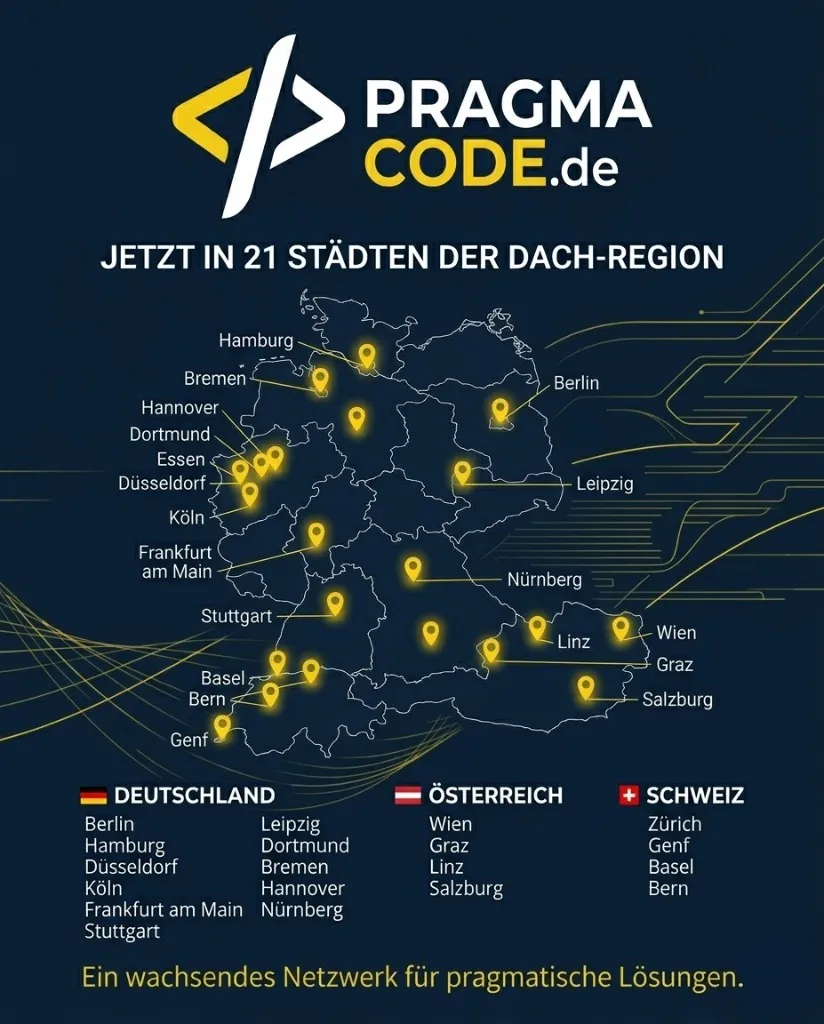
Our Regional Expertise
We are your digital partner – regionally anchored and successfully scaling across borders.
Have a vision?
Let's check together how we can make your idea take flight.
Book your free strategy call nowExtended Specialized Glossary
NIS2 Directive
European Union Directive 2022/2555 establishing unified legal obligations to enforce high common cybersecurity standards across critical economic sectors.
ISO/IEC 27001
The premier international standard for Information Security Management Systems (ISMS), specifying governance, controls, and auditing.
NIS2 Risk Analysis
The statutory obligation to systematically identify, quantify, and document security vulnerabilities across enterprise networks and digital supply chains.
BSI IT-Grundschutz
A standardized security framework developed by the German Federal Office for Information Security (BSI) for modular threat mitigation.