


The widespread integration of autonomous AI systems offers small and medium-sized enterprises (SMEs) unprecedented productivity gains in 2026 – yet simultaneously opens up entirely new, critical attack vectors for cybercriminals. Recent studies reveal that 78 percent of all companies experience AI-related security incidents completely unprepared. Discover where the operational vulnerabilities of autonomous workflows lie and how to sustainably protect your systems with our battle-tested 5-step emergency plan.
This article is an in-depth expert contribution from our content cluster. Discover the complete overview on our main page: IT Solutions →
- The Threat Landscape: 78 percent of surveyed organizations have already experienced AI-related security incidents. Despite the surging deployment of agentic systems, fewer than half have established formal governance frameworks or security playbooks for artificial intelligence.
- Autonomous Agents in the Crosshairs: Modern AI agents no longer operate as isolated chat windows in a browser; they hold read and write permissions across ERP systems, databases, cloud infrastructure, and email accounts. Any security breach translates directly into operational disruptions and financial exposure.
- The 5-Step Emergency Plan: A resilient enterprise defense rests on five operational pillars: rigorous AI asset inventorying, Security by Design with micro-segmentation, semantic AI firewalls, automated kill switches, and continuous human awareness training.
- The New Reality: Productivity Dreams Meet Security Gaps
- 1. The Dark Side of AI: Unforeseen Risks of Autonomous Systems
- 2. The 4 Critical Attack Vectors on Autonomous AI Systems in 2026
- 3. Root Causes of Unpreparedness: Where SMEs Still Need to Learn
- 4. Your 5-Step Emergency Plan: Proactive Incident Preparation
- 5. Beyond Compliance: Building blocks for a Cyber-Resilient AI Infrastructure
- Conclusion: From Security Gap to Competitive Advantage
The New Reality: Productivity Dreams Meet Security Gaps
Artificial Intelligence has fundamentally reshaped the European business landscape in 2026. What started a few years ago as exploratory text generation has rapidly matured into a dense, interconnected ecosystem of autonomous software agents. The McKinsey Global Institute estimates the annual productivity upside of AI, automation, and robotics in Germany alone at up to $486 billion. The manufacturing and engineering sectors lead this transformation with an estimated value creation potential exceeding $112 billion, closely trailed by wholesale, logistics, and professional services. It is therefore hardly surprising that corporate demand for hands-on AI implementation engineering has surged more than sixfold since 2023.
Yet while strategic ambitions remain immense, organizational resilience frequently lags behind: The German Economic Institute (IW) documents an annual productivity growth rate of merely 0.4 percent over the past half-decade. The bottleneck is rarely the underlying AI model itself, but rather brittle, unvetted, and unprotected integration architectures. Even so, mid-market businesses are investing aggressively: In an extensive DIHK enterprise survey, 86 percent of executive respondents identify AI integration as vital to their competitive survival. Global industrial powerhouses like Siemens, along with specialized mid-market champions, are already automating complex supply chain decisions and customer workflows end-to-end.
This rapid shift toward autonomy introduces unprecedented operational risks. An in-depth industry study conducted by Digicert paints an alarming picture: 78 percent of surveyed organizations have already suffered at least one serious AI-related security incident. More than three-quarters of all enterprises rolled out four or more AI-powered systems within the last six months alone – often rushed through production without preceding threat modeling or architectural reviews. The speed of deployment has completely outpaced the speed of defense. Business leaders must address this critical vulnerability immediately to safeguard their corporate continuity.
What does AI Security mean for SMEs?
AI security involves protecting AI systems (models, training pipelines, vector databases, and agent tools) from targeted attacks, and ensuring these systems do not execute unintended actions that could harm the company. It requires proactive AI Risk Management.
1. The Dark Side of AI: Unforeseen Risks of Autonomous Systems
The threat landscape surrounding artificial intelligence differs fundamentally from classic malware or legacy network perimeter breaches. Because generative models operate on probabilistic reasoning, consume unstructured inputs dynamically, and execute programmatic actions through APIs, they introduce structural failure modes that traditional firewalls and signature-based antivirus scanners are completely blind to.
Data Exfiltration and Privacy Violations by Uncontrolled AI
A primary vulnerability when using external cloud LLMs and unmonitored APIs is the silent leakage of confidential corporate intelligence. In daily operations, well-meaning employees routinely feed proprietary source code, internal financial audits, executive compensation structures, or customer PII into generative platforms to draft reports faster. If this data leaves the corporate boundary without strict Zero Data Retention (ZDR) guarantees, companies face severe penalties under GDPR Compliance alongside the permanent loss of proprietary trade secrets.
Manipulation of AI Models (Adversarial Attacks) and Semantic Exploits
Adversaries have advanced their tactics to manipulate models directly at the semantic layer. In Adversarial Machine Learning campaigns, attackers craft subtle prompt payloads that deceive the model’s internal reasoning guardrails. A customer support agent can be manipulated into ignoring return policies, issuing fraudulent discounts, or dumping internal system prompts. In automated document validation workflows, microscopic perturbations in uploaded PDFs or invoices can cause the model to approve fraudulent supplier payments automatically.
Tool-Call Hijacking and MCP Vulnerabilities
With the industry-wide adoption of agentic communication standards such as the Model Context Protocol (MCP), AI agents in 2026 possess live tool-execution rights: They query relational databases, invoke webhooks, trigger ERP bookings, and execute terminal commands. When an adversary embeds malicious instructions inside processed content, the agent executes these tool calls under its own authenticated privileges. This enables privilege escalation without requiring the attacker to break into underlying servers directly.
Shadow AI and Unmonitored Third-Party Extensions
Unsanctioned AI usage remains a rampant operational liability for mid-sized enterprises. According to Bitdefender, nearly half of all corporate IT leaders lack full visibility into the AI tools and browser extensions quietly utilized across departments. Even more concerning: The same survey revealed that 55.2 percent of cybersecurity professionals were instructed to keep detected security incidents quiet due to brand concerns or impending audit deadlines. A culture of silence prevents systematic vulnerability remediation.
2. The 4 Critical Attack Vectors on Autonomous AI Systems in 2026
To design an effective cyber-defense architecture, technical decision-makers must evaluate the four dominant threat vectors targeting agentic ecosystems in 2026. Because modern AI fuses semantic understanding with direct tool execution, standard perimeter security is no longer sufficient:
Indirect Prompt Injections
Hostile system instructions hide inside seemingly benign third-party inputs – such as inbound supplier emails, PDF invoices, or web pages scraped by an agent during routine research. The agent parses the malicious payload and executes unauthorized commands.
Tool & MCP Hijacking
Autonomous agents connect directly to ERP, CRM, and communication interfaces. Adversaries hijack function calling parameters, forcing the agent to alter databases, delete mission-critical assets, or approve fraudulent bank transfers.
RAG & Vector Poisoning
In Retrieval-Augmented Generation (RAG) pipelines, attackers inject tampered documents into knowledge bases. When the model retrieves these poisoned chunks, it hallucinates malicious execution scripts or derives dangerously flawed business conclusions.
Denial of Wallet & Loops
Complex reasoning models can be trapped in recursive, unsolvable logical loops. Attackers intentionally trigger runaway reasoning cycles to burn through tens of thousands of API credits per hour, paralyzing backend services and inflating cloud bills.
3. Root Causes of Unpreparedness: Where SMEs Still Need to Learn
Although awareness of conventional cyber threats has sharpened through initiatives like the European NIS2 Directive, protecting autonomous AI systems reveals a substantial capability gap across mid-sized businesses. The root causes of this vulnerability stem from over-reliance on legacy security assumptions:
Comparison: Legacy IT Security vs. Modern AI Security
- Defense Focus: Securing hardware endpoints, perimeter firewalls, and server ports using static signatures.
- Threat Detection: Scanning for known malware signatures and enforcing predefined access rulebooks.
- Data Transit: Static permission models (role-based access control at the file-system level).
- Remediation: Applying OS-level security patches and updating commercial enterprise software.
- Defense Focus: Securing dynamic semantic streams, training datasets, and prompt interfaces.
- Threat Detection: Continuous anomaly detection, monitoring for data drift, hallucination, and adversarial inputs.
- Data Transit: Dynamic deep-packet inspection via specialized AI Firewalls.
- Remediation: Hardening model guardrails against prompt injection and model poisoning exploits.
Misunderstanding the Risk Profile of Autonomous Agents
Many Managing Directors and IT heads mistakenly apply legacy network security playbooks directly to generative models. They assume that complex passwords, multi-factor authentication, and VPN barriers provide adequate security. However, when an AI model acts as a reasoning engine capable of initiating software transactions, the prompt interface itself represents the primary attack surface. If an agent holds permissions to update financial ledgers or modify cloud databases, a hijacked prompt circumvents all perimeter defenses.
Rushing to Deploy at the Expense of Security by Design
In the rush to capture efficiency gains, engineering teams frequently wire AI APIs directly into internal workflows without architecting proper boundary controls according to Security by Design. Rigorous security audits are too often treated as friction that delays time-to-market. The empirical data confirms this reckless trend: The Orca Security Report revealed that an astonishing 99.9 percent of all known, patchable AI vulnerabilities in monitored enterprise deployments were left unmitigated and vulnerable to exploitation.
Cost Trap: Denial of Wallet & Runaway Agent Loops
A malicious prompt or a malformed tool call can trap an autonomous agent in an infinite reasoning loop. When a multi-agent workflow generates tens of thousands of tokens per iteration while spamming downstream APIs, cloud billing can escalate into five-figure sums within hours – completely crashing internal server queues. Without hard token constraints and strict execution budgets per session, organizations risk severe financial bleed.
4. Your 5-Step Emergency Plan: Proactive Incident Preparation
To eliminate these security blind spots and build robust Cyber Resilience, mid-sized enterprises require a structured, operationally enforceable framework. Our 5-step emergency plan empowers your technical organization to contain emerging threats rapidly and maintain business continuity:
-
Step 1: Complete AI Asset Inventory & Shadow AI Discovery
Catalog every model, assistant, IDE extension, and background agent operating within your organization without exception. Build an exhaustive operational map: Which tools handle which data tiers? Which agents possess read or write access to core databases? Uncover unauthorized shadow AI through automated network flow analysis and DNS traffic inspection.
-
Step 2: Security by Design & Zero-Trust Micro-Segmentation
Strictly isolate AI tools from mission-critical internal networks. Enforce the principle of least privilege uncompromisingly: A customer service assistant has no operational justification for accessing payroll data. Run all tool-execution runtimes inside isolated containers (micro-sandboxes) and provision agents with ephemeral, tightly scoped API tokens.
-
Step 3: Semantic AI Firewalls & Real-Time Egress Monitoring
Deploy specialized security inspection layers upstream and downstream of your models. An ingress firewall semantically inspects incoming prompts for jailbreak patterns and injection attempts. An egress firewall validates model completions for accidental leakage of proprietary source code, customer PII, or manipulated tool parameters before execution.
-
Step 4: Incident Response & Automated Kill Switches
Establish clear, automated containment playbooks for incident response. Every autonomous agent must be equipped with an instantaneous, automated kill switch. If anomaly detection identifies suspicious bursts in database queries or parameter drift, the infrastructure must isolate the agent and revoke credentials immediately without destabilizing core enterprise IT.
-
Step 5: Forensic Replay & Regulatory Breach Disclosure
Archive all user prompts, intermediate reasoning traces, and API responses in tamper-proof, append-only logs. In the event of a breach, these immutable logs enable deterministic replay to pinpoint the root cause. Maintain validated reporting channels: Under NIS2 and GDPR, qualifying cybersecurity incidents must be reported to supervisory authorities within 24 to 72 hours.
Expert Tip: Ephemeral Tokens & Human-in-the-Loop for Irreversible Actions
Never grant autonomous agents static, long-lived API keys. Issue short-lived OAuth 2.0 tokens restricted to precise resource scopes with lifespans of only a few minutes. Furthermore, for irreversible actions – such as database deletions, ERP payment releases, or mass external communications – mandate an explicit Human-in-the-Loop approval gate before execution proceeds.
5. Beyond Compliance: Building blocks for a Cyber-Resilient AI Infrastructure
Statutory standards under the EU AI Act and NIS2 define merely the legal minimum bar. To defend enterprise operations against modern, automated cyber threats in 2026, companies must implement technical defenses that go far beyond checkbox compliance exercises.
Deployment of Dedicated AI Firewalls
Position an intelligent inspection gateway ahead of your AI runtimes. AI firewalls evaluate user intent semantically, filtering out sophisticated jailbreak vectors, unauthorized SQL statements, and command injections before model processing occurs.
Cryptographic Integrity in Data Pipelines
Shield your training corpora and document repositories from data poisoning. Enforce cryptographic signing for training chunks and maintain strict version control to detect unauthorized modifications to your data pipelines instantly.
Continuous AI Red-Teaming & Fuzzing
Do not wait for malicious actors to uncover logical vulnerabilities. Commission ethical hackers to run automated fuzzing campaigns, test extreme edge cases in agent reasoning, and validate that software guardrails hold under pressure.
Securing Enterprise RAG (Retrieval-Augmented Generation) Architectures
Most enterprises augment models with proprietary knowledge using RAG pipelines (explore our detailed guide on local enterprise RAG and GDPR compliance). Vector databases like Qdrant, Chroma, or pgvector store highly sensitive corporate secrets as high-dimensional embeddings. If access controls to vector stores are neglected, unauthorized employees can extract confidential executive records. Enforce strict chunk-level Access Control Lists (ACLs) so that a sales assistant never receives confidential board records as contextual embeddings.
Pre-Rollout Procurement & Agent Audit Checklist
Before any third-party AI agent or SaaS tool is authorized for production deployment, internal IT security teams should perform a structured evaluation against four non-negotiable criteria:
1. AI Software Bill of Materials (AI-SBOM) & Provenance
Vendors must document foundational model dependencies, third-party libraries, and geographical data storage locations to guarantee complete GDPR and EU AI Act alignment.
2. Sandboxed Tool-Execution Architecture
All tool interfaces (including MCP endpoints and external webhooks) must run within isolated containerized runtimes with least-privilege rights. Direct write access to production databases must be strictly prohibited.
3. Tamper-Proof Prompt & Output Audit Trails
All prompts, reasoning traces, and API interactions must be logged to immutable storage repositories to satisfy the stringent transparency mandates of Article 15 of the EU AI Act.
4. Instant Kill-Switch SLA & Emergency Support
Vendors must contractually commit to immediate API-level emergency termination mechanisms, backed by formal Incident Response Service Level Agreements (SLAs) for compromised agents.
Quick-Check: Is Your AI Infrastructure Secure?
Conclusion: From Security Gap to Competitive Advantage
The sobering finding that 78 percent of enterprises encounter AI security incidents completely unprepared is an urgent wake-up call for European mid-market leadership. In 2026, AI security is no longer an optional technical checklist item; it is a foundational prerequisite for enterprise resilience, regulatory compliance, and corporate governance.
Organizations that act proactively – adapting risk assessments to agentic systems, embedding Security by Design into deployment pipelines, and deploying active safeguards like AI firewalls and automated kill switches – do much more than merely avert severe regulatory penalties under the EU AI Act and NIS2. They cultivate an enduring trust advantage with enterprise customers and ecosystem partners. Secure, resilient, and transparent AI workflows transform an operational risk into a powerful differentiator in the digital economy.
Do you have questions about AI security in your organization?
Schedule a Free Initial ConsultationOur Regional Expertise
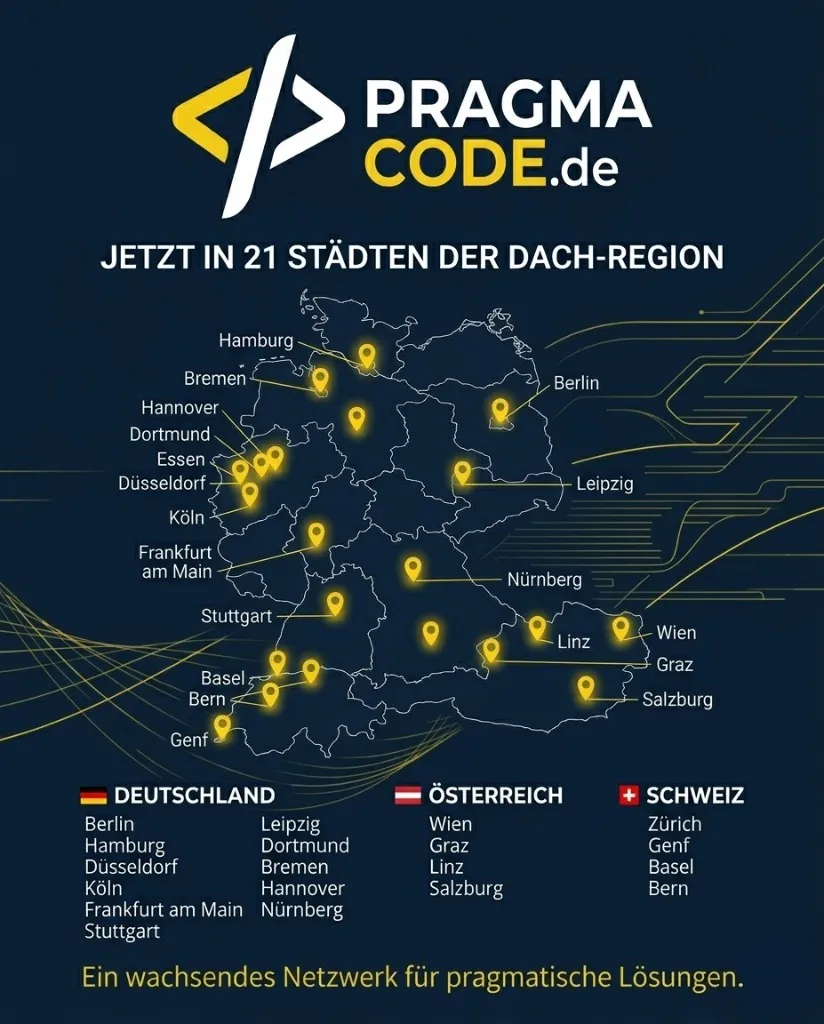
We are your digital partner – regionally anchored and successfully scaling across borders.
Have a vision?
Let's check together how we can make your idea take flight.
Book your free strategy call nowExtended Specialized Glossary
AI Risk Management
The systematic process of identifying, assessing, and mitigating risks arising from the deployment and utilization of Artificial Intelligence systems within an organization.
AI Firewall
A specialized security layer that monitors and filters inputs (prompts) and outputs of AI models to prevent injection attacks, data exfiltration, and malicious content.
Security by Design
An approach to software and systems engineering where cybersecurity and data safety measures are integrated into the architecture from the very beginning rather than added post-hoc.