

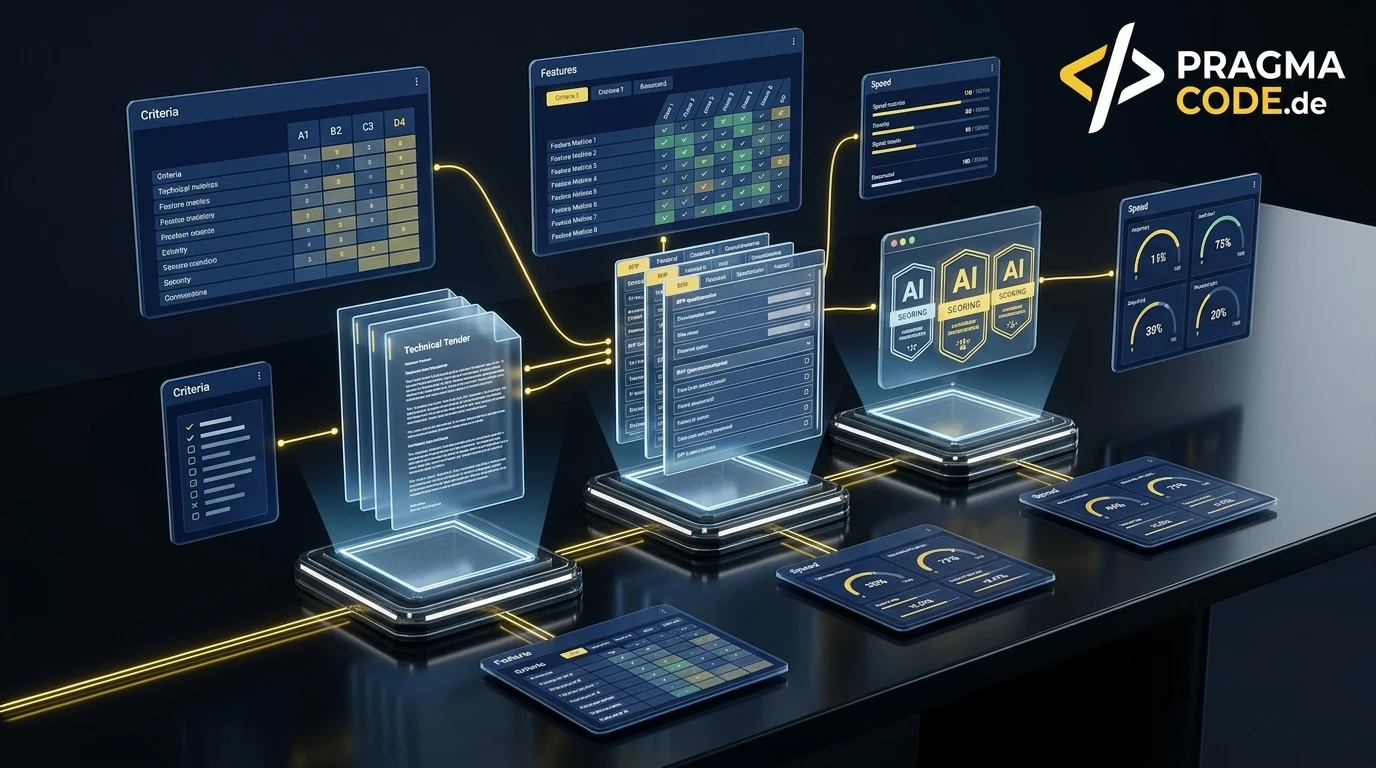
Manually answering hundreds of complex tender questions across multi-tab Excel sheets drains engineering and sales capacity. Modern RFP software accelerates proposals via centralized content libraries and generative AI agents. Our vendor comparison evaluates market leaders, weighs cloud SaaS versus GDPR-compliant on-premise architectures, and provides a clear criteria checklist for mid-market enterprises.
This article is an in-depth expert contribution from our content cluster. Discover the complete overview on our main page: AI & Workflow Automation →
The Paradigm Shift in B2B Proposal Management
While legacy RFP response tools relied on static snippet libraries, generative AI has rewritten the rules of commercial tender management. Sales organizations that continue to rely on manual copy-pasting across spreadsheet grids surrender market share to agile competitors leveraging automated semantic pipelines.
- The Enterprise Bottleneck: Highly paid solution architects, lead engineers, and sales executives spend up to 30% of their operational hours completing repetitive security questionnaires and functional requirements specifications.
- Market Segmentation: The vendor ecosystem splits into established enterprise suites (Responsive, Loopio, RFP360), modern AI-native responders (AutoRFP), and sovereign on-premise/private-cloud architectures built on open-source RAG stacks.
- GDPR as a Decision Matrix: European mid-market enterprises prioritize verified data residency, zero-data-retention API guarantees, and enforceable contractual bans on model training using proprietary proposal data.
- 1. Why Traditional RFP Workflows Fail in B2B Sales
- 2. What Modern RFP Software Must Deliver Today
- 3. The 4 Leading Software Categories in the Market
- 4. Comprehensive Vendor Comparison: Enterprise SaaS vs. Custom RAG
- 5. Generative AI vs. Legacy Snippet Repositories
- 6. Evaluation Criteria Checklist for European Enterprises (GDPR & Integrations)
- 7. The 5 Typical Implementation & Cost Traps
- 8. The 4-Stage Implementation Roadmap to Production
- 9. Quick-Check: Selecting the Ideal RFP Tooling Architecture
- 10. Conclusion & Strategic Outlook for 2026+
1. Why Traditional RFP Workflows Fail in B2B Sales
For industrial engineering companies, specialized IT consultancies, and mid-market technology vendors, completing complex Requests for Proposals (RFP), security questionnaires, and technical requirement specifications is the gatekeeper to closing six- and seven-figure enterprise contracts. Yet the daily execution of this process is notoriously inefficient.
Traditional tender response workflows systematically break down across three persistent operational vulnerabilities:
1. Obsolete Knowledge Silos & Fragmented Repositories
Historical winning proposals remain scattered across SharePoint folders, private desktop hard drives, and old email threads. Account executives inadvertently copy outdated architectural specifications, deprecated pricing models, or obsolete ISO certificates into new submissions.
2. Exhausting High-Value Subject Matter Experts
Because sales generalists cannot answer intricate questions regarding cryptography, regulatory compliance, or API architectures, lead developers, cybersecurity officers, and legal counsel are repeatedly pulled from revenue-generating client deliverables to draft repetitive responses.
3. Missed Deadlines & Lost Deal Opportunities
Because completing a single 300-question tender demands between 40 and 80 engineering hours, sales leaders frequently issue "No-Bid" decisions on viable opportunities simply because internal proposal bandwidth is exhausted.
This is where specialized RFP Software delivers transformative ROI: it acts as the centralized memory of the commercial organization, automatically parsing complex tender documents and generating context-aware response drafts in minutes.
2. What Modern RFP Software Must Deliver Today
Early response tools were little more than keyword-indexed text folders. A robust modern platform for enterprise Tender Management in 2026 must fulfill rigorous functional requirements:
1. Native Multi-Tab Excel & Word Parsing
Enterprise tenders rarely arrive as clean text. They feature complex Excel workbooks with conditional logic, dropdown validations, and strict cell character limits. Quality software parses these schemas natively and exports completed answers directly into the client's proprietary file format.
2. Hybrid Dense Vector Knowledge Retrieval
Literal keyword search fails when clients employ custom procurement terminology. Modern systems leverage RAG Architectures that understand semantic equivalence (e.g. recognizing that "Disaster Recovery RPO" and "Target Data Loss Tolerance" address the exact same operational concept).
3. Collaborative Human-in-the-Loop Routing
No AI-generated draft should reach an enterprise buyer unverified. The software must facilitate granular section assignment to Subject Matter Experts (SMEs), automated Slack/Teams reminders, complete audit trails, and multi-tier approval sign-offs.
4. Transparent Citation & Source Grounding
Every draft proposal response must link directly to verified corporate source assets (e.g. "ISO 27001 Audit Report 2025, Page 14"), allowing reviewers to authenticate claims immediately and eliminating model hallucinations.
3. The 4 Leading Software Categories in the Market
When evaluating the procurement landscape, organizations face four distinct technical delivery models:
1. Enterprise RFP Platforms
Established market leaders such as Responsive (formerly RFPIO) and Loopio. They provide mature content libraries, global user permissions, and extensive CRM integrations (Salesforce, HubSpot) for multinational sales teams.
2. AI-Native Tender Responders
Agile challengers like AutoRFP engineered from inception on frontier LLMs. They emphasize rapid onboarding, intuitive user interfaces, and automated end-to-end first-draft completion in record time.
3. Public Procurement & Bid Suites
Platforms geared toward formal government contracting and regulated institutional tenders (e.g., RFP360, Qvidian). They manage both the buyer purchasing process and vendor submission compliance.
4. Sovereign Custom-RAG Stacks
Custom on-premise architectures deploying PostgreSQL/pgvector, local open-source LLMs, and n8n workflow engines. They guarantee 100% data sovereignty, zero ongoing token surcharges, and complete GDPR autonomy.
4. Comprehensive Vendor Comparison: Enterprise SaaS vs. Custom RAG
Platform selection depends on proposal velocity, sales team size, and regulatory confidentiality constraints. This structural comparison contrasts multinational commercial SaaS suites with private RAG deployments:
Comparison: Established Enterprise SaaS vs. Private Custom RAG Stacks
- Target Audience: Global enterprises with 100+ distributed account executives.
- Hosting Infrastructure: Multi-tenant US Cloud (AWS/Azure), with optional regional data pins.
- Strengths: Mature web portals, deep Salesforce connectivity, battle-tested collaboration modules.
- Weaknesses: High annual licensing fees (often 15,000 € to 50,000 €+ annually), lengthy 2-to-6-month rollout timelines.
- Compliance: Proprietary AI layers necessitate careful review of Data Processing Agreements (DPA).
- Target Audience: Mid-market B2B manufacturers, software consultancies, and engineering firms.
- Hosting Infrastructure: 100% on-premise or within ISO-certified German/EU data centers.
- Strengths: Absolute data sovereignty, direct ERP/SharePoint integration, zero recurring per-seat penalties.
- Weaknesses: Demands upfront engineering implementation by experienced automation architects.
- Compliance: Total GDPR compliance, zero US cross-border data exposure, guaranteed zero-retention.
As detailed in our blueprint on automating RFPs with local RAG architectures, mid-market B2B organizations achieve substantially higher operational flexibility and margin defense when retaining full control over proprietary sales intelligence.
5. Generative AI vs. Legacy Snippet Repositories
The technological divide between software generations is evident in how draft responses are formulated:
Generation 1: Static Content Repositories
Users execute keyword searches against historical proposal databases. When a snippet matches, it is pasted verbatim into the new tender. The friction: if phrasing, tone, or specific client context differs, the sales engineer must manually rewrite the entire passage.
Generation 2: AI-Powered Semantic Synthesis
Modern generative RAG pipelines extract verified factual parameters from across corporate repositories (whitepapers, technical documentation, security policies) and synthesize tailored, grammatically precise responses aligned with the customer's exact prompt structure.
Expert Tip: Enforcing Strict Fact-Grounding
Never rely on unconstrained commercial LLM generation. Enterprise RFP systems must enforce Strict Fact-Grounding: if the knowledge retrieval engine finds no verified evidentiary proof in the corporate repository to satisfy a specific tender requirement, the system must refuse to hallucinate an answer and flag the item for mandatory expert escalation.
6. Evaluation Criteria Checklist for European Enterprises (GDPR & Integrations)
Before procuring an RFP automation solution, enterprise procurement teams should conduct a rigorous utility analysis across these four critical pillars:
1. GDPR Compliance & Strict Prohibition of Model Training
Verify contractually that vendor LLM integrations never utilize confidential client proposals to train public models. US SaaS providers must substantiate zero-data-retention (ZDR) agreements or offer EU-isolated instances.
2. Fidelity of Document Export
Can completed responses be exported back into the customer's original template without disturbing fonts, cell dimensions, or styling? Manual post-export remediation completely erodes efficiency gains.
3. Frictionless CRM & Collaboration Integration
Tender responses require rapid cross-departmental coordination. Platforms must feature native integrations into Salesforce, HubSpot, Microsoft Teams, or Slack to notify SMEs within their standard communication workflows.
4. Transparent Pricing & User Licensing Model
Scrutinize pricing structures: does the vendor bill per core user, per proposal volume, or via variable consumption tokens? For mid-sized firms, licensing models that include unlimited casual SME reviewers offer superior predictability.
For engineering firms handling proprietary blueprints and trade secrets, deploying local enterprise RAG platforms frequently represents the only architecture approved by internal data protection officers and works councils.
7. The 5 Typical Implementation & Cost Traps
In practice, proposal automation initiatives rarely fail due to algorithmic limitations; they falter due to operational oversights:
1. Ingesting Unfiltered Historical Archives
Importing 50 unreviewed legacy proposals from the past five years poisons the database with conflicting parameters. Deprecated software releases end up competing with current product specifications.
2. Neglecting Ongoing Content Governance
Knowledge repositories decay without active ownership. Without designated content owners tasked with quarterly verification, proposal accuracy erodes and sales teams abandon the tool.
3. Absent Role-Based Access Control (RBAC)
Sales representatives pitching standard product tiers should not have unrestricted access to confidential margin calculations or defense-grade security disclosures from government tenders.
4. Forcing SMEs Into Complex Third-Party UIs
If software engineers and compliance officers must log into an unfamiliar external platform to review answers, adoption stalls. Review requests must surface as actionable cards inside Microsoft Teams or Slack.
5. Proprietary Vendor Lock-in
Choose platforms that guarantee continuous data portability via structured JSON, Markdown, or CSV exports, safeguarding your intellectual property if you switch vendors.
8. The 4-Stage Implementation Roadmap to Production
To accelerate time-to-value and ensure immediate ROI, execute implementation across four structured milestones:
-
Content Audit & Curating the Top 100 Questions
Rather than ingesting massive document repositories, identify the 100 most frequent procurement inquiries (company financials, ISO certifications, cloud security, disaster recovery) and have subject matter experts authorize gold-standard answers.
-
Live Pilot on 2-3 Active Enterprise Tenders
Run the selected platform or custom RAG pipeline in parallel with manual workflows across two real-world tenders. Benchmark drafting acceleration and review edit ratios.
-
SME Workflow Orchestration & Team Enablement
Connect automated review notifications into daily communication channels (Microsoft Teams, Slack) and train proposal managers on prompt calibration and fact verification.
-
Continuous Knowledge Ingestion & Scaling
Following every awarded tender, automatically ingest refined, winning response passages back into the core vector database to enrich corporate intelligence.
9. Quick-Check: Selecting the Ideal RFP Tooling Architecture
Use this decision matrix to identify which tooling archetype delivers maximum leverage for your operational context:
Quick-Check: Architectural Selection
10. Conclusion & Strategic Outlook for 2026+
Automating proposal workflows has evolved from an optional administrative convenience into a decisive strategic capability in B2B commerce. Sales organizations capable of compressing tender preparation cycles by 80% bid on more opportunities, deliver higher proposal consistency, and respond in hours rather than weeks.
Long-term success is ultimately determined not by superficial feature checklists, but by verified data accuracy, strict source citation, and uncompromising data privacy. Whether deploying an established SaaS suite or engineering a sovereign on-premise RAG pipeline, the imperative is clear: turn your enterprise knowledge into an autonomous commercial asset today.
Ready to Automate Your B2B RFP Response Workflows?
We evaluate your tender specifications, design secure RAG response pipelines, and deploy frictionless automation workflows tailored to your sales organization.
Schedule a Free Strategy ConsultationOur Regional Expertise
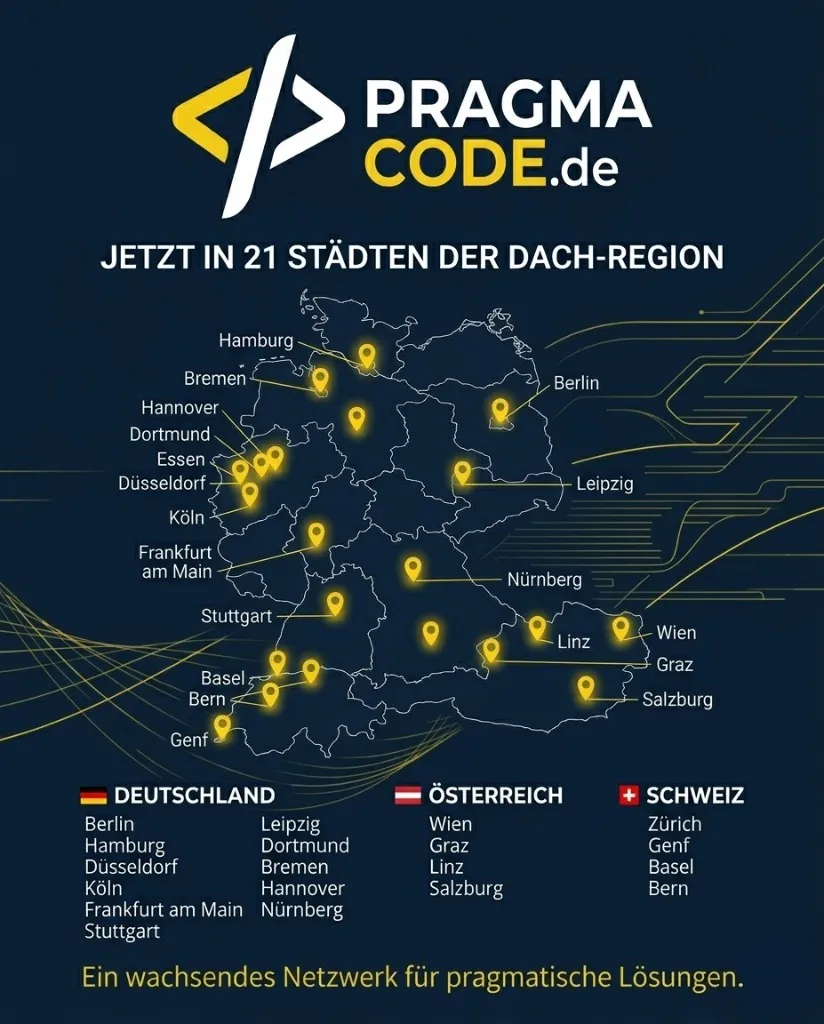
We are your digital partner – regionally anchored and successfully scaling across borders.
Have a vision?
Let's check together how we can make your idea take flight.
Book your free strategy call nowExtended Specialized Glossary
RFP Software
Dedicated B2B platforms designed to automate responses to Request for Proposals (RFPs), security questionnaires, and technical tenders using centralized content libraries and generative AI.
Tender Management
The structured, end-to-end organizational and software workflow governing the qualification, drafting, review, and timely submission of commercial bids and public tenders.
RFP (Request for Proposal)
A formal procurement document issued by enterprise buyers seeking competitive technical and commercial proposals from external suppliers.
RAG
Retrieval-Augmented Generation - A method optimizing language models by fetching verified internal enterprise documents before generating deterministic answers.
Human-in-the-Loop (HITL)
A workflow framework where human subject matter experts verify, refine, and authorize AI-generated output before external release.