


B2B wholesale in 2026 is undergoing a profound transformation: commercial procurement professionals expect the intuitive usability of top-tier consumer stores combined with tiered contract pricing, hierarchical approval workflows, and real-time ERP data synchronization. Shopware 6 has established itself as the leading modular commerce engine across Europe. This practical guide analyzes the essential B2B features, architectural considerations, and proven deployment strategies for mid-market distributors.
This article is an in-depth expert contribution from our content cluster. Discover the complete overview on our main page: E-Commerce →
Moving Beyond Static Catalogs and Manual Email Orders
In 2026, millennial and digital-native procurement managers control purchasing decisions across European mid-market enterprises. Manual PDF order forms, phone negotiations, and delayed price confirmations lead directly to cart abandonment and supplier churn. Wholesale distributors running on a modern Shopware 6 infrastructure combine consumer-grade self-service interfaces with sophisticated enterprise commerce logic — securing decisive competitive advantages over legacy competitors.
- The New Wholesale Standard: Commercial buyers demand seamless digital ordering experiences while requiring contract-specific net pricing, corporate sub-accounts, and automated budget approvals.
- Rule Builder Replaces Custom Code: Multi-tiered pricing rules, branch-specific shipping terms, and order minimums are configured natively in Shopware without modifying the core codebase.
- ERP Integration is Mission-Critical: Long-term B2B profitability depends entirely on reliable, bidirectional ERP integration. Asynchronous data pipelines prevent performance bottlenecks across hundreds of thousands of customer price records.
- 1. The Digital Wholesale Transformation: Key Differences Between B2B and B2C
- 2. The 4 Pillars of Shopware B2B Architecture
- 3. The Top 5 Essential B2B Features for Modern Wholesale
- 4. Dynamic Contract Pricing & Conditions in the Rule Builder
- 5. Seamless ERP Integration: Connecting SAP, Microsoft Dynamics & Legacy Systems
- 6. Hierarchical Company Accounts, User Roles & Approval Workflows
- 7. Streamlined Procurement: CSV Quick Order & PunchOut (OCI/cXML)
- 8. 5-Phase Implementation Roadmap for Wholesale Distributors
- 9. Wholesale Digital Readiness Checklist
- 10. Conclusion: B2B E-Commerce as a Strategic Growth Engine
1. The Digital Wholesale Transformation: Key Differences Between B2B and B2C
For decades, industrial wholesale distribution appeared immune to rapid e-commerce disruption. Business was conducted primarily through traveling field sales representatives, printed annual catalogs, phone inquiries, and manual purchase orders sent via fax or email. In 2026, that operating model has collapsed. Industry studies by the Institute for Retail Research indicate that more than 65 percent of all business-to-business transactions are now initiated and completed through digital self-service channels. Distributors lacking digital ordering platforms increasingly lose market share to agile competitors.
However, deploying a standard retail B2C shopping platform in a wholesale context inevitably fails. Commercial purchasing involves structural layers of complexity: wholesale buyers rarely pay a single universal retail price. Instead, transactions are governed by master service agreements, historical volume commitments, customer-specific rebate brackets, and project-based quotes. Furthermore, purchasing decisions involve multi-person buying centers: an apprentice or engineer selects technical components, a department head approves the expenditure limit, and a central procurement officer executes the order using an internal purchase order (PO) tracking number.
Comparison: Traditional B2C Commerce vs. B2B Wholesale
- Uniform Retail Prices: Standard gross prices displayed for all consumers including statutory VAT.
- Single Decision Maker: The shopper is simultaneously the selector, payer, and recipient.
- Immediate Settlement: Transactions rely predominantly on credit cards, PayPal, or consumer wallets.
- Standard Parcel Logistics: Single-parcel direct dispatch to residential delivery addresses.
- Individual Net Pricing: Master contracts, tiered quantity breaks, and default net price displays.
- Hierarchical Organizations: Granular employee permissions, spending limits, and approval chains.
- Invoice Billing & Credit Limits: Customized commercial credit terms, open accounts, and SEPA B2B.
- Freight & Split Shipments: Pallet freight calculation, delivery appointment scheduling, and backorders.
Shopware 6 bridges this divide effectively: it offers the clean, responsive user experience expected of modern digital storefronts while delivering enterprise-grade B2B logic under the hood. For a comprehensive overview of investment requirements, review our detailed guide on Shopware B2B implementation costs.
2. The 4 Pillars of Shopware B2B Architecture
The technical versatility of Shopware 6 stems from its API-first headless foundation built on modern Symfony and Vue.js frameworks. Rather than requiring brittle core modifications to support corporate workflows, Shopware separates frontend presentation from core business rules. This architecture rests on four fundamental pillars designed specifically for high-volume trade:
1. Rule Builder & Pricing Matrix
The native Rule Builder combines any customer tag, order volume, destination country, or payment method into dynamic rule trees. Volume pricing brackets and percentage discounts execute at runtime without writing custom code.
2. B2B Suite & Company Account Management
Complete structural mapping of corporate clients: enterprise buyers manage subsidiaries, branches, and individual buyer accounts with granular spending limits and approval workflows entirely via self-service.
3. Sync API & ERP Integration
Bidirectional REST APIs maintain real-time synchronization with enterprise systems such as SAP S/4HANA or Microsoft Dynamics 365. Inventory levels, order confirmations, and tracking records stay synchronized across channels.
4. High-Efficiency Checkout & PunchOut
Built-in spreadsheet quick-ordering, one-click reordering from historical purchase logs, and seamless punchout catalog integration with systems like SAP Ariba via OCI and cXML standards.
3. The Top 5 Essential B2B Features for Modern Wholesale
Commercial buyers evaluate digital storefronts by how quickly and accurately they facilitate work tasks. To accelerate B2B revenue growth, distributors must eliminate operational friction in the everyday purchasing routine. In commercial implementations, five core feature sets consistently drive adoption and conversion:
1. Customer-Specific Net Pricing
Authenticated buyers immediately see their pre-negotiated contract pricing, volume-based tier brackets, and real-time raw material surcharges without manual quote requests.
2. Role-Based Permissions & Budgets
Corporate staff can assemble requisitions independently, while carts exceeding pre-set budget caps automatically route to managers for one-click approval.
3. Rapid Matrix & CSV Quick Order
Procurement staff input hundreds of part numbers instantly through direct paste or bulk CSV/Excel upload with automated inventory and pricing verification.
4. Multi-Warehouse Stock & Split Shipments
Displays localized regional warehouse stock, per-item delivery scheduling, and automated order splitting between in-stock items and delayed backorders.
5. PunchOut Catalogs (OCI & cXML)
Enterprise buyers jump directly from their internal ERP (such as SAP Ariba or Coupa) into the distributor catalog, transferring assembled carts back for purchase order creation.
4. Dynamic Contract Pricing & Conditions in the Rule Builder
Wholesale pricing architecture is inherently multi-layered. Unlike consumer stores where a single discount code applies across the board, B2B distributors operate with multidimensional pricing structures. A representative wholesale account might require:
A 15 percent baseline discount on industrial hand tools, an additional 5 percent volume break at 50 units, excluded on promotional items, combined with free freight on net orders exceeding €1,500.
The Shopware 6 Rule Builder solves this challenge without custom database scripting. Business logic is assembled visually using composable boolean conditions based on customer tags, account IDs, billing regions, payment terms, or aggregate cart values. For technical best practices on maintaining price consistency with back-office databases, review our guide on real-time B2B pricing synchronization.
Pro-Tip: Scaling Beyond 100,000 Pricing Rules
Distributors maintaining tens of thousands of negotiated price agreements must avoid bloating the Rule Builder with individual rule entities. Best practice for high-performance enterprise catalogs: store raw customer-product price matrices in indexed database tables or calculate prices via an asynchronous pricing microservice. Use the native Rule Builder for structural governance such as freight thresholds, payment eligibility, and tax exemptions.
5. Seamless ERP Integration: Connecting SAP, Microsoft Dynamics & Legacy Systems
A modern B2B store cannot function as a standalone island. It acts as the digital storefront and ordering layer of the distributor's primary Enterprise Resource Planning (ERP) backbone. Whether utilizing SAP S/4HANA, Microsoft Dynamics 365 Business Central, Infor, Epicor, or legacy mid-market systems, the technical robustness of the interface dictates operational profitability.
1. Master Data Synchronization
The ERP serves as the single source of truth for technical product specifications, hazardous material classifications, customs tariffs, and customer credit limits, synchronizing via webhooks or scheduled batch jobs.
2. Real-Time Inventory Visibility
For scarce components or allocated quotas, the store must display reliable inventory data, cleanly distinguishing between physical shelf stock, reserved customer allocations, and incoming supplier POs.
3. Bidirectional Document & Order Pipeline
Store orders instantly generate draft sales documents in the ERP. Once invoices, delivery notes, and shipping tracking numbers are issued, generated PDFs sync back to the customer's portal for on-demand download.
A frequent failure pattern in wholesale integration is relying on rigid, point-to-point custom scripts. Enterprise implementations increasingly rely on modern integration platforms (iPaaS or robust workflow engines like n8n Enterprise) that queue, transform, and retry data packets resiliently. Learn more in our analysis of B2B self-service customer portal architecture.
6. Hierarchical Company Accounts, User Roles & Approval Workflows
Self-service account governance is among the most effective drivers of operational cost reduction in wholesale distribution. Commercial clients expect the autonomy to configure purchasing rights for their own teams without filing administrative support tickets.
Using the Shopware B2B Suite or commercial B2B components, distributor clients can configure multi-tier corporate hierarchies:
1. Company Administrator: Manages company locations, assigns cost centers, and configures new employee accounts.
2. Field Buyer: Orders standard operational supplies independently up to a pre-defined threshold, such as €500 per order.
3. Department Approver: Receives automated email alerts whenever a requisition exceeds buyer thresholds, approving or rejecting the order with a single click.
This automated governance relieves the distributor's internal sales team from processing routine authorizations while dramatically speeding up customer procurement turnaround.
7. Streamlined Procurement: CSV Quick Order & PunchOut (OCI/cXML)
In high-volume commercial purchasing, speed is paramount. Professional workshops, manufacturing plants, and trade specialists know exact part numbers before visiting an online store. Forcing these buyers through standard visual category trees creates unnecessary operational friction.
Shopware resolves this through two dedicated high-efficiency mechanisms:
Spreadsheet & Direct Matrix Ordering: Buyers paste lists of SKUs and quantities into a multi-line input box or upload CSV files exported from their internal software. Shopware validates availability instantly and loads hundreds of line items into the active cart with a single action.
PunchOut Integration (OCI & cXML): Multinational corporations and government institutions route all purchasing through central procurement portals such as SAP Ariba, Coupa, or Jaggaer. Through a PunchOut catalog integration, the buyer navigates seamlessly from their internal procurement software into the distributor's Shopware store. After assembling their cart, clicking checkout does not finalize an order; instead, structured OCI or cXML cart data returns to the buyer's procurement system for internal authorization and automated PO issuance.
8. 5-Phase Implementation Roadmap for Wholesale Distributors
Deploying an enterprise B2B commerce platform requires rigorous operational planning. Wholesale e-commerce projects rarely fail due to technology limitations; they fail because of misaligned pricing models, dirty legacy data, or inadequate customer onboarding. The following 5-phase roadmap ensures predictable execution:
-
1. Commercial Audit & Requirements Definition
Audit existing customer contracts, discount matrices, and ERP data structures. Interview your top 20 accounts to pinpoint specific purchasing requirements such as punchout needs, invoice terms, and approval workflows.
-
2. Data Cleansing & ERP Interface Architecture
Standardize product master data within the core ERP. Define interface pipelines (synchronous vs. asynchronous) for prices, inventory, documents, and customer accounts.
-
3. Core Shopware Configuration & MVP Build
Install Shopware 6, configure the Rule Builder for customer-tier logic, and customize the corporate B2B customer portal according to responsive brand guidelines.
-
4. Pilot Program with Selected Key Accounts
Launch the platform to a friendly pilot group of 5 to 10 strategic accounts. Collect usability feedback, refine search performance, and resolve data exchange edge cases.
-
5. Full Rollout, Sales Force Enablement & Scaling
Execute full-scale customer onboarding. Train field sales representatives to use the self-service portal as an enablement tool for reorders, freeing capacity for strategic account growth.
9. Wholesale Digital Readiness Checklist
Evaluate your current digital commerce posture against these core criteria for modern wholesale distribution:
Quick-Check: Is Your Wholesale Operation B2B-Ready?
10. Conclusion: B2B E-Commerce as a Strategic Growth Engine
Digital transformation in wholesale distribution is not a cosmetic software upgrade; it is a fundamental strategic requirement for commercial relevance across European markets. Modern buyers demand velocity, pricing transparency, and operational simplicity. Distributors relying on manual processing face mounting administrative costs and steady customer attrition toward agile digital-first competitors.
Shopware 6 provides the ideal synergy of modular enterprise scalability, a dynamic Rule Builder, and comprehensive B2B toolsets. When engineered cleanly and deeply integrated with your ERP backbone, an enterprise B2B portal transforms your sales operation from a reactive order processor into a proactive, scalable revenue driver.
Official Sources & Primary Documentation
- Shopware AG: Official Shopware B2B Suite & Commercial Documentation – Architectural overview, feature catalogs, and integration guidelines.
- EHI Retail Institute: B2B E-Commerce Study 2026 – Key benchmarks, market dynamics, and technology investment priorities in European wholesale.
- IFH Cologne: B2B Market Monitor – Purchasing behavior, digital self-service trends, and commercial buyer expectations.
Our Regional Expertise
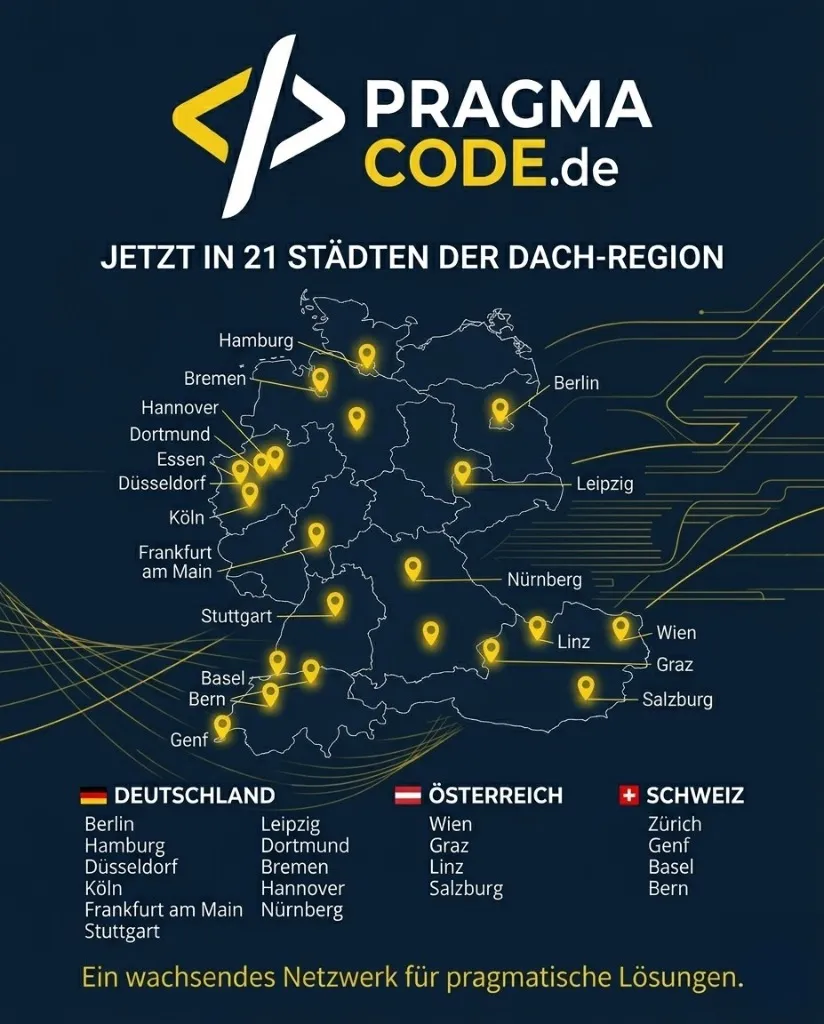
We are your digital partner – regionally anchored and successfully scaling across borders.
E-commerce for your business?
I deliver this for small and mid-sized businesses: at a fixed price agreed upfront, working directly with the person who builds it. Process, scope and pricing are on the service page.
See service & pricing Or request a free intro callExtended Specialized Glossary
Shopware 6
A modern, highly modular e-commerce framework built on Symfony and Vue.js with an API-first headless architecture.
ERP Integration
The automated bidirectional data synchronization between an enterprise resource planning system and an online store for products, stock, and orders.
PunchOut Catalog
An e-procurement integration (primarily OCI or cXML) enabling corporate procurement buyers to access supplier catalogs directly from their internal ERP.