


Planning a modern online store on Shopware 6 often confronts SME executives with an opaque web of licensing tiers, cloud hosting fees, agency estimates, and ERP integration retainers. Discover this comprehensive 2026 cost audit breaking down true investments, operating expenses, and long-term TCO.
This article is an in-depth expert contribution from our content cluster. Discover the complete overview on our main page: E-Commerce Development & Scaling →
- The Zero-Dollar Open-Source Illusion: While the Shopware Community Edition carries zero licensing fees, mid-market B2B implementations require bespoke development and third-party plugins that drive overall expenditure.
- The Commercial Tier Shift: Commercial Shopware tiers start at 600 Euros per month (Rise) and scale based on gross merchant volume (GMV). They primarily benefit organizations requiring out-of-the-box B2B capabilities and vendor SLAs.
- ERP Integration Dominates Budgets: Synchronizing multi-tiered customer price matrices, custom inventory buffers, and variant catalogs with SAP, Microsoft Dynamics, or Navision frequently accounts for 30 to 50 percent of total investment.
- 1. The Structural Cost Architecture of Shopware 6
- 2. Deep Dive: The 4 Shopware 6 Licensing Models
- 3. The 5 Core Expense Categories in a Shopware Deployment
- 4. Ongoing Monthly Fixed Costs: Hosting, Maintenance, and Tooling
- 5. Edition Comparison: Community Edition vs. Commercial Plans (Rise & Evolve)
- 6. Critical Cost Traps: Plugins, ERP Connectors, and Update Backlogs
- 7. Headless Shopware with Astro/Next.js: Commercial Feasibility for SMEs
- 8. A 5-Step Strategic Blueprint for Reliable Budgeting
- 9. Quick-Check: Aligning Your Operational Profile with the Right Plan
- 10. Conclusion & Investment Recommendations
1. The Structural Cost Architecture of Shopware 6
In European digital commerce, Shopware 6 has emerged as one of the premier platforms for ambitious B2C retailers and specialized mid-market B2B manufacturers. Built on Symfony (PHP) and Vue.js, its modern API-first architecture delivers robust foundations for international multi-store expansion, complex pricing rules, and omnichannel fulfillment.
Yet for executive decision-makers evaluating platform investments, pricing transparency remains a significant challenge. Entry-level providers advertise turnkey stores starting under 5,000 Euros, while enterprise system integrators quote six-figure budgets for seemingly comparable requirements. This disparity stems from the multifaceted nature of TCO (Total Cost of Ownership): an enterprise store is not merely a theme installation, but an interconnected ecosystem of software licenses, high-availability hosting, ERP middleware, payment gateways, and technical governance.
To prevent budget overruns, commercial directors must deconstruct these operational cost drivers prior to signing software subscriptions or agency development agreements.
2. Deep Dive: The 4 Shopware 6 Licensing Models
Shopware structures its platform across an open-source baseline and three tiered commercial subscription tiers, each unlocking proprietary feature modules and vendor SLA guarantees:
1. Community Edition
0 € License Fees – up to 1 million euros GMV. Since March 2025, Shopware requires a commercial plan once annual GMV exceeds 1 million euros, otherwise access to the Shopware Account and Store (and thus plugin purchases and updates) ends. The core is MIT-licensed. Grants complete access to essential e-commerce capabilities (catalog management, checkout, Rule Builder, Shopping Experiences). Carries no vendor support; B2B features must be built custom or purchased via marketplace plugins.
2. Shopware Rise
Starting at 600 € / month. Entry commercial tier. Unlocks advanced CMS storytelling capabilities, extended Rule Builder parameters, social shopping channels, and direct vendor support with guaranteed turnaround SLAs during business hours.
3. Shopware Evolve
From 2,400 € / month (list price, scales with GMV). Includes the B2B Components (corporate account hierarchies, approval workflows, custom price lists, quote generation) and advanced search.
4. Shopware Beyond
Bespoke enterprise pricing – Shopware publishes no list price. Multi-inventory for multiple warehouses, highest SLA classification (24/7 critical response), advanced multi-country localization, unlimited storefronts, and Flow Builder automations for high-volume transactions.
3. The 5 Core Expense Categories in a Shopware Deployment
Every commercial Shopware project budget is composed of five distinct cost pillars that require transparent planning:
1. Software Subscriptions & Plugins
Annual or monthly fees payable to Shopware AG, combined with licensing for critical store plugins (payment gateways, carrier integrations, tax engines, consent management).
2. Hosting & Cloud Infrastructure
Dedicated cloud server infrastructure (Hetzner, AWS, Mittwald) featuring high-performance PHP-FPM runtimes, Redis object caching, OpenSearch clustering, and MariaDB clusters.
3. Agency UX/UI Design & Development
Custom design systems aligned with corporate branding, responsive theme coding, checkout friction reduction, and bespoke frontend business rules.
4. ERP & Data Pipeline Integration
The ERP Integration layer connecting inventory systems (SAP, Dynamics, Navision). Synchronizes product attributes, tiered pricing, stock levels, and automated order booking.
5. Ongoing Maintenance & SLAs
Continuous engineering retainers for security patching, version upgrades, transaction funnel monitoring, and ongoing conversion rate optimization.
4. Ongoing Monthly Fixed Costs: Hosting, Maintenance, and Tooling
Following initial launch, predictable recurring operational expenses govern daily store health. For a typical mid-sized B2B Shopware store, fixed operational overhead in 2026 breaks down as follows:
Managed Cloud Infrastructure (150 to 850 € / Month)
Shopware 6 requires substantial computational resources. Shared web hosting plans are completely inadequate. Production stability requires managed virtual instances with at least 8 CPU cores, 32 GB RAM, high-speed NVMe storage, Redis caching, and a dedicated OpenSearch cluster for instant catalog querying.
Plugin Subscriptions & SaaS Connectors (120 to 450 € / Month)
The Shopware Community Store operates predominantly on SaaS subscription models. Maintaining 8 to 15 standard extensions (accounting exports, shipping carrier APIs, payment modules, compliance cookies) generates recurring software charges.
Technical Support & SLA Retainer (600 to 2,200 € / Month)
Proactive security patching, minor core updates, and rapid incident response protocols. Retaining technical partner support ensures immediate remediation during critical transaction pipeline failures.
Expert Tip: Never Omit Dedicated OpenSearch Infrastructure
Do not rely on standard database queries for product discovery. Once your catalog surpasses 5,000 active SKUs, standard MySQL fulltext search degrades server performance under traffic. Provisioning a dedicated OpenSearch or Elasticsearch instance takes search load off the database and delivers instant type-ahead filtering.
5. Edition Comparison: Community Edition vs. Commercial Plans (Rise & Evolve)
Mid-market organizations face an important strategic decision: "Can we launch successfully on the open-source Community Edition, or does commercial viability require Rise or Evolve?" Here is how the paths compare:
Comparison: Shopware 6 Community Edition vs. Commercial Subscriptions (Rise / Evolve)
- Licensing Cost: 0 euros up to 1 million euros annual GMV; above that a commercial plan is required for Account and Store access. No revenue-sharing fees.
- Vendor Support: Exclusively community forums; no guaranteed turnaround SLAs or patch hotlines.
- B2B Feature Set: Foundational functions; native B2B Suite absent and must be replaced via custom coding or plugins.
- CMS Capabilities: Standard CMS layouts; dynamic storytelling blocks reserved for commercial subscriptions.
- Engineering Overhead: Higher bespoke engineering investment required to implement enterprise business rules.
- Licensing Cost: From 600 € / month (Rise) or from 2,400 € / month (Evolve), list prices excl. VAT, GMV-scaled.
- Vendor Support: Direct vendor engineering access with binding response time commitments and escalation channels.
- B2B Feature Set: Turnkey B2B Suite including customer company accounts, quote negotiations, and approval hierarchies.
- CMS Capabilities: Advanced storytelling features, quickview triggers, form builders, and behavioral product streams.
- Engineering Overhead: Faster deployment timelines for complex B2B commerce scenarios via native functionality.
General rule for SMEs: straightforward B2C retailers with access to competent developers often thrive on the Community Edition. Conversely, industrial manufacturers requiring customer-specific pricing catalogs and approval hierarchies save months of custom development by leveraging the native B2B Suite in Evolve.
6. Critical Cost Traps: Plugins, ERP Connectors, and Update Backlogs
Budget blowouts in Shopware initiatives rarely originate from base software licenses. Instead, they stem from three predictable technical oversights:
Cost Trap 1: Unregulated Plugin Proliferation
Installing dozens of third-party plugins creates architectural fragility. Poorly written marketplace extensions slow down page rendering, trigger fatal conflicts during minor core updates, and accumulate recurring subscription fees.
Cost Trap 2: Underestimated ERP Data Complexity
Legacy ERP systems maintain pricing, discounts, and packaging units via bespoke relational tables. Replicating this business logic within Shopware frequently expands middleware integration budgets from planned 5,000 to over 25,000 Euros.
Cost Trap 3: Neglected Maintenance and Upgrade Backlogs
Failing to budget for continuous monthly maintenance leaves stores stranded on obsolete software versions. Upgrading an unmaintained store after two years often equals the cost of a full re-platforming project.
7. Headless Shopware with Astro/Next.js: Commercial Feasibility for SMEs
An influential architectural paradigm in enterprise commerce is Headless Commerce: decouples Shopware's standard PHP storefront and replaces it with a dedicated modern frontend powered by Astro or Next.js. Shopware operates in the background as a headless engine providing data via Storefront APIs.
What are the economic tradeoffs of a headless architecture for mid-market businesses?
Advantage: Instant Loading Speeds & Higher Checkout Conversion
An Astro or Next.js storefront serves pre-rendered HTML across edge CDN points in under 200 milliseconds. Eliminating frontend PHP rendering bottlenecks improves search rankings and boosts mobile conversion rates.
Advantage: Maximum Security & Elastic Resilience
The public customer frontend has no direct connection to the underlying Shopware database. Traffic spikes or distributed attacks cannot compromise the core commerce system, which remains isolated behind secure API gateways.
Commercial Assessment: Higher Initial CapEx, Lower Long-Term OpEx
Headless setups typically demand 20 to 35 percent higher upfront development investment due to bespoke API orchestration. Over subsequent operating years, however, hosting and maintenance expenses drop significantly.
8. A 5-Step Strategic Blueprint for Reliable Budgeting
To eliminate unpleasant financial surprises, structure your Shopware commercial planning across five disciplined milestones:
-
Step 1: Quantify Annual Order and Revenue Volumes
Document current and projected e-commerce sales volume along with average order values. This clarifies whether the Community Edition suffices or at what inflection point commercial tiers (Rise/Evolve) deliver superior economic efficiency.
-
Step 2: Comprehensive B2B and B2C Requirements Scoping
Catalogue required capabilities in a structured matrix. Differentiate between features supported by Shopware standard configurations versus those demanding bespoke code or certified extensions.
-
Step 3: ERP and PIM Technical Interface Audit
Verify whether native connectors exist for your ERP software (SAP, Dynamics 365, ProAlpha) or if custom middleware must be engineered. Dedicate at least 30 percent of total budget toward data pipeline integration.
-
Step 4: Solicit Fixed-Price Milestones from Specialized Agencies
Reject open-ended hourly billing arrangements. Require specialized digital engineering partners to provide binding, milestone-based fixed fees across conceptualization, UX, development, and launch.
-
Step 5: Compute 36-Month Total Cost of Ownership
Consolidate initial development fees, recurring hosting costs, plugin licenses, and monthly engineering retainers over a 3-year timeline to establish an authoritative investment baseline.
9. Quick-Check: Aligning Your Operational Profile with the Right Plan
Use this evaluation matrix to assess the optimal software tier for your deployment:
Quick-Check: Platform Alignment Guide
10. Conclusion & Investment Recommendations
Shopware 6 is a mature, highly adaptable e-commerce ecosystem capable of meeting the stringent requirements of modern European mid-market enterprises. Investing in a professional Shopware deployment delivers strong returns when built upon disciplined processes, robust ERP integrations, and resilient architecture.
Do not be misled by unrealistically low initial estimates. A professionally engineered storefront with seamless inventory pipelines and instant loading speeds generates rapid ROI through elevated basket conversions and reduced manual back-office overhead. Insist on fixed-price agency milestones, eliminate unnecessary plugin bloat, and explore modern headless frontends to maximize your e-commerce investment.
Official Sources & Primary Documentation
- Shopware AG: "Official Shopware 6 Pricing & Edition Overview" – Authorized pricing specifications for Community, Rise, Evolve, and Beyond plans.
- Shopware Developer Documentation: "Shopware 6 Infrastructure & Hosting Architecture" – Technical prerequisites for server hardware, PHP runtimes, and clustering.
- Symfony Framework: "Symfony Enterprise Performance Documentation" – Architectural foundations powering the Shopware 6 application core.
- OpenSearch Project: "OpenSearch High-Performance Indexing Guide" – Production clustering standards for enterprise catalog querying and faceted search.
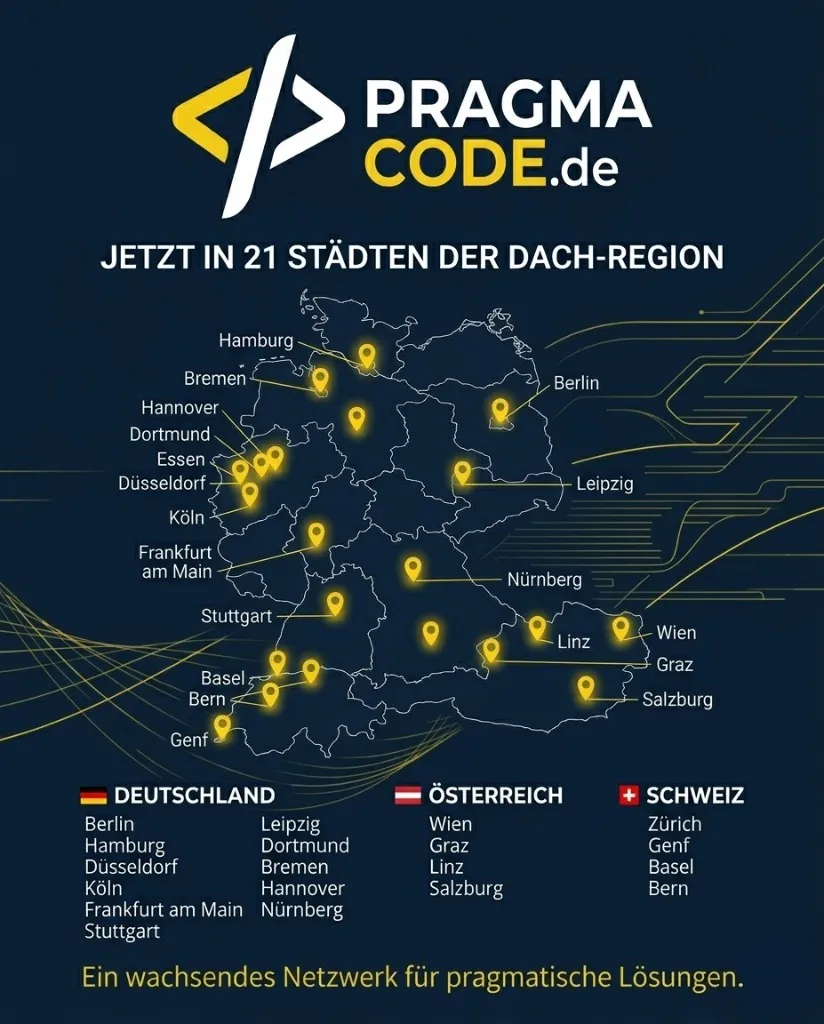
Our Regional Expertise
We are your digital partner – regionally anchored and successfully scaling across borders.
Have a vision?
Let's check together how we can make your idea take flight.
Book your free strategy call nowExtended Specialized Glossary
Shopware 6
A modular, API-first enterprise e-commerce platform built on modern Symfony and Vue.js frameworks, engineered for flexibility and international scale.
TCO (Total Cost of Ownership)
A comprehensive financial metric calculating all direct, indirect, upfront, and recurring expenditures incurred by an IT asset over its lifecycle.
ERP Integration
The automated bidirectional technical synchronization connecting an online store with an enterprise resource planning system for stock and order flows.
Headless Commerce
An architectural decoupling separating the frontend customer presentation layer from backend transactional e-commerce business logic.