

The rapid expansion of Generative AI and Large Language Models presents SMEs with an economic and ecological dilemma: While AI agents boost productivity, data center costs and Scope 3 emissions soar. Green AI bridges performance and sustainability – discover how DACH enterprises save up to 70% energy in 2026 while remaining fully CSRD compliant.
This article is an in-depth expert contribution from our content cluster. Discover the complete overview on our main page: AI Consulting & Enterprise Agents →
The Green AI Turning Point for SMEs
The era of unrestricted brute-force compute is over. In 2026, forward-thinking enterprises measure AI success not by parameter count alone, but by efficiency per watt and verifiable Scope 3 IT Emissions.
- Economic Leverage: Targeted inference optimization and Quantization reduce API and cloud costs for AI workloads by up to 70%.
- Regulatory Compliance: The CSRD mandates mid-sized enterprises starting in 2026 to verify the environmental footprint of their entire IT supply chain.
- Architectural Elegance: The future belongs not to monolithic LLMs, but to tailored Small Language Models (SLMs) and intelligent semantic caching.
- 1. The AI Energy Divergence: Why SMEs Must Rethink Compute
- 2. The Green AI Framework: 5 Levers for Energy-Efficient Architectures
- 3. CSRD Compliance & EU AI Act: Auditing AI Carbon Footprints
- 4. ROI & Business Case: Sustainability as a Financial Performance Driver
- 5. Step-by-Step Roadmap: 5 Phases to Green AI Infrastructure
- 6. Conclusion: Securing Market Leadership with Sustainable AI
1. The AI Energy Divergence: Why SMEs Must Rethink Compute
Artificial Intelligence has evolved from an experimental tech trend into a core operational backbone for value creation. Whether automated document processing in accounting, autonomous customer support agents, or predictive maintenance in smart manufacturing – AI systems drastically boost productivity across DACH enterprises. However, this progress comes with a growing side effect that concerns executive leadership: rapidly escalating energy consumption and operational costs.
A standard Google search query consumes roughly 0.3 watt-hours (Wh) of electricity. In contrast, a multi-step query to a modern frontier LLM (such as Claude 3.5 Sonnet or GPT-4o) involving RAG (Retrieval-Augmented Generation) and code execution can demand 10 to 30 times more electrical energy. Scaled across millions of monthly API calls in enterprise workflows, AI infrastructure quickly becomes the largest power consumer in corporate IT.
Expert Tip: Red Teaming IT Energy Expenditures
When reviewing monthly IT controlling, do not lump AI token costs into generic cloud expenses. Explicitly track GPU compute time and token throughput to isolate the actual carbon footprint and identify hidden efficiency leaks.
The Scaling Paradox: Over-Provisioning vs. Precision
Much of today's enterprise AI power consumption stems not from inherent task complexity, but from architectural waste. Many software teams default to employing giant, general-purpose models with hundreds of billions of parameters for simple tasks like text classification, form extraction, or standard email summarization. This is equivalent to delivering a single letter using a 40-ton semi-truck.
Green AI directly addresses this inefficiency. The goal is not to curb AI adoption, but to optimize the ratio of floating-point operations (FLOPs) to business value. The comparison below highlights the paradigm shift between legacy brute-force AI deployment and an efficiency-driven Green AI strategy:
Comparison: Legacy Brute-Force AI vs. Green AI Strategy
- Model Selection: Uncritical use of >175B parameter LLMs for basic tasks
- Inference Pattern: Every single user query triggers a full model pass
- Hosting: Rigid cloud instances with high GPU idle time
- Precision: Standard FP16/FP32 floating-point representations
- Scope 3 Accounting: No tracking of AI token energy or server emissions
- Model Selection: Deployment of specialized SLMs (1B–8B parameters)
- Inference Pattern: Semantic caching resolves 40–60% of recurring queries
- Hosting: Dynamic serverless edge inference backed by 100% renewable PPAs
- Precision: Lossless INT8/INT4 Quantization
- Scope 3 Accounting: Automated end-to-end carbon reporting for CSRD
2. The Green AI Framework: 5 Levers for Energy-Efficient Architectures
Achieving measurable cost and carbon reductions in medium-sized enterprises requires an engineering-first methodology. The Green AI Framework developed by Pragma Code rests on five field-tested architectural levers:
Lever 1: Model Sizing & SLM-First Architecture
Replacing massive LLMs with domain-adapted Small Language Models (e.g., Mistral 7B, Llama 3.1 8B, Phi-3). For 85% of corporate use cases, fine-tuned SLMs achieve equal or higher accuracy while consuming less than 5% of the energy. If you would rather not self-host, the same principle applies to hosted lightweight models — see Gemini 3.6 Flash & 3.5 Flash-Lite.
Lever 2: Post-Training Quantization & Pruning
Compressing model weights from 16-bit float (FP16) down to 8-bit (INT8) or 4-bit (INT4) integers. This shrinks VRAM footprints by up to 75%, allowing powerful models to run on energy-efficient on-premise hardware or edge devices.
Lever 3: Semantic Caching & Vector Offloading
Positioning a vector database layer (such as Qdrant or Redis) as an intelligent cache in front of the model. Semantically equivalent queries are answered in sub-milliseconds without triggering GPU compute passes.
Lever 4: Dynamic Task Routing (Speculative Execution)
Deploying an ultra-lightweight classifier model to evaluate incoming prompts. Routine tasks are routed to fast, low-power local models; only complex edge cases escalate to frontier models.
Lever 5: PUE-Optimized Hosting & Renewable Cloud Selection
Migrating AI inference workloads to data centers with low PUE ratings (< 1.15), waste-heat recovery, and 100% certified renewable energy PPAs in the DACH region.
Deep-Dive: Quantization as an Efficiency Multiplier
Quantization is one of the most effective mathematical techniques for turning bulky AI models into lean, high-speed assets. During training, neural networks rely on high floating-point precision (FP32 or FP16) to capture tiny gradient adjustments. For operational inference, however, such high precision is rarely required.
Using advanced methods like AWQ (Activation-aware Weight Quantization) or GPTQ, model weights can be quantized to 4-bit precision with virtually no degradation in benchmark performance. The benefits for enterprises are substantial:
Hardware Reduction
A 70B parameter model that unquantized requires costly multi-GPU server clusters can run quantized on a single workstation node.
Throughput Acceleration
Lower memory bandwidth bottlenecks dramatically boost token generation speeds per second.
Direct CO₂ Savings
Reduced VRAM footprint minimizes heat dissipation, substantially lowering server cooling power demands.
3. CSRD Compliance & EU AI Act: Auditing AI Carbon Footprints
With the implementation of the EU Corporate Sustainability Reporting Directive (CSRD), mid-sized companies across Germany, Austria, and Switzerland must produce audited sustainability reports. Corporate IT operations and newly integrated AI pipelines fall directly under Scope 3 IT Emissions.
Continuous Token Telemetry
Deploying local telemetry pipelines to log prompt and completion tokens across all models for precise conversion into kWh and carbon equivalents (gCO₂e).
Green Provider Auditing
Auditing third-party AI cloud vendors for verified Power Purchase Agreements (PPAs) and regional grid mix certificates within DACH data centers.
EU AI Act Transparency
Meeting Article 50 documentation standards under the EU AI Act for complex AI models, including explicit declarations of compute resource usage.
Proactively aligning AI architecture with Green AI principles satisfies regulatory demands while strengthening enterprise standing with financial institutions, investors, and tier-1 supply chain partners demanding ESG compliance.
4. ROI & Business Case: Sustainability as a Financial Performance Driver
Historically, green IT initiatives were sometimes viewed as overhead cost centers. In Artificial Intelligence, however, the paradigm is flipped: Green AI is an efficiency driver that directly improves bottom-line profitability.
Consider a practical DACH case study: A mid-sized engineering firm with 450 employees utilizes AI agents across customer service, contract analysis, and technical documentation, processing approximately 150,000 model calls daily.
The Financial Trap of Unoptimized AI
Relying exclusively on proprietary frontier APIs for 150,000 unoptimized daily queries yields monthly API bills between €12,500 and €18,000. As agent adoption expands, these costs scale uncontrollably.
By implementing the Pragma Code Green AI Framework – combining a quantized Llama-3.1-8B model for 80% of standard tasks, semantic caching, and dynamic routing for edge cases – costs drop dramatically:
Monthly Inference Costs
After Green AI optimization
approx. €3,200Savings: over 75% compared to unoptimized API usage.
Energy Consumption
AI workload reduction
420 kWh/monthPreviously: 1,850 kWh/month — over 77% savings.
Payback Period
Full ROI after implementation
< 4 monthsFast payback through immediately effective infrastructure optimizations.
5. Step-by-Step Roadmap: 5 Phases to Green AI Infrastructure
Transitioning to a sustainable AI landscape does not require rebuilding software stacks from scratch. This 5-phase roadmap provides a structured path for enterprise adoption:
-
Phase 1: AI Infrastructure Audit & Baseline
Cataloging all active AI endpoints, token volumes, and model sizes across the enterprise to establish a clear carbon and cost baseline.
-
Phase 2: Task Classification & Model Right-Sizing
Mapping AI use cases against required intelligence tiers and identifying tasks that can be migrated from expensive LLMs to specialized SLMs.
-
Phase 3: Integration of Semantic Caching & Quantization
Deploying a vector caching layer in front of AI endpoints and benchmarking quantized INT8/INT4 model variants in staging environments.
-
Phase 4: Hosting Migration to PUE-Optimized Nodes
Transitioning hosting workloads to European data centers powered by 100% certified green energy or deploying efficient on-premise hardware.
-
Phase 5: Automated Telemetry & CSRD Reporting
Establishing continuous efficiency dashboards for token spending, carbon metrics, and automated CSRD Scope 3 reporting.
6. Conclusion: Securing Market Leadership with Sustainable AI
In 2026, Green AI is no longer a theoretical ideal – it is a competitive imperative for mid-sized enterprises across the DACH region. Combining model right-sizing, quantization, caching, and green hosting enables businesses to harness AI's full productivity benefits without falling into cost or emission traps.
Organizations that establish sustainable AI architectures today build lasting advantages: reduced operating costs, seamless regulatory compliance, and a strong market position as responsible technology leaders.
Quick-Check: Your Green AI Checklist
Have questions about Green AI & sustainable AI strategies?
Schedule a Free Initial ConsultationOur Regional Expertise
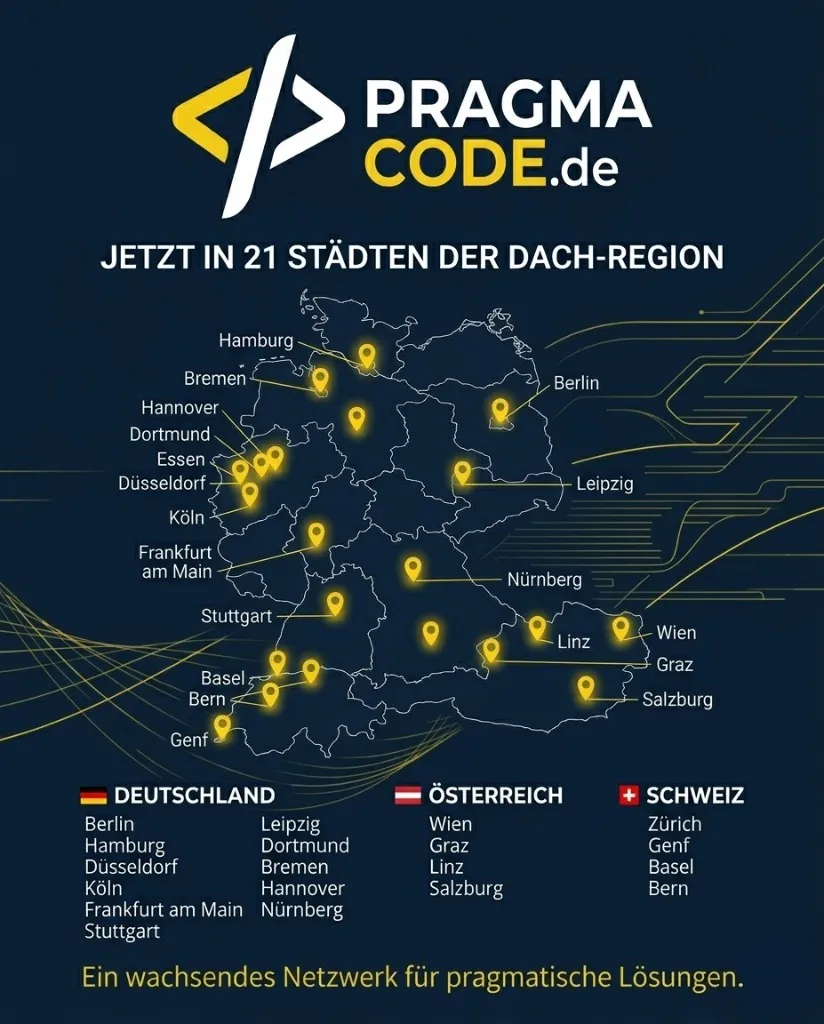
We are your digital partner – regionally anchored and successfully scaling across borders.
Have a vision?
Let's check together how we can make your idea take flight.
Book your free strategy call nowExtended Specialized Glossary
Green AI
A research and operational paradigm for Artificial Intelligence that prioritizes energy efficiency, carbon reduction, and environmental sustainability during training, fine-tuning, and inference.
Scope 3 IT Emissions
Indirect greenhouse gas emissions within the IT value chain, including energy and resource consumption from third-party cloud services, external AI APIs, and server infrastructure.
SLM (Small Language Model)
Compact language models with reduced parameter counts (e.g., 1B to 8B parameters) designed for specialized tasks with a fraction of the energy and memory requirements of large LLMs.
Quantization
The reduction of numerical precision of model weights (e.g., from 16-bit Float to 8-bit or 4-bit Integer) to dramatically lower memory footprint and energy usage during inference.
PUE (Power Usage Effectiveness)
A metric measuring data center energy efficiency, calculated as the ratio of total facility energy to energy delivered directly to computing equipment.
CSRD
Corporate Sustainability Reporting Directive – an EU directive obligating companies to provide standardized sustainability reports.