
With Grok 4.6, xAI pushes the envelope for autonomous AI agents: Instead of isolated chat prompts, the model tackles complex, multi-step engineering and knowledge work tasks across hours. In benchmark stress tests, Grok 4.6 proves frontier performance through SFT trajectory regeneration and agentic reinforcement learning.
This article is an in-depth expert contribution from our content cluster. Discover the complete overview on our main page: AI Automation & Intelligent Agents →
- Resilient Long-Running Agent Workflows: Grok 4.6 remains strictly anchored in context across dozens of sequential file edits, test executions, and compiler feedback loops without drifting or hallucinating.
- Historic Milestone on GDPVal-AA: With a record score of 1,753 points on GDPVal-AA v2 and 1,577 points on AA-Briefcase, the model establishes a new high-water mark for economically meaningful enterprise knowledge work, surpassing GPT-5.6 Sol and Fable 5.
- Visual & Interactive First-Pass Synthesis: The model translates ambiguous, high-level product briefs into a cohesive visual design system and fully structured, executable software architecture in a single pass.
From Ephemeral Chatbots to Persistent Software Engineers
The era of single-shot conversational AI prompts is officially behind us. Modern enterprise engineering requires autonomous systems that operate as true junior-to-senior technical partners: scanning entire codebases, respecting domain boundaries, writing regression tests, and methodically repairing compilation errors. With Grok 4.6, xAI delivers the underlying engine for this agentic transformation.
- 1. Grok 4.6 Architecture: Training, SFT Regeneration & Agentic RL
- 2. Benchmark Stress Test: Grok 4.6 vs. Frontier Flagships
- 3. Long-Running Agents: Multi-Step Execution Without Context Drift
- 4. Visual & Interactive First-Pass Synthesis: Rapid Prototyping at Scale
- 5. Developer Guide: Grok 4.6 in Cursor, Grok Build and the xAI API Console
- 6. Enterprise Security, Safeguard Calibration & Vulnerability Remediation
- 7. ROI, Token Economics & Total Cost of Ownership (TCO)
- 8. Strategic Quick-Check: Implementation Roadmap for Tech Leaders
1. Grok 4.6 Architecture: Training, SFT Regeneration & Agentic RL
The performance leap from Grok 4.5 to Grok 4.6 is not merely the outcome of brute-force compute scaling. xAI restructured its pre-training and alignment pipelines to systematically address failure modes encountered by standard LLMs in persistent, multi-step environments. The model architecture rests upon three core pillars:
Extended Supplemental Training Run
Grok 4.6 underwent a significantly longer supplemental pre-training phase utilizing curated, high-integrity software engineering corpora and model-synthesized datasets for advanced mathematical reasoning and algorithmic optimization.
SFT Trajectory Regeneration via Grok 4.5
Utilizing SFT Trajectory Regeneration, Grok 4.5 generated millions of multi-step problem-solving trajectories across diverse reasoning tiers and agent harnesses, with automated verification models filtering out flawed traces.
Domain-Specific Agentic Reinforcement Learning
Through Agentic RL, Grok 4.6 was trained in closed-loop interactive sandboxes—including Linux kernel optimization, full-stack web engineering, CAD modeling, and enterprise data synthesis.
The SFT Trajectory Regeneration paradigm is especially consequential. Instead of relying exclusively on static human demonstrations, Grok 4.5 served as an autonomous synthetic curriculum generator. By exploring complex STEM, software engineering, and analytical problems across variable thinking budgets, it produced rich decision trees containing plan formulations, tool invocations, error handling, and recovery strategies. Automated verifiers pruned sub-optimal branches, ensuring that Grok 4.6 was trained strictly on verified, high-efficiency problem-solving trajectories.
Consequently, Grok 4.6 exhibits exceptional resilience when encountering runtime exceptions, dependency collisions, or failed integration tests—systematically diagnosing the underlying root cause rather than repeatedly regurgitating erroneous code blocks.
2. Benchmark Stress Test: Grok 4.6 vs. Frontier Flagships
Standardized benchmark evaluations place Grok 4.6 at the forefront of generative and agentic systems. In evaluations measuring real-world economic value, multi-file code editing, and complex knowledge synthesis, the model establishes decisive competitive advantages.
The empirical benchmark results illustrate a profound evolution: while previous models excelled at single-turn question answering, Grok 4.6 dominates across multi-turn, high-complexity problem spaces:
GDPVal-AA v2 (Economic Value Addition)
Measures tangible solution quality across complex enterprise knowledge domains.
1,753 PointsGrok 4.6 delivers the highest score ever recorded, outpacing GPT-5.6 Sol (1,728) and Fable 5 (1,741).
CursorBench v3.2 (IDE Code Editing)
Evaluates precision across multi-file codebases and diff-based integrations.
69.9%Decisive lead over Grok 4.5 (66.7%) and GPT-5.6 Sol (67.2%) on realistic software refactoring tasks.
On the composite Artificial Analysis Intelligence Index (aggregating nine demanding industry benchmarks), Grok 4.6 achieves 61 points, tying GPT-5.6 Sol Max (61 points) and substantially outperforming Grok 4.5 (56 points). Furthermore, on agentic terminal tasks (Terminal-Bench v3.0: 26.0% vs. 15.7%) and multi-tool orchestration (APEX-Agents: 57.5% vs. 47.1%), the model nearly doubles its autonomous command-line utility.
3. Long-Running Agents: Multi-Step Execution Without Context Drift
A primary bottleneck in deploying autonomous agents has been "context degradation": after 5 to 10 sequential tool calls, models often suffer from degraded coherence, misremember initial constraints, or get trapped in repetitive error loops.
With Long-Running Agents, Grok 4.6 addresses this through autonomous self-monitoring. Before modifying files or committing code changes, the model executes automated Self-Verification Loops:
Codebase Ingestion & Boundary Analysis: The agent scans architecture guidelines, type definitions, and package manifests without contaminating its working context with unnecessary boilerplate.
Hypothesis Formulation & Milestone Planning: Breaks down complex user requirements into discrete, testable sub-goals with clear validation thresholds.
Incremental Diff Modification: Applies precise, surgical changes to targeted files while maintaining full type safety and linter compliance.
Autonomous Verification & Test Execution: Runs local unit and integration test suites, parses stacktraces, and performs autonomous self-corrections before finalizing output.
This systematic discipline elevates software engineering workflows. Instead of hand-holding an AI assistant through every line of code, technical leads can delegate complete refactoring tickets—such as migrating a legacy REST service to a type-safe GraphQL backend—and receive a fully verified, green-tested pull request.
4. Visual & Interactive First-Pass Synthesis: Rapid Prototyping at Scale
A standout capability of Grok 4.6 is its Visual & Interactive First-Pass Synthesis. Previous LLM generations frequently produced brittle, visually disjointed UI mockups requiring extensive manual layout adjustments.
Grok 4.6 exhibits an advanced visual design sensibility. When presented with an abstract product concept—such as an enterprise B2B analytics portal with role-based access control, interactive data tables, and CSV exports—it generates on the very first pass:
Harmonious Design Tokens & Palettes
Curated HSL color systems, WCAG AAA compliant typography, responsive dark/light mode CSS variables, and clean glassmorphism accents.
Modular Component Architectures
Strict separation of layout, container, and presentation components across modern frameworks including React, Astro, Next.js, and Vue.
Functional State Machines & Mock Backends
Interactive controls with operational event handlers, loading states, schema validations, and responsive behavior across mobile and desktop viewports.
For product managers, startup founders, and innovation labs, this shrinks the cycle time between initial ideation and functional prototypes from days to mere minutes.
5. Developer Guide: Grok 4.6 in Cursor, Grok Build and the xAI API Console
Grok 4.6 is natively available across premier developer platforms, including the popular AI IDE Cursor and xAI's web development suite Grok Build. To accelerate developer adoption, xAI is providing 2x included usage in both Cursor and Grok Build during the launch week.
Pro-Tip: Optimizing System Prompts for Grok 4.6 Agent Workflows
When orchestrating Grok 4.6 via API or IDE rules, provide explicit verification instructions. The model excels when directed: "Perform static type checks against tsconfig.json and run unit tests before proposing file writes." This triggers internal self-verification loops with maximum efficacy.
Developers can access Grok 4.6 via the official xAI API Console (console.x.ai) using standard OpenAI-compatible SDKs. The following TypeScript example illustrates tool orchestration in an autonomous refactoring pipeline:
import OpenAI from "openai";

// Grok 4.6 is fully compatible with the OpenAI API specification
const xai = new OpenAI({
  apiKey: process.env.XAI_API_KEY,
  baseURL: "https://api.x.ai/v1",
});

async function runAutonomousCodeRefactoring(filePath: string, instructions: string) {
  const response = await xai.chat.completions.create({
    model: "grok-4.6",
    temperature: 0.1, // Low temperature for deterministic engineering workflows
    messages: [
      {
        role: "system",
        content: `You are an expert software architect. Analyze the provided codebase,
identify performance bottlenecks, and execute refactoring operations adhering strictly to type safety.
Iteratively test against edge cases before providing final outputs.`,
      },
      {
        role: "user",
        content: `Refactor file ${filePath} according to the following requirements:\n${instructions}`,
      },
    ],
    tools: [
      {
        type: "function",
        function: {
          name: "execute_unit_tests",
          description: "Runs the test suite and returns failed assertions.",
          parameters: {
            type: "object",
            properties: {
              testFile: { type: "string" },
            },
            required: ["testFile"],
          },
        },
      },
    ],
    tool_choice: "auto",
  });

  return response.choices[0].message;
}
6. Enterprise Security, Safeguard Calibration & Vulnerability Remediation
A recurring challenge with early foundation models was over-active or poorly calibrated safety filters: models frequently refused legitimate cybersecurity tasks, such as analyzing proprietary code for vulnerabilities or writing penetration test harnesses.
xAI redesigned Grok 4.6's safety architecture to maximize utility for legitimate engineering and defensive security use cases while maintaining robust defenses against malicious exploitation.
Automated Vulnerability Patching
Grok 4.6 autonomously detects CVE risks, SQL injection vectors, and Cross-Site Scripting (XSS) vulnerabilities, proposing non-breaking, backwards-compatible security patches.
Pre- & Post-Deployment Audit Gates
The model underwent xAI's most rigorous pre-deployment evaluation suite to date, validated through extensive third-party red-teaming and compliance testing.
7. ROI, Token Economics & Total Cost of Ownership (TCO)
Evaluating AI models in production requires a holistic analysis of Total Cost of Ownership (TCO). Inexpensive token pricing offers little value if an inferior model requires multiple correction turns to produce working code.
Grok 4.6 delivers superior cost efficiency by maximizing First-Pass Accuracy:
The Hidden Cost Trap of Sub-Par Models
Lower-tier models often output flawed code requiring 4 to 6 re-prompting cycles. This quadruples effective token consumption and consumes expensive senior developer time for manual debugging.
First-Pass Resolution with Grok 4.6
High first-pass accuracy slashes correction loops by up to 65%, completing engineering tasks faster and consuming fewer cumulative inference tokens.
For engineering teams of 10 to 50 developers, deploying Grok 4.6 yields rapid positive ROI within weeks through accelerated cycle times, reduced bug escape rates, and automated test suite coverage.
8. Strategic Quick-Check: Implementation Roadmap for Tech Leaders
To successfully roll out Grok 4.6 and autonomous agent workflows in your engineering organization, we recommend a focused three-step roadmap:
Quick-Check: Your Roadmap for Autonomous Coding Agents
Ready to Integrate Autonomous AI Agents into Your Engineering Workflow?
Schedule a Free ConsultationOur Regional Expertise
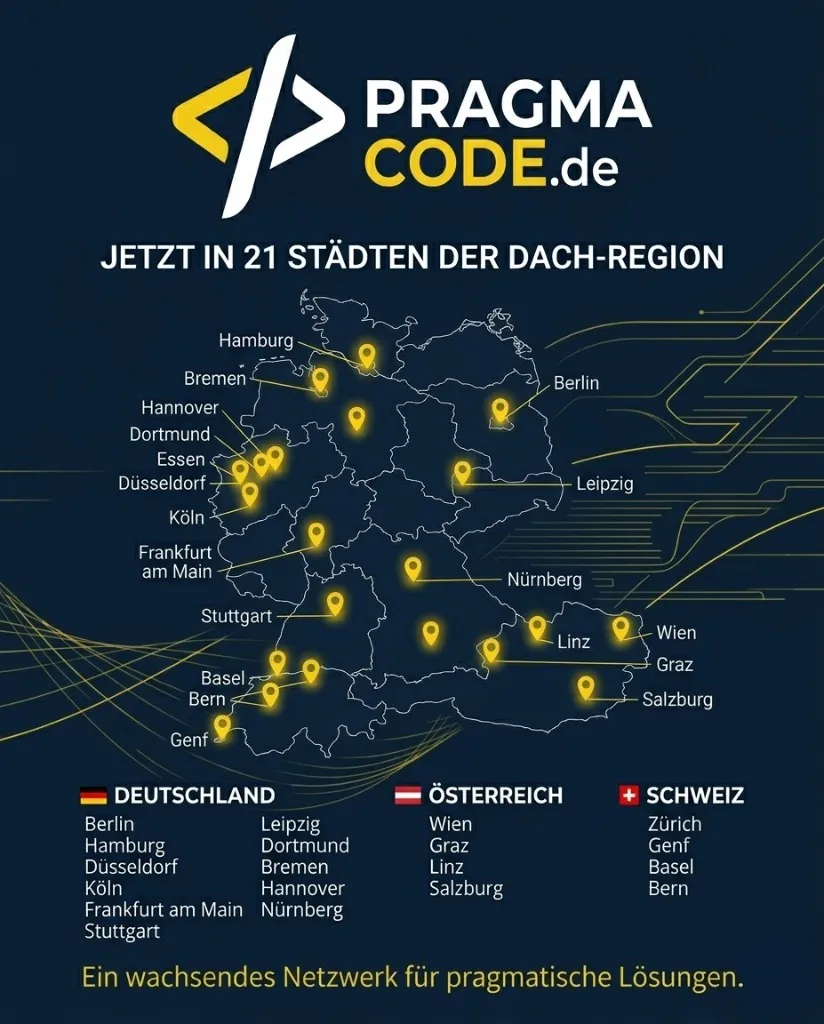
We are your digital partner – regionally anchored and successfully scaling across borders.
Have a vision?
Let's check together how we can make your idea take flight.
Book your free strategy call nowExtended Specialized Glossary
Grok 4.6
The flagship AI model by xAI specialized in autonomous long-running agents, software engineering, agentic RL, and interactive first-pass project synthesis.
xAI
The AI research and development company founded by Elon Musk, developing the Grok model family, Colossus supercomputing clusters, and agentic developer tooling.
Agentic RL
Reinforcement learning inside specialized interactive software and system environments that trains models to pursue multi-step goals and execute tools autonomously.
GDPVal-AA
A recognized benchmark measuring the economic value and operational solution quality of AI models across demanding knowledge work and enterprise tasks.
CursorBench
A specialized benchmark evaluating the capabilities of AI models within the Cursor IDE on real-world programming tasks.
Long-Running Agents
Autonomous AI agents capable of executing highly complex, multi-step tasks across dozens of steps, file operations, and feedback loops without context drift.
SFT Trajectory Regeneration
A training methodology where predecessor models generate synthetic solution and reasoning trajectories, which are filtered by automated checks and used for supervised fine-tuning.
Self-Verification Loops
Iterative internal validation mechanisms used by AI models to autonomously test intermediate steps, code syntax, and logical consistency before outputting results.