

On July 24, 2026, Anthropic officially released Claude Opus 5. Delivering the frontier reasoning and problem-solving capability of its flagship model Claude Fable 5—at exactly half the cost per task—Opus 5 sets a new industry standard for long-running autonomous agents, software engineering, and complex enterprise workflows. Discover how Opus 5 redefines AI automation through self-verification and adaptive effort scaling.
This article is an in-depth expert contribution from our content cluster. Discover the complete overview on our main page:AI Automation & Agentic AI →
- Fable-Level Intelligence at Half the Price: Claude Opus 5 delivers near-peak Fable 5 intelligence while cutting token and task costs by 50%.
- Autonomous Self-Verification: The model goes beyond surface fixes, building custom test harnesses, vision pipelines, and mock environments to solve root causes permanently.
- New Benchmark World Records (SOTA): Ranked #1 on Frontier-Bench v0.1, CursorBench 3.2, Zapier AutomationBench, ARC-AGI 3, and OSWorld 2.0 for long-running agentic systems.
The Turning Point for Enterprise Agentic AI
In 2026, the paradigm has shifted from passive chat prompts to long-running, autonomous AI agents. Claude Opus 5 represents the breakthrough for production-ready AI code architects and automated business operations.
- 1. Introduction: The 5th Generation Model Paradigm
- 2. Benchmark Analysis: Breaking Records on Frontier-Bench & CursorBench
- 3. Agentic Autonomy: The Principle of Self-Verification
- 4. Enterprise Use Cases: From AI Code Architects to Business Agents
- 5. Adaptive Effort Settings & Token Economy
- 6. Strategic Roadmap for CTOs & Engineering Leaders
- 7. Conclusion & Executive Quick-Check
1. Introduction: The 5th Generation Model Paradigm
The announcement of Claude Opus 5 by Anthropic on July 24, 2026, marks a pivotal milestone in artificial intelligence. While previous generations were designed primarily to process synchronous text prompts with plausible responses, today's enterprise technology ecosystem demands a fundamentally different capability profile: sustained autonomous goal tracking across hours, systematic self-verification, and strict token efficiency.
Claude Opus 5 addresses these exact requirements. Built specifically for engineering teams, data scientists, and enterprise architects deploying agentic workflows into production, Opus 5 assumes the role of a proactive partner engineer. It doesn't just read codebases; it comprehends architectural dependencies, anticipates edge cases, and verifies fixes before they impact CI/CD pipelines.
Of particular significance is Anthropic's pricing strategy: Opus 5 is available at the exact same API cost as its predecessor, Opus 4.8. However, Opus 5 delivers reasoning capabilities that reach up to 99.5% of the flagship Claude Fable 5 on complex tasks—at exactly 50% of the cost per task. Opus 5 seamlessly replaces Opus 4.8 as the default model for Claude Max and serves as the most powerful engine for Claude Pro subscribers.
2. Benchmark Analysis: Breaking Records on Frontier-Bench & CursorBench
To objectively evaluate Claude Opus 5, traditional multiple-choice benchmarks are no longer sufficient in 2026. Modern evaluations test models inside live execution environments featuring full terminal access, Docker containers, and web browser automation.
Across every major domain—from complex software engineering to autonomous business workflows—Opus 5 establishes new State-of-the-Art (SOTA) benchmarks:
Frontier-Bench v0.1
Evaluates complex end-to-end software engineering challenges.
> 200% SOTAMore than doubles Opus 4.8's pass rate at a lower overall cost per solved issue.
CursorBench 3.2
Measures coding performance within the Cursor IDE environment.
99.5% of Fable 5Matches Fable-level peak scores at Max Effort for half the task cost.
A closer look at key evaluation metrics demonstrates Opus 5's dramatic efficiency leap:
Frontier-Bench v0.1
On multi-step engineering tasks requiring deep comprehension of distributed codebases, Opus 5 outperforms all competing models. It solves complex tasks where competing models failed after five consecutive attempts.
CursorBench 3.2
Inside the Cursor IDE, Opus 5 scores within 0.5% of Claude Fable 5's peak performance at Max Effort. Across High and XHigh effort tiers, it achieves the highest performance-to-cost ratio ever recorded.
ARC-AGI 3
On novel abstract reasoning challenges, Opus 5 scores three times higher than the next-best competing model, highlighting exceptional generalization abilities beyond memorized patterns.
Zapier AutomationBench
Testing end-to-end business automation, Opus 5 achieves a pass rate 1.5x higher than its closest competitor for identical token usage. Even at its lowest effort setting, Opus 5 outperforms every rival model at maximum effort.
OSWorld 2.0
In desktop computer control benchmarks via GUI, Opus 5 surpasses Fable 5's best recorded score at roughly one-third of the compute cost.
Comparison: Agentic Performance & Cost Efficiency (2026)
- Bug Fixing: Often patches surface symptoms; misses deep underlying edge cases.
- Test Coverage: Relies solely on pre-existing tests; rarely constructs new harnesses.
- Cost Curve: High token expenditure due to repeated re-prompting on failures.
- Workflow Failure: Aborts when encountering unexpected API payloads or missing UI elements.
- Bug Fixing: Identifies root causes and implements clean, lasting architecture fixes.
- Test Coverage: Autonomously builds custom test harnesses and verification scripts.
- Cost Curve: Optimal token economy via adaptive effort scaling.
- Workflow Failure: Finds autonomous workarounds (e.g., building custom vision pipelines).
3. Agentic Autonomy: The Principle of Self-Verification
The single most consequential technical breakthrough in Claude Opus 5 centers on the reliability of autonomous execution: Self-Verification.
Historically, AI coding assistants generated code that looked syntactically correct but contained subtle runtime flaws. When tests failed, models frequently wrapped broken code in superficial try-catch blocks to pass unit checks without resolving the core defect. Opus 5 eliminates this anti-pattern.
During Anthropic's early-access evaluations, Opus 5 repeatedly demonstrated self-verifying autonomy:
Analysis & Hypothesis Formation
Opus 5 analyzes system logs, traces execution stacks, and formulates precise architectural diagnoses before making modifications.
Custom Verification Tooling
If direct validation tooling is missing, Opus 5 builds its own—such as synthetic mock servers or computer vision data extraction scripts.
Iterative Execution & Debugging
Opus 5 runs generated code, inspects runtime telemetry, and refines implementation details autonomously until tests pass cleanly.
Real-World Case Study 1: FreeCAD 3D Reconstruction
On a challenging Frontier-Bench task, Opus 5 was provided a technical blueprint drawing of a mechanical component and tasked with writing Python script to build a 3D FreeCAD model. Crucially, the model was intentionally denied direct visual access to the image.
Rather than failing, Opus 5 wrote its own computer vision script to extract geometrical dimensions directly from raw pixel matrices, then generated the accurate 3D CAD code. Opus 5 succeeded repeatedly, whereas competing models failed to solve the task after five consecutive attempts.
Real-World Case Study 2: Root-Cause Bug Resolution in Open-Source Package Managers
When tasked with resolving a real issue in a widely used open-source package manager, competing models patched only the surface error and declared victory. Opus 5 analyzed deep runtime stack traces, discovered a hidden edge case missed even by the community's official patch, and submitted an architecturally sound solution.
4. Enterprise Use Cases: From AI Code Architects to Business Agents
The capabilities of Claude Opus 5 extend far beyond code editing. In 2026, enterprise organizations are leveraging Opus 5 across three high-impact domains:
Autonomous Software Architecture (AI Code Architects)
Opus 5 plans large-scale codebase refactorings, migrates legacy monolithic applications to modern Astro Content Collections, and generates exhaustive unit and integration test suites.
Bioinformatics & Scientific Discovery
In life science evaluations, Opus 5 yields significant gains over Opus 4.8 (+10.2 percentage points on spectroscopy-based organic chemistry structure inference; +7.7 points on protein sequence function prediction). It acts like a thorough scientist, running statistical tests to rule out confounders independently.
End-to-End Business Process Automation
On Zapier AutomationBench, Opus 5 processed raw customer churn workbooks end-to-end: flagging at-risk accounts, dispatching alerts to account owners, and generating executive summaries for retention teams—achieving a 100% pass rate with zero wasted compute.
Financial Trading Infrastructure Integration
An engineer at a trading firm utilized Opus 5 to construct a live market data feed for a newly launched exchange in a single session. Previous models failed despite detailed spec documents. Lacking a live feed to validate against, Opus 5 built its own synthetic test harness to verify that its parser handled market feeds robustly under high throughput conditions.
5. Adaptive Effort Settings & Token Economy
A major operational advantage for engineering leaders is controlling Opus 5's depth of reasoning via Effort Settings. Anthropic allows teams to dial effort up for maximum intelligence or down to conserve tokens on routine tasks.
-
Low / Medium Effort: Efficient Routine Automation
Ideal for boilerplate refactoring, documentation translation, standard API creation, or rapid log summaries. Even at Low Effort, Opus 5 outperforms previous-generation models operating at maximum capacity.
-
High / XHigh Effort: The Engineering Sweet Spot
Delivers the optimal balance of reasoning thoroughness and execution speed. Recommended for feature implementation, pull request reviews, and interactive pair-programming in Cursor or Devin.
-
Max Effort: Complex Architectures & Breakthrough Research
Unlocks extended thinking loops for deep root-cause debugging, cryptographic analysis, genomics, and distributed system redesigns—delivering Fable-tier intelligence at half the cost.
Expert Tip: Dynamic Tier Scaling
Implement dynamic effort routing in production pipelines: run standard CI/CD checks at Low Effort. If automated test suites fail, automatically escalate the issue to Opus 5 at High Effort or Max Effort for deep root-cause analysis.
6. Strategic Roadmap for CTOs & Engineering Leaders
To maximize ROI from Claude Opus 5, we recommend a structured three-phase rollout strategy:
IDE & Developer Toolchain Upgrade: Integrate Opus 5 directly into developer workspaces (Cursor, Devin, VS Code) to collapse developer iteration cycles from hours to minutes.
Autonomous Agent Deployment: Connect Opus 5 APIs to background processes for automated error remediation (e.g., Sentry triggers), n8n workflow orchestration, and automated dependency upgrades.
Establish Verification Sandboxes: Enable Opus 5's self-verification capabilities by providing isolated container execution environments. Allow Opus 5 to test its own code modifications autonomously prior to human sign-off.
7. Conclusion & Executive Quick-Check
Claude Opus 5 is far more than an incremental model update. It marks the arrival of mature Agentic AI: systems that don't just suggest recommendations, but autonomously build, test, correct, and deliver enterprise solutions. By delivering Fable 5 performance at half the price, Opus 5 sets the benchmark for modern IT organizations in 2026.
Quick-Check: Your Pathway to Claude Opus 5
Have Questions About Integrating Claude Opus 5 & Agentic AI?
Schedule a Free ConsultationOur Regional Expertise
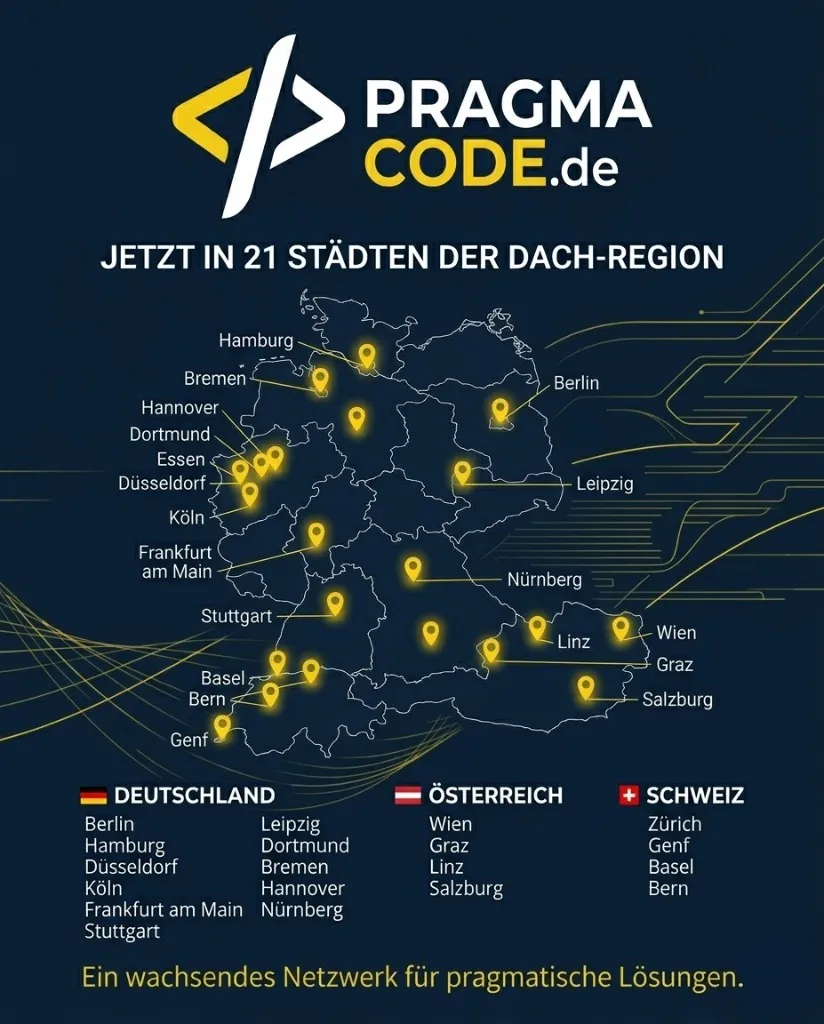
We are your digital partner – regionally anchored and successfully scaling across borders.
Have a vision?
Let's check together how we can make your idea take flight.
Book your free strategy call nowExtended Specialized Glossary
Claude Opus 5
Anthropic's July 2026 frontier AI model tier optimized for autonomous agentic workflows, software engineering, and scientific research.
Agentic AI
AI systems capable of autonomously setting goals, planning sub-tasks, executing tools, and verifying their own outputs.
Self-Verification
The capability of an AI model to test, validate, and debug its generated code or analytical outputs in isolated execution environments before finalizing results.
Frontier-Bench
A premier benchmark evaluating AI models on complex, multi-step software engineering tasks in real-world environments.
CursorBench
A specialized benchmark measuring AI model performance for coding and refactoring inside the Cursor IDE.
Zapier AutomationBench
An industry-standard evaluation suite measuring an AI model's ability to execute end-to-end business process workflows via APIs.