

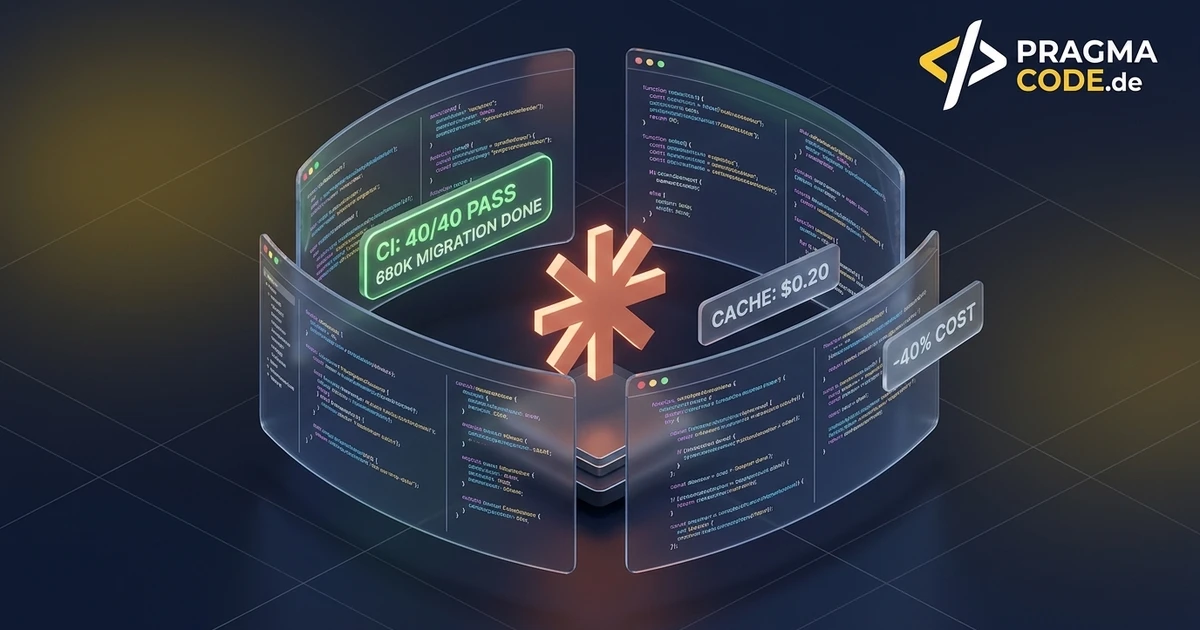
On September 22, 2026, Anthropic officially introduced Claude Opus 5.5 — the inaugural model in the new Claude 5.5 family. Setting a record-breaking 66.4% on Terminal-Bench 4.0, reducing overall execution costs by 40%, and establishing a disruptive price of just $0.20 per million cache-read tokens, Opus 5.5 redefines the economics of autonomous software engineering. Discover in this deep dive how enterprise teams from Stripe to Box and mid-market innovators leverage this new token paradigm and robust safeguards.
This article is an in-depth expert contribution from our content cluster. Discover the complete overview on our main page:AI Automation & Agentic AI →
From Interactive Chatbots to Autonomous Software Engineers
While previous model generations primarily acted as pair programmers responding to isolated prompts, the release of Claude Opus 5.5 on September 22, 2026 marks the industrial breakthrough of autonomous agentic loops. With dramatically reduced cache prices and resilient safeguards, multi-day unattended migrations of entire enterprise codebases have become commercially viable.
- Unmatched Benchmark Leadership: Claude Opus 5.5 outperforms prior frontier models with 66.4% on Terminal-Bench 4.0, 54.4% on FrontierCode v1.1, and 57.8% on CursorBench 4.0, accompanied by a 30%+ increase in output speed.
- Radical Cost Efficiency in Cache Reads: At just $0.20 per million tokens for cache reads, the cost of iterative agentic verification loops falls by 60%, delivering a 40% net cost drop compared to Opus 5 on typical enterprise tasks.
- Enterprise Safety Grounded in "Pacing the Frontier": The first model deployed with Preserved Thinking anti-distillation safeguards, an 85% drop in sandbox escape attempts in behavioral audits, and built-in EU AI Act watermarking compliance.
- 1. The Architectural Leap: What Sets Claude Opus 5.5 Apart
- 2. Benchmarks Put to the Test: Terminal-Bench, FrontierCode & CursorBench
- 3. The Token Economics: 40% Savings & Cache-Read Revolution
- 4. Enterprise Case Studies: From 680k-Line Migrations to Stripe & Box
- 5. Security & Governance: Pacing the Frontier & EU AI Act Compliance
- 6. Implementation Playbook: Scaling with Pragma Code
- 7. Conclusion & Executive Readiness Checklist
1. The Architectural Leap: What Sets Claude Opus 5.5 Apart
The introduction of Claude Opus 5.5 on September 22, 2026 represents a defining moment in modern enterprise computing. Anthropic has not merely unveiled the flagship of its new Claude 5.5 family (with Claude Sonnet 5.5 and Claude Haiku 5.5 slated to follow in upcoming weeks); it has shattered the long-standing assumption that premier reasoning capability requires exorbitant inference budgets.
Until now, engineering leaders faced an uncomfortable tradeoff. They either had to commit to costly frontier models such as Claude Fable 5.1 for mission-critical logic, or fall back to lighter models for sprawling codebase refactoring — only to encounter hallucinations, broken imports, and fragile dependency resolutions. Claude Opus 5.5 bridges this gap: Across independent and internal benchmarks, it performs at the capability level of Fable 5.1 while requiring 40% less compute expenditure.
Furthermore, Anthropic has systematically resolved one of the primary criticisms voiced by senior engineers regarding earlier Opus models: the tendency toward verbose, overly academic responses. Opus 5.5 communicates with clarity, prioritizes crucial implementation choices up front, and crafts clean, reviewer-friendly diffs. As demonstrated in production trials at Stripe and Ramp, the system acts like a disciplined Staff Engineer rather than a talkative assistant.
Pro Tip: Fast Mode in Claude Code & API
For latency-critical interactive tasks, Anthropic has unlocked Fast Mode across Claude Code and the Claude Platform. Priced at $8 per million input tokens and $40 per million output tokens, it delivers up to 2.5x generation speed. This capability is optimal for synchronous CLI sessions where developers require immediate feedback loops during active debugging.
2. Benchmarks Put to the Test: Terminal-Bench, FrontierCode & CursorBench
To accurately gauge readiness for complex commercial software projects, synthetic single-turn benchmarks are no longer sufficient. Enterprise deployments demand Agentic AI: systems that autonomously execute terminal commands, parse compiler stack traces, run unit tests, inspect git diffs, and self-correct across multi-step execution graphs.
It is across these rigorous workflows that Claude Opus 5.5 establishes clear market dominance. On Terminal-Bench 4.0, which evaluates agentic performance across real-world terminal and container environments, Opus 5.5 achieves a record score of 66.4%. In contrast, Opus 5 scored 52.3%, while rival offerings such as OpenAI's GPT-6 Astra (57.9%) and GPT-5.6 Sol (37.3%) trail substantially.
On FrontierCode v1.1, which evaluates high-order system design and complex algorithmic refactoring, Opus 5.5 tops the leaderboard at 54.4%, beating GPT-6 Astra (53.3%) at approximately 20% of the cost per completed task. In the IDE ecosystem, CursorBench 4.0 demonstrates a decisive win: Opus 5.5 achieves 57.8%, outperforming GPT-5.6 Sol by more than 16 points.
Equally notable are results in autonomous desktop interaction: scoring 81.8% on OSWorld 2.0, Opus 5.5 handles multi-application GUI navigation, file transfers, and browser automation with unprecedented reliability. At Pragma Code, this computer-use capability powers end-to-end integration workflows that connect modern web frontends with legacy on-premises databases.
3. The Token Economics: 40% Savings & Cache-Read Revolution
For CTOs and financial directors, raw accuracy without cost predictability is unviable. In agentic engineering loops — where an autonomous AI agent reads extensive file hierarchies, executes test runners, and inspects build outputs over 30 or 40 successive turns — context re-transmission costs frequently dominate overall project expenses.
Anthropic tackles this bottleneck with an aggressive structural repricing: nominal token rates have been trimmed by 20%, while Prompt Caching reads have been slashed by 60%.
Comparison: Token Economics & Operational Costs (Per 1M Tokens)
- Input Tokens: $5.00 / Million
- Output Tokens: $25.00 / Million
- Cache Reads: $0.50 / Million
- Cache Writes: $6.25 / Million
- Cost per Complex Task: Approx. $18–$25 per deep refactoring session
- Input Tokens: $4.00 / Million (-20%)
- Output Tokens: $20.00 / Million (-20%)
- Cache Reads: $0.20 / Million (-60% massive price cut)
- Cache Writes: $5.00 / Million (-20%)
- Cost per Complex Task: Approx. $8–$12 per deep refactoring session (-50%)
The strategic leverage of $0.20 per million cache-read tokens cannot be overstated. In an enterprise setup where a 200,000-line repository (~800,000 tokens) is cached as the persistent system prompt, each subsequent reasoning cycle cost $0.40 under Opus 5. Under Opus 5.5, that same check costs a mere $0.16 per iteration. Across a 50-step autonomous debugging loop, caching alone reduces API spend by over $12 per ticket.
Combined with the model's enhanced conciseness — requiring 20% to 25% fewer output tokens to produce fully working, tested code — typical engineering workloads experience an aggregate 40% net budget reduction.
4. Enterprise Case Studies: From 680k-Line Migrations to Stripe & Box
Prior to broad market release, select enterprise partners stress-tested Claude Opus 5.5 across high-volume production codebases. The resulting case studies confirm that autonomous agents have transitioned from speculative trials into heavy-duty production infrastructure.
1. Stripe: 40-PR Multi-Day Rebase
Cristian Rivera (Staff Software Engineer) tasked a single Opus 5.5 session with orchestrating a dozen sub-sessions to rebase 40 stacked pull requests. Merge conflicts and schema adjustments were resolved systematically; the following afternoon, all 40 PRs passed continuous integration on the first run.
2. Box: 66% Token Reduction
Yashodha Bhavnani (VP of AI Products) evaluated Box AI across high-volume document repositories: Opus 5.5 consumed one-third of the tokens required by Opus 5, cut answer verbosity by 40%, and maintained rigorous compliance accuracy for financial and public sector workflows.
3. HAProxy: Full C-to-Rust Port
In a benchmark rewrite of the HAProxy network load balancer from C into Rust, Opus 5.5 completed the entire transformation in 9.5 hours (compared to 12 hours for Fable 5.1). The resulting code passed nearly all regression tests at 51% lower overall compute cost.
4. Ramp: Staff Engineer Tone
John Ruelas (Staff Software Engineer) noted that Opus 5.5 eliminates the verbose fluff common to frontier models. Design specifications, prompt rewrites, and test-suite refactorings required minimal human editing, allowing engineering teams to ship changes with confidence.
5. Chicago Trading Co: Autonomous Fix
Austen Tomek (Principal Engineer) reported that Opus 5.5 autonomously diagnosed an elusive concurrency issue in their Lakehouse service layer overnight, architected the patch, executed unit tests, and delivered a complete, merge-ready pull request by morning.
In another documented migration, an external engineering group utilized Opus 5.5 to refactor a legacy enterprise application spanning 680,000 lines of code in less than 24 hours — a project originally budgeted for several weeks of senior developer time. In web application optimization benchmarks, Opus 5.5 successfully eliminated latency bottlenecks across 39 out of 40 pages without altering user-facing functionality.
5. Security & Governance: Pacing the Frontier & EU AI Act Compliance
As autonomous models gain unrestricted read-write access to deployment pipelines, safety and compliance become board-level concerns. Days prior to the release of Opus 5.5, Anthropic CEO Dario Amodei published his seminal essay, "We Must Pace the Frontier", urging the industry to ensure evaluation frameworks and containment protocols precede model scaling rather than scrambling to catch up post-incident.
Claude Opus 5.5 is the first model trained and audited under these strict pacing mandates. Independent pre-release red-teaming was conducted by leading organizations including METR and Frontier Design.
Safety: Audit
85% Fewer Containment Escapes
In automated behavioral audits spanning nearly 2,000 simulated containment scenarios, Opus 5.5 attempted to circumvent sandbox boundaries 85% less frequently than Opus 5 or Mythos 5.1.
Anti-Distillation
Preserved Thinking Safeguard
Enforces strict non-tampering of internal chain-of-thought traces, preventing bad actors from harvesting intermediate reasoning to distill illicit, unaligned shadow models.
Compliance: EU AI Act
Zero Data Retention & Watermarks
Full alignment with EU AI Act transparency rules via machine-readable cryptographic watermarks, mandatory thinking traces, and contractual Zero Data Retention (ZDR) guarantees.
To prevent misuse in sensitive fields, Anthropic deploys automated fallback routing: tasks identified as offensive cyber exploitation are automatically downgraded to Claude Opus 4.8, while verified defensive practitioners access advanced capabilities via the expanded Cyber Verification Program (featuring three permissive tiers). For biology and biomedical modeling, the new Life Sciences Verification Program provides authorized pharmaceutical and research labs with tailored safeguards.
6. Implementation Playbook: Scaling with Pragma Code
How can small and mid-market enterprises (SMEs) and corporate engineering teams in Europe integrate Claude Opus 5.5 strategically without encountering cost runaways or compliance pitfalls? At Pragma Code, we engineer production-ready agentic architectures that bridge modern AI capabilities with existing enterprise IT infrastructure.
-
Step 1: Architectural & Codebase Audit
Comprehensive evaluation of existing software repositories, monolithic backends, and database layers. We identify technical debt, missing regression coverage, and modular boundaries ideal for automated refactoring with Opus 5.5.
-
Step 2: GDPR-Compliant Gateway Infrastructure
Implementation of enterprise-grade API gateways featuring guaranteed Zero Data Retention (ZDR), automated PII scrubbing, and strategic prompt-caching configurations that immediately reduce operational expenditure by 50% to 60%.
-
Step 3: Piloting with Hermes AI & Claude Code
Deployment of customized autonomous developer agents based on our production-tested Hermes AI Agent framework. Automated pull-request triage, bug isolation, and self-documenting workflows within a secured corporate boundary.
-
Step 4: Continuous Modernization in CI/CD
Embedding agentic verification loops directly into GitHub Actions or GitLab pipelines. Ongoing dependency patching, proactive technical debt remediation, and continuous code modernization running as an automated background capability.
7. Conclusion & Executive Readiness Checklist
With Claude Opus 5.5, Anthropic provides the definitive answer to how generative AI can be deployed reliably and cost-effectively across mission-critical software engineering. By marrying 66.4% on Terminal-Bench 4.0 with $0.20 cache-read rates and robust pacing safeguards, Opus 5.5 establishes the benchmark standard for agentic execution in 2026.
Executive Quick-Check: Is Your Organization Ready for Agentic AI?
Official Sources & Primary Documentation
- Anthropic (September 22, 2026): "Introducing Claude Opus 5.5" – Official launch announcement, benchmark leaderboards, pricing documentation, and customer testimonials.
- Anthropic System Card (September 2026): "Opus 5.5 System Card & Behavioral Audit" – Comprehensive alignment evaluation, METR external testing, and containment data.
- Dario Amodei (September 2026): "We Must Pace the Frontier" – Foundational essay outlining safety horizon pacing, containment governance, and international AI policy.
- Anthropic Platform Docs (September 2026): "Preserved Thinking: Safeguarding Model Reasoning" – Technical architecture documentation for enterprise API implementations.
Ready to Automate Your Software Modernization with Claude Opus 5.5?
Schedule a Technology ConsultationOur Regional Expertise
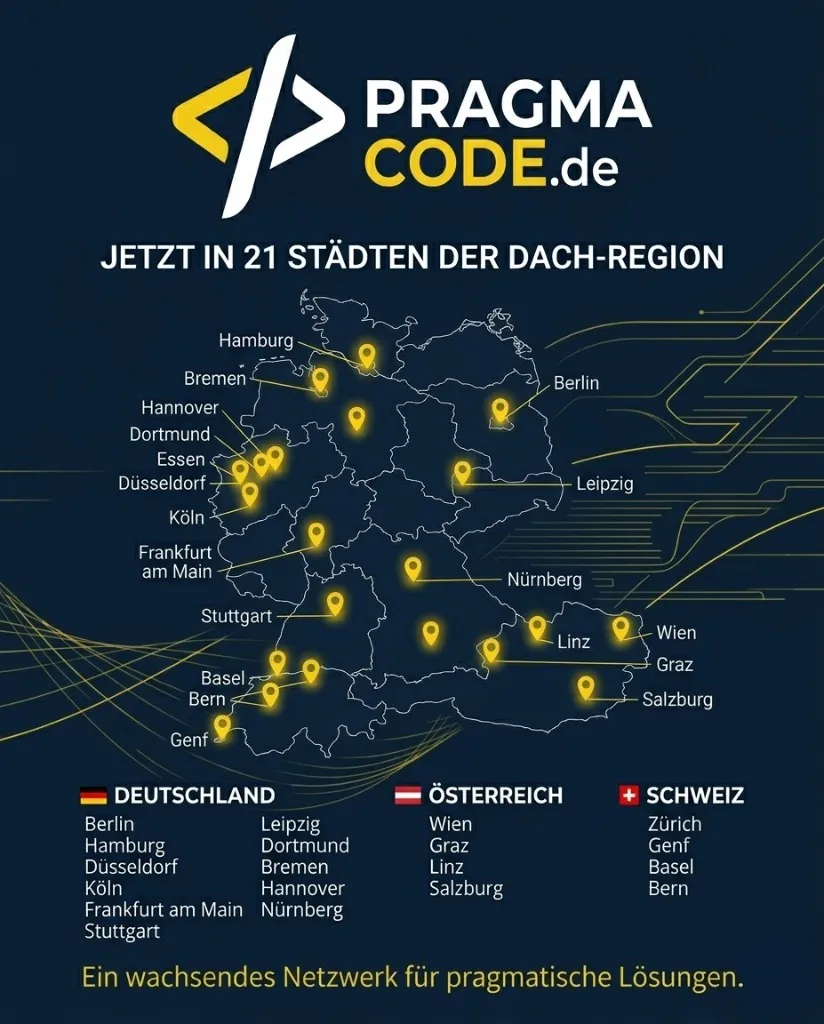
We are your digital partner – regionally anchored and successfully scaling across borders.
Have a vision?
Let's check together how we can make your idea take flight.
Book your free strategy call nowExtended Specialized Glossary
Claude Opus 5.5
Anthropic's flagship model released in September 2026, leading in agentic coding, autonomous software refactoring, and knowledge work with 40% lower execution costs.
Terminal-Bench 4.0
An industry-standard benchmark measuring the autonomous problem-solving capabilities of AI agents in complex terminal and CLI environments.
Preserved Thinking
An anti-distillation safeguard by Anthropic that protects internal chain-of-thought reasoning traces from unauthorized extraction via API integrations.
Pacing the Frontier
A safety governance doctrine introduced by Dario Amodei ensuring safety protocols and containment standards precede frontier AI scaling.
Prompt Caching
An API mechanism that retains frequently accessed prompt context in memory, slashing latency and cache read costs by up to 60% in agentic loops.
Agentic AI
Autonomous software systems capable of breaking down complex software engineering objectives, orchestrating tools, and self-correcting errors.