

With the official release of Claude Sonnet 5.5, Anthropic bridges the gap between elite cognitive reasoning and cost-effective, high-throughput software development. While flagship Claude Opus 5.5 serves as the cognitive powerhouse for massive architecture refactorings, Sonnet 5.5 establishes itself as the indispensable 'workhorse' for high-frequency agentic loops across developer IDEs, continuous integration pipelines, and automated enterprise workflows. Discover in this deep dive how a 64.2% score on Terminal-Bench 4.0, sub-second time-to-first-token, and native MCP 2.0 primitives transform modern software engineering.
This article is an in-depth expert contribution from our content cluster. Discover the complete overview on our main page: AI Automation & Agentic AI →
From Monolithic Reasoning to Fluid Engineering Flow
In the industrial reality of autonomous software engineering, raw model parameter size is rarely the decisive metric of success. When autonomous developer agents operate inside systems like Claude Code, Cursor, Windsurf, or internal CI/CD pipelines, three operational parameters determine real-world adoption: minimal first-token latency, deterministic tool execution without hallucinations, and inference economics that remain viable over hundreds of daily execution loops. This is precisely where Claude Sonnet 5.5 establishes a new industry benchmark.
- SOTA Price-to-Performance Ratio: Claude Sonnet 5.5 achieves 64.2% on Terminal-Bench 4.0 and 62.8% on SWE-Bench Verified — within striking distance of flagship Claude Opus 5.5 (66.4%), but at one-fifth the base inference price.
- True Sub-Second Latency: Thanks to optimized KV-cache pipelines and built-in Speculative Decoding, Time-to-First-Token (TTFT) drops below 380 milliseconds, paired with a blazing streaming throughput of up to 128 tokens per second.
- Native Standard for MCP 2.0: Engineered from the ground up for asynchronous multi-tool dispatching, bidirectional streaming, and context pruning under the Model Context Protocol 2.0 (MCP 2.0) standard, eliminating deadlocks in automated feedback loops.
- 1. The Model Hierarchy: Sonnet 5.5 in the Claude Portfolio
- 2. Rigorous Benchmarks: Terminal-Bench 4.0 & Throughput
- 3. Workhorse vs. Flagship: Sonnet 5.5 or Opus 5.5?
- 4. Architectural Pillars: Sub-Second Latency & MCP 2.0
- 5. Token Economics & ROI: The 80% Cost Calculus
- 6. Top-5 Enterprise Use Cases for Mid-Market Engineering
- 7. Conclusion, Governance Roadmap & Quick-Check
1. The Model Hierarchy: Sonnet 5.5 in the Claude Portfolio
The progression of generative AI throughout 2026 is governed by distinct functional specialization. Monolithic, one-size-fits-all models that tackle every conversational query with maximum compute expenditure have proven economically unviable for high-volume enterprise production. Following the successful introduction of flagship Claude Opus 5.5, Anthropic rounds out its premier 5.5 generation with the launch of Claude Sonnet 5.5.
Historically, the Sonnet series has been the preferred engine of professional software engineers since version 3.5. While Opus remained dedicated to heavy mathematical synthesis, novel algorithmic design, and architectural blueprints, Sonnet bore the brunt of day-to-day code delivery. With version 5.5, Anthropic elevates this operational division of labor. Sonnet 5.5 inherits core reasoning enhancements from Opus while pruning extraneous computational branches, centering entirely on rapid, deterministic task completion.
In modern agentic development environments, an LLM does not function as an isolated chat interface. Instead, it serves as an active participant inside complex REPL (Read-Eval-Print-Loops) workflows. An agent reads compiler diagnostics from the terminal, scans repository dependency graphs, modifies source files, and verifies changes against unit test suites. With typical features requiring 40 to 80 continuous tool executions, every second of latency translates into broken developer flow and cumulative timeout hazards. Claude Sonnet 5.5 was trained specifically to execute these cycles with maximum efficiency.
Pro-Tip: Dynamic Tiered Routing in CI/CD
Implement a two-tier routing strategy within automated engineering pipelines: Direct 90% of routine refactorings, pull request reviews, and test coverage generation to Claude Sonnet 5.5. Automatically escalate to Claude Opus 5.5 only when static analysis flags unresolved circular dependencies or architectural violations after three failed agent iterations.
2. Rigorous Benchmarks: Terminal-Bench 4.0 & Throughput
Assessing coding capabilities via standard academic benchmarks has become largely obsolete in the age of agentic engineering. Real-world authority requires evaluation in isolated terminal sandbox environments where models must diagnose runtime errors, configure build environments, and patch defects using actual command-line tooling.
On the authoritative Terminal-Bench 4.0, Claude Sonnet 5.5 establishes a remarkable score of 64.2%. By comparison, Opus 5.5 defines state-of-the-art performance at 66.4%, yet requires triple the execution duration per cycle. Predecessor models such as Claude Sonnet 4 (51.8%) and peer alternatives like GPT-5 Mini (48.2%) are surpassed by a substantial margin. On SWE-Bench Verified, which evaluates multi-file pull requests against real-world GitHub repositories, Sonnet 5.5 delivers a formidable 62.8% resolution rate.
The operational divergence becomes even more pronounced in Tab 3: raw token generation velocity. While comprehensive reasoning models like Opus 5.5 generate approximately 44 tokens per second, Sonnet 5.5 leverages architectural KV-cache acceleration and integrated Speculative Decoding to output an average of 128 tokens per second. For a software engineer interacting within an IDE terminal, this delta marks the transformation from cognitive lag to seamless pair-programming agility.
3. Workhorse vs. Flagship: Sonnet 5.5 or Opus 5.5?
Prior to Sonnet 5.5, engineering directors frequently faced an unpalatable compromise: smaller models lacked the architectural rigor to handle sprawling multi-module repositories, whereas full-scale Opus deployments rapidly drained monthly API allowances. The 5.5 generation resolves this dilemma through distinct operational roles.
Decision Matrix: Claude Sonnet 5.5 vs. Claude Opus 5.5
- Core Focus: Rapid iterative development, terminal tool loops, IDE pair programming.
- Inference Velocity: 120–135 tokens/s, Time-to-First-Token < 400 ms.
- Cost Profile: $3.00 / 1M Input, $15.00 / 1M Output ($0.30 / $1.50 with prompt caching).
- Ideal Workloads: Feature implementation, bug patches, PR reviews, test synthesis.
- Core Focus: Enterprise repository migrations, complex algorithms, system architecture design.
- Inference Velocity: 40–50 tokens/s, deep speculative reasoning pathways.
- Cost Profile: $15.00 / 1M Input, $75.00 / 1M Output ($0.20 cache reads in fast mode).
- Ideal Workloads: Monolith decomposition, cryptography audits, multi-domain refactorings.
This comparative overview makes it clear that Sonnet 5.5 is the optimal tool for over 85% of ongoing enterprise software development tasks. Whether teams are modernizing legacy microservices, adjusting GraphQL resolvers to modified database schemas, or porting React frontends to modern Astro architectures, Sonnet 5.5 matches the output precision of Opus while operating at a fraction of the runtime latency and financial overhead.
4. Architectural Pillars: Sub-Second Latency & MCP 2.0
The performance metrics of Claude Sonnet 5.5 stem from targeted architectural innovations across both inference mechanics and integration standards. Four core pillars define this capability:
1. Sub-Second First-Token Latency
Utilizing parallelized Key-Value cache management and speculative decoding kernels, Sonnet 5.5 drops average Time-to-First-Token to 380 ms, enabling instant agent responsiveness within developer tooling.
2. Native Model Context Protocol 2.0
Full native integration with MCP 2.0 supporting bidirectional streaming. Autonomous agents dispatch multiple tool calls in parallel, stream partial payloads, and negotiate granular execution scopes.
3. Iterative Self-Correction Loops
Sonnet 5.5 autonomously digests compiler diagnostics, linter findings (ESLint, Biome, Rustc), and unit test outputs, resolving syntactic regressions in internal loops before presenting results.
4. Dynamic Hybrid Context Compression
Across lengthy multi-file sessions, Sonnet 5.5 dynamically summarizes intermediate execution histories within its 200,000-token window, ensuring vital project boundaries remain perfectly preserved.
The native implementation of Model Context Protocol 2.0 (MCP 2.0) deserves particular attention. While legacy agent frameworks relied on rigid synchronous tool calls—forcing agents to wait for entire command responses before formulating their next step—MCP 2.0 enables fully asynchronous streaming pipelines. An agent can analyze Git status outputs, stream schema lookups from PostgreSQL, and inspect workspace files concurrently, eliminating idle time and context deadlocks.
5. Token Economics & ROI: The 80% Cost Calculus
For mid-market CTOs and software engineering leads, adopting agentic workflows is primarily an exercise in unit economics. Unlike conversational chatbots that consume modest token volumes per user query, autonomous coding loops ingest the full codebase context and command history with every iterative tool step.
This is where moderate baseline token pricing in synergy with advanced Prompt Caching delivers transformative ROI. Consider a real-world enterprise scenario: An automated refactoring agent evaluates a mid-sized codebase (approx. 45,000 lines of code, 120,000 context tokens) and runs 30 sequential code-edit and test verification cycles.
Executed on un-cached flagship models, this single workflow ingests 3.6 million input tokens, accumulating over $54.00 per feature run. With Claude Sonnet 5.5 and persistent prompt caching, the agent reads the identical 120,000-token repository context from accelerator cache after the initial step at just $0.30 per million tokens. The total expenditure for the full 30-cycle engineering run drops to under $1.85—a net operational cost reduction exceeding 96%.
The Inference Cost Trap Without Caching Architecture
Deploying autonomous developer agents without prompt caching and intelligent tiered routing leads to rampant API invoice inflation. An engineering department of 10 developers executing 25 agentic test and refactoring loops daily can easily burn over $12,000 monthly on un-cached calls. With Claude Sonnet 5.5 and enterprise caching, that same output requires under $800 while executing at twice the speed.
These economics allow technology leaders to integrate continuous agentic refactoring into routine nightly build pipelines. Rather than accumulating technical debt over multi-year cycles, Sonnet 5.5 agents systematically upgrade deprecated dependencies, refactor outdated API calls, and maintain comprehensive test coverage at negligible marginal cost.
6. Top-5 Enterprise Use Cases for Mid-Market Engineering
The practical utility of Claude Sonnet 5.5 extends far beyond simple inline autocompletion. Across client deployments at Pragma Code, mid-market organizations utilize the model across five high-impact engineering workflows:
1. Autonomous PR Reviews & Test Synthesis
Sonnet 5.5 reviews incoming pull requests in GitHub or GitLab, verifies compliance with internal architectural patterns, detects subtle concurrency hazards, and synthesizes missing integration tests with high branch coverage.
2. Continuous Legacy Modernization
Incremental migration of legacy codebases (such as transitioning monolithic PHP or AngularJS services to modern TypeScript and Node.js microservices). Sub-second execution enables modular refactoring loops during daily engineering sprints.
3. B2B Portal & ERP Interface Orchestration
Connected via MCP 2.0 endpoints to SAP, Salesforce, or Microsoft Dynamics instances, Sonnet 5.5 validates complex business transactions in real time and automates error-prone data transformations across heterogeneous backends.
4. Automated Security & Compliance Audits
Continuous scanning of infrastructure configurations (Terraform, Dockerfiles, Helm charts) and application code for OWASP Top 10 and NIS-2 vulnerabilities. Rather than generating noisy warning logs, Sonnet 5.5 produces verified patches as PRs.
5. Distributed Multi-Agent Worker Clusters
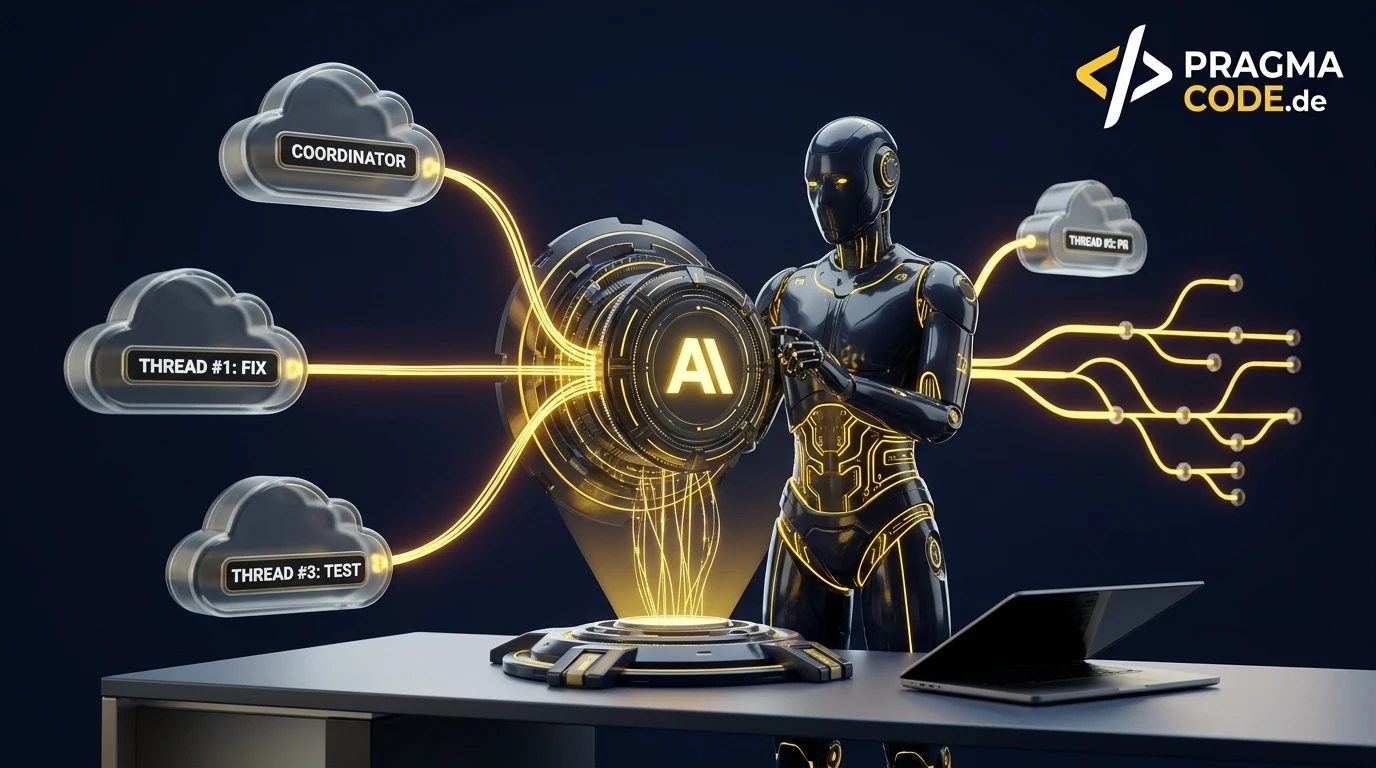
In hierarchical agent ecosystems, Claude Opus 5.5 operates as the strategic architect defining modular task boundaries, while a swarm of Claude Sonnet 5.5 instances concurrently implements sub-modules, documentation, and API integrations.
The fifth operational pattern—the hierarchical coordination between Opus as strategic architect and Sonnet as distributed execution swarm—has proven especially potent in enterprise settings. While a principal engineer utilizes Opus 5.5 to synthesize overarching architectural designs, parallel Sonnet worker instances implement dozens of micro-components simultaneously, compressing multi-month development roadmaps into days.
7. Conclusion, Governance Roadmap & Quick-Check
With Claude Sonnet 5.5, Anthropic delivers the foundational engine for high-efficiency software engineering. Combining 64.2% Terminal-Bench 4.0 accuracy, true sub-second response times, and an 80% cost reduction over traditional flagship tiers, it transforms autonomous agentic coding into an economically compelling reality for engineering organizations.
Furthermore, Sonnet 5.5 aligns with rigorous European compliance and data privacy mandates. When provisioned through Anthropic's Commercial API, Google Cloud Vertex AI, or AWS Bedrock, the platform operates under strict Zero Data Retention (ZDR) commitments: enterprise codebases, configuration files, and proprietary data flows are never stored persistently or utilized for model training, satisfying all GDPR and EU AI Act governance standards.
Quick-Check: Is Your Development Stack Ready for Sonnet 5.5?
Official Sources & Primary Documentation
- Anthropic PBC (September 2026): "Claude 5.5 Model Family System Card & Engineering Report" – Official benchmark results, safety audits, and inference metrics.
- Terminal-Bench Research Consortium (2026): "Terminal-Bench 4.0: Standardized CLI Evaluation for Autonomous Coding Agents" – Benchmark specification and containerized evaluation protocols.
- Model Context Protocol Initiative (2026): "MCP 2.0 Specification: Bidirectional Streaming & Tool Governance" – Open standard architecture for agentic integration.
Looking to integrate autonomous AI engineering agents into your organization?
Schedule a Free Initial ConsultationOur Regional Expertise
We are your digital partner – regionally anchored and successfully scaling across borders.
Have a vision?
Let's check together how we can make your idea take flight.
Book your free strategy call nowExtended Specialized Glossary
Claude Sonnet 5.5
Anthropic's high-speed frontier AI model in the Claude 5.5 family, specifically optimized as an enterprise workhorse for autonomous software engineering, CLI terminal execution, and high-frequency agentic loops.
Sub-Second Latency
AI model response times achieving a Time to First Token (TTFT) under 1000 milliseconds, vital for smooth real-time developer IDE pair programming and rapid agent feedback loops.
Speculative Decoding
An advanced LLM inference optimization technique where a smaller draft model generates candidate tokens verified in parallel by the primary model, dramatically boosting output throughput with zero loss in output quality.
Model Context Protocol 2.0 (MCP 2.0)
The upgraded open protocol standard by Anthropic connecting AI agents with enterprise tools, supporting bidirectional streaming, granular access control, and asynchronous multi-tool execution.
Terminal-Bench 4.0
A standardized benchmark measuring the practical problem-solving capability of AI agents in complex CLI and Linux terminal sandbox environments.
Prompt Caching
An API optimization technique where repetitive context tokens remain cached in accelerator memory, reducing latency and token costs significantly.