


In November 2026, Anthropic and OpenAI ignited the next stage of agentic software engineering: With Claude Fable 5.2 (alongside its security-hardened twin Mythos 5.2) and GPT-6.2 Astra, engineering leaders are presented with two heavyweight frontier systems designed for multi-day development loops, massive codebase migrations, and autonomous terminal execution. In this deep dive, we compare both contenders across rigorous benchmarks including Terminal-Bench 4.1 and SWE-bench Pro, dissect their token economics with 1-million-token contexts, and reveal how engineering teams deploy them productively.
This article is an in-depth expert contribution from our content cluster. Discover the complete overview on our main page: AI Automation & Agentic AI →
- Historic Benchmark Milestone: Claude Fable 5.2 establishes record-breaking results with 93.0% on SWE-bench Pro and 67.6% on Terminal-Bench 4.1 in autonomous software engineering, outperforming GPT-6.2 Astra (60.3% Terminal-Bench) on complex codebase migrations.
- Architectural Edge for Long-Horizon Workflows: Featuring a 1,000,000-token context window and 128,000-token maximum output, Fable 5.2 sustains agentic loops over hours and days, whereas OpenAI focuses Astra on visual computer-use and desktop automation.
- Pricing & Fast Mode: Fable 5.2 starts at $8.00 / $40.00 per million tokens. For latency-critical CI/CD pipelines, Anthropic's new Fast Mode accelerates token throughput by 2.5× ($16.00 / $80.00).
- Dual-Tier Safety Architecture: While Fable 5.2 is broadly available via API and cloud platforms, Anthropic restricts its identically powered counterpart Mythos 5.2 exclusively to accredited organizations enrolled in the Cyber Verification Program.
For select Anthropic Pro, Team, and Enterprise accounts, Fable 5.2 has been made available for your longest and toughest coding tasks. This preview access is included directly in your plan through mid-November 2026.
Standout Developer Feature – The Fable Reset in Claude Code: While Fable 5.2 draws down usage quotas faster than Opus 5.5 due to deep reasoning loops, Anthropic introduced a remarkably developer-centric feature in the Claude Code app: The “Fable Reset” button. Developers can manually reset their 5-hour limit and Fable limit at any point—and this week’s Fable usage is completely exempt from your weekly usage limits. This allows teams to benchmark and stress-test the model on demanding enterprise codebases with zero risk of running out of weekly quota.
- 1. The Paradigm Shift: Why Fable 5.2 and Astra 6.2 Redefine Software Engineering
- 2. Architectural Comparison: Mythos Class vs. Astra Engine
- 3. Benchmark Deep Dive: Terminal-Bench 4.1, SWE-bench Pro & FrontierCode
- 4. Token Economics, Fast Mode & TCO: Real-World ROI Analysis
- 5. Enterprise Governance & Compliance: Fable 5.2 vs. Mythos 5.2
- 6. Implementation Playbook for Engineering Teams: Migration with Pragma Code
- 7. Conclusion & Decision Compass for Technology Leaders
1. The Paradigm Shift: Why Fable 5.2 and Astra 6.2 Redefine Software Engineering
Software engineering is undergoing its most radical transformation since the advent of distributed version control. Throughout 2024 and 2025, engineering organizations predominantly treated large language models as interactive autocomplete assistants within the IDE. As we move through late 2026, we have formally entered the era of fully autonomous agentic engineering. AI models are no longer prompted to implement isolated TypeScript helper functions; they now autonomously audit multi-service repositories, diagnose failing end-to-end integration test suites in remote Linux terminals, execute commands inside Docker containers, and submit clean, production-ready pull requests after hours of sustained reasoning.
With Claude Fable 5.2 and GPT-6.2 Astra, two fundamentally divergent engineering philosophies confront each other. Anthropic's Mythos class centers on relentless reasoning depth, deterministic command-line execution, and an expansive 1-million-token memory. OpenAI, conversely, equips Astra 6.2 with state-of-the-art visual Computer Use, allowing the autonomous agent to operate not only CLI tools but also web browsers, native desktop GUIs, and graphical debugging suites just like a human engineer.
For engineering directors, CTOs, and enterprise architects, the evaluation has long shifted beyond incremental single-turn benchmark scores. The critical business question is clear: Which model infrastructure accelerates development roadmaps from months into days while preserving airtight security boundaries and predictable token expenses?
Autonomous Terminal Loops
Agents execute complex shell routines, package management, and test suites in isolated sandboxes, reacting dynamically to unexpected runtime traces.
Always-On Adaptive Thinking
Variable thinking budgets allow models to reply in milliseconds for routine refactoring while spending minutes exploring deep architectural hypotheses.
1M Persistent Context Caching
Entire enterprise codebases remain in active GPU cache over extended sessions, collapsing repetitive token retrieval expenses by over 80%.
2. Architectural Comparison: Mythos Class vs. Astra Engine
To accurately assess real-world development performance, understanding the architectural decisions underpinning both systems is essential. Anthropic and OpenAI have prioritized distinct layers of the modern engineering workflow.
Anthropic's Mythos Class: Endurance for Monolithic Repositories
With the release of Claude Fable 5.2, Anthropic introduces the Mythos class, an architectural tier specifically tuned for persistent, long-horizon software engineering and scientific computing. Three core specifications define this system:
1,000,000 Tokens
Developers can inject approximately 750,000 lines of source code, schemas, and historical log dumps into a single session. Retrieval precision remains virtually 100% across the full span without context dilution.
128,000 Tokens
No more truncated responses: Fable 5.2 synthesizes complete microservices, multi-tiered database migration scripts, and exhaustive integration test matrices in a single uninterrupted generation.
Adaptive Thinking
Replacing static reasoning passes, the model modulates deliberation depth dynamically. Via the effort parameter, engineering teams govern computational budgets based on task criticality.
Notably, Anthropic bifurcated the release into two sister offerings: While Claude Fable 5.2 is universally accessible through the Claude API, AWS Bedrock, and Google Cloud Vertex AI, Claude Mythos 5.2 is reserved for verified participants in the Cyber Verification Program. Both share identical computational performance, but Mythos 5.2 operates with tailored safety boundaries required for high-stakes defensive cyber evaluations.
OpenAI's GPT-6.2 Astra: Multimodal Tool Virtuosity
OpenAI targets GPT-6.2 Astra as an omni-capable digital engineer. Rather than restricting interactions to textual terminal pipes and file edits, Astra 6.2 couples advanced reasoning with native visual computer interaction (Computer Use):
Computer Use
Astra inspects workspace screenshots, coordinates mouse movements accurately, and operates non-API desktop applications. This delivers immense value when navigating opaque legacy systems.
Hybrid Reasoning
The model fluidly coordinates Python subprocesses, browser documentation queries, SQL interfaces, and graphical IDE workflows across complex multi-step automation pipelines.
512k Context / 32k Output
Offering half the raw context of Fable 5.2, Astra relies on aggressive state-compaction algorithms inside OpenAI's Codex harness to sustain long-running debugging sessions efficiently.
- Context Window: 512,000 Tokens
- Max Output: 32,768 Tokens
- Core Focus: Computer Use, hybrid GUI/CLI automation
- Thinking Budget: Automated reasoning managed via Codex harness
- Access: ChatGPT Enterprise, OpenAI API, Azure AI Studio
- Primary Strength: Fluidity across heterogeneous desktop apps
- Context Window: 1,000,000 Tokens (2× factor)
- Max Output: 128,000 Tokens (4× factor)
- Core Focus: Deep autonomous software engineering & CLI
- Thinking Budget: Adaptive Thinking with explicit effort tuning
- Access: Claude API, AWS Bedrock, GCP Vertex AI
- Primary Strength: Monolithic refactoring & persistent loops
3. Benchmark Deep Dive: Terminal-Bench 4.1, SWE-bench Pro & FrontierCode
To eliminate vendor bias and evaluate real-world software engineering efficacy, we rely on established, reproducible industry benchmarks. Outdated single-prompt evaluations provide zero predictive value for agentic setups. True enterprise readiness requires testing suites that enforce hours of multi-step debugging, compiler failures, and dynamic environment state changes.
In verified November 2026 evaluations, Claude Fable 5.2 claims top honours across terminal and software engineering suites, while GPT-6.2 Astra excels in mixed-mode environments.
Dissecting the Evaluation Results
The empirical benchmark data illuminates clear differentiation between both frontiers:
SWE-bench Pro (Enterprise Bug-Fixing)
93.0% Fable vs. 74.0% AstraThe headline achievement of the November release: SWE-bench Pro compiles real-world issues from enterprise codebases spanning multi-file dependencies. Fable 5.2 resolves more than 9 out of 10 complex bug reports including regression suites on the first pass, compared to 74.0% for Astra 6.2 on deeply inherited code.
Terminal-Bench 4.1 (Linux & CLI Loops)
67.6% Fable vs. 60.3% AstraOn tasks requiring raw Linux CLI orchestration, package installs, daemon restarts, and logfile analysis, Fable 5.2 extends the lead over former frontrunner Claude Opus 5.5 (66.4%). Astra 6.2 reaches 60.3%, occasionally stumbling on obscure terminal flags.
FrontierCode 2.0 (Unseen Repositories)
69.9% Fable vs. 59.8% AstraEvaluating pristine repositories generated after training cutoffs, Fable 5.2 demonstrates superior architectural planning when synthesizing modular, type-safe code packages, beating Astra 6.2 by over 10 percentage points.
Terminal-Bench-Science 0.1 (Research & Compute)
75.3% Mythos / 74.6% Fable vs. 61.2% AstraIn computational science workflows (bioinformatics, quantitative physics, complex derivatives modeling), Fable 5.2 (74.6%) and its security-hardened counterpart Mythos 5.2 (75.3%) establish decisive advantages over the competition.
Conversely, GPT-6.2 Astra retains undisputed leadership on OSWorld 2.0 (desktop GUI automation): Scoring 84.2%, OpenAI outpaces Anthropic's browser and screen automation capabilities, which Anthropic channels primarily through API-driven Sonnet and Opus agents.
4. Token Economics, Fast Mode & TCO: Real-World ROI Analysis
Frontier benchmark triumphs mean little if operational API bills erase business margins. In agentic engineering, an AI worker cycles through 30 to over 100 turns per ticket: ingesting source files, generating edits, triggering builds, parsing test failures, and applying corrective diffs. Consequently, token economics dictate software automation ROI.
Anthropic's Pricing Structure & The Fast Mode Advantage
Anthropic positions Fable 5.2 aggressively compared to prior flagship debuts:
Standard Mode
At $8.00 per million input tokens and $40.00 per million output tokens, Anthropic significantly lowers the barrier for top-tier reasoning, delivering twice the performance of prior flagships.
$0.40 Cache Reads
Up to 500,000 tokens of codebase remain permanently in GPU cache ($10.00 cache writes). Because multi-turn loops consist of over 85% cache reads, effective task expenses collapse dramatically.
Fast Mode (2.5× Speed)
For urgent CI/CD gates and emergency production patches, Fast Mode accelerates token generation by 2.5× ($16.00 input / $80.00 output). Execution latency drops from 14 to under 6 minutes.
- Input Tokens: Approx. $5.00 / million
- Output Tokens: Approx. $25.00 / million
- Reasoning Overhead: Additional charges for internal thinking tokens
- Cache Reads: $1.25 / million
- Throughput: High baseline speed; no dedicated fast mode
- Cost for 50-Loop Task: Approx. $14.00 to $22.00
- Input Tokens: $8.00 / million (Standard) | $16.00 (Fast)
- Output Tokens: $40.00 / million (Standard) | $80.00 (Fast)
- Cache Reads: $0.40 / million (High efficiency in loops)
- 1M Context Window: Up to 750,000 code lines cached
- Fast Mode: 2.5× token output speed for emergency fixes
- Cost for 50-Loop Task: Approx. $9.50 to $16.00 (leveraging cache)
The decisive economic factor is prompt caching: Because an agent repeatedly resends identical repository contexts across multi-turn sessions, cache reads account for over 85% of total token volume. Despite higher base input costs, Fable 5.2 frequently completes complex multi-turn workflows 20% to 35% more cost-effectively than architectures lacking aggressive cache discounts.
5. Enterprise Governance & Compliance: Fable 5.2 vs. Mythos 5.2
As AI agents gain autonomous command-line access, corporate governance and risk management requirements escalate rapidly. A system executing arbitrary shell commands and revising production repositories poses severe risks if exploited—ranging from supply chain contamination to container breakout attempts and unauthorized data exfiltration.
The Dual-Tier Architecture: Fable vs. Mythos
Anthropic manages safety through a rigorous division of access tiers:
Claude Fable 5.2
Available to commercial developers globally via API and cloud hyperscalers. Standard classifiers actively block exploit authoring, credential phishing, and destructive operating system manipulation.
Claude Mythos 5.2
Accessible only following vetting under the Cyber Verification Program. Possesses identical computational power but allows deep vulnerability testing and red-teaming in audited sandbox environments.
EU AI Act and Regulatory Compliance
For European enterprises, compliance with the EU AI Act and GDPR represents an absolute prerequisite. Both providers have integrated substantial controls:
Preserved Thinking & Behavioral Audits
Fable 5.2 records internal reasoning in tamper-resistant structures resistant to prompt-injection extraction. Behavioral audits indicate a 90%+ decline in container-escape attempts within Docker sandboxes. Commercial API telemetry is excluded from model retraining by default.
Enterprise Privacy & Tool Auditing
Astra 6.2 enforces granular permission boundaries for visual actions. Administrators can specify whitelisted desktop executables and configure automatic redaction on sensitive UI input fields (such as credential prompts) before visual frames are processed.
6. Implementation Playbook for Engineering Teams: Migration with Pragma Code
Rolling out frontier agentic models into corporate development cycles demands structured governance. At Pragma Code, we utilize a five-phase adoption framework that maximizes engineering velocity while enforcing comprehensive guardrails:
-
Repository Auditing & Cache Architecture
Assess codebase modularity, documentation completeness, and type schemas. Configure persistent prompt-caching headers ensuring core libraries and architectural guidelines remain permanently cached.
-
Deployment of Isolated Sandbox Containers
Establish hardened Docker and Linux runtime environments governed by restrictive egress policies. AI agents receive dedicated CLI capabilities without direct write credentials to production data stores.
-
Task-Driven Model Routing Gateways
Deploy an intelligent routing proxy: Core software development, multi-file refactoring, and test synthesis route to Claude Fable 5.2; visual UI verification and heterogeneous browser tasks route to GPT-6.2 Astra.
-
Strategic CI/CD Fast Mode Utilization
Restrict Fable 5.2 Fast Mode to automated pull request triage during high-priority release windows, capturing 2.5× velocity gains without inflating standard development budgets.
-
Developer Enablement & Agentic Workflows
Train engineering teams in long-horizon prompt framing and effective peer review of agent-generated pull requests and architectural modifications.
7. Conclusion & Decision Compass for Technology Leaders
The arrival of Claude Fable 5.2 and GPT-6.2 Astra represents the maturation of autonomous programming. These systems have evolved from experimental coding companions into business-grade productivity engines capable of doubling effective software development velocity.
Strategic Summary:
When Claude Fable 5.2 is the Superior Choice
Recommendation: Code, Terminal & MonoreposChoose Fable 5.2 when your priority centers on demanding backend engineering, multi-file refactoring across massive codebases, and deterministic terminal workflows. Scoring 93.0% on SWE-bench Pro alongside a 1M-token context buffer, Fable 5.2 represents the gold standard for agentic software engineering in late 2026.
When GPT-6.2 Astra is the Superior Choice
Recommendation: GUI, Browser & Hybrid ToolsChoose GPT-6.2 Astra when your workflows require native desktop application interaction, navigating legacy enterprise software lacking APIs, or executing browser-driven workflows. In visual Computer Use (84.2% on OSWorld 2.0), OpenAI remains the industry leader.
Take full advantage of the active preview window inside the Claude Code app through mid-November 2026. Thanks to the built-in Fable Reset feature, you can execute resource-heavy codebase refactorings and reset your limits at will without burning weekly plan quotas. For custom architectural design, secure CI/CD orchestration, or enterprise caching strategies, Pragma Code delivers specialized consulting and implementation support.
Official References & Primary Documentation
- Anthropic (November 2026): “Introducing Claude Fable and Mythos 5.2” – Official launch notes, architectural whitepapers, and Cyber Verification Program details.
- OpenAI (November 2026): “GPT-6.2 Astra: Advancing System Intelligence & Computer Use” – Multimodal agents, system-level execution, and Codex integration.
- BenchLM & Mini-SWE-Agent (November 2026): “Frontier Coding Leaderboard: SWE-bench Pro & Terminal-Bench 4.1 in Practice” – Independent agentic evaluation metrics.
- EU AI Office (2026): “EU Artificial Intelligence Act: Compliance Guidelines for General Purpose AI” – Regulatory directives for frontier AI systems.
Our Regional Expertise
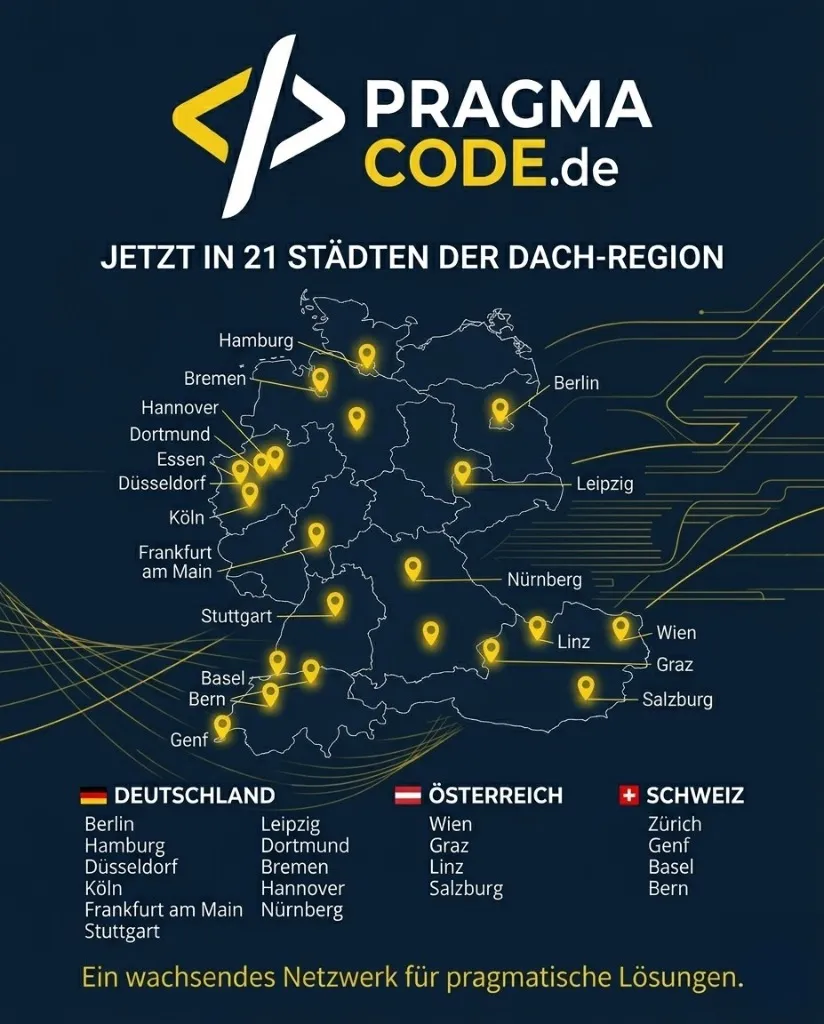
We are your digital partner – regionally anchored and successfully scaling across borders.
AI automation for your business?
I deliver this for small and mid-sized businesses: at a fixed price agreed upfront, working directly with the person who builds it. Process, scope and pricing are on the service page.
See service & pricing Or request a free intro callExtended Specialized Glossary
Claude Fable 5.2
The flagship Mythos-class frontier model released by Anthropic in November 2026, built for long-horizon software engineering, 1-million-token context windows, and autonomous multi-agent coordination.
Claude Mythos 5.2
The specialized safety-verified twin of Fable 5.2 sharing identical underlying capabilities, accessible exclusively through Anthropic's Cyber Verification Program for high-assurance environments.
GPT-6.2 Astra
OpenAI's frontier model engineered for visual software navigation (Computer Use), hybrid terminal execution, and autonomous tool workflows.
Terminal-Bench 4.0
An industry-standard benchmark measuring the autonomous execution capabilities of AI agents in authentic CLI, Linux, and Docker environments.
Agentic AI
Autonomous software systems that independently pursue goals, reason through intermediate steps, operate tools, and resolve complex workflows.
Prompt Caching
A method for maintaining recurring context prompts in server-side memory, reducing token latency and API expenses by up to 80%.