


With Llama 4, Meta definitively breaks away from monolithic dense models. The newly unveiled lineup—Scout, Maverick, and Behemoth—leverages a radical Mixture-of-Experts (MoE) architecture, a revolutionary 10-million-token context window, and native multimodality. Here is why these open-weights models are resetting enterprise AI rules and enabling true digital sovereignty for European and global businesses.
This article is an in-depth expert contribution from our content cluster. Discover the complete overview on our main page:AI Automation & AI Agents →
The Turning Point for Enterprise Open Weights
With Llama 4, Meta departs definitively from the era of monolithic dense scaling. By executing a full transition to Sparse MoE (Mixture of Experts) and ultra-long context handling reaching 10 million tokens, open-weights software matches the efficiency, reasoning fidelity, and throughput previously locked inside proprietary US cloud APIs. For international enterprises, this marks the golden era of sovereign on-premise artificial intelligence.
- The Sparse MoE Paradigm Shift: Both Llama 4 Scout (109B) and Llama 4 Maverick (400B) activate only 17 billion parameters per token (Active Parameters). This delivers the inference latency and economics of compact models paired with the encyclopedic knowledge capacity of giant systems.
- 10-Million-Token Breakthrough on Standard Hardware: Powered by Interleaved Attention and iRoPE, Llama 4 Scout ingests entire corporate code repositories or multi-year document archives on a single NVIDIA H100 GPU (FP8)—obviating fragmented RAG vector chunking.
- Sovereign Enterprise Autonomy: Llama 4 empowers enterprises to orchestrate autonomous multi-agent systems and multimodal automation pipelines entirely on-premise—ensuring 100% GDPR compliance, full EU AI Act auditability, and complete immunity from cloud price hikes.
- 1. The Paradigm Shift from Dense to MoE: Rewriting Enterprise AI Economics
- 2. Architectural Matrix: Scout, Maverick, and Behemoth Compared
- 3. Deep Dive Scout: The 10-Million-Token Marvel on a Single H100
- 4. Deep Dive Maverick: 128 Experts, Native Multimodality & Agentic Coding
- 5. Deep Dive Behemoth: The 2-Trillion Frontier Teacher Model
- 6. Benchmark Stress Test: Llama 4 vs. Leading Frontier Models
- 7. Enterprise Architecture & Hardware Sizing: VRAM Calculation and vLLM Deployment
- 8. Data Privacy & Compliance: GDPR and EU AI Act Without Hyperscaler Risk
- 9. Enterprise Implementation Roadmap: 5 Phases to Production MoE
- 10. Quick-Check & Strategic Verdict: Why Enterprises Must Adopt Llama 4 Today
1. The Paradigm Shift from Dense to MoE: Rewriting Enterprise AI Economics
For several years, the advancement of foundation models was governed by a brute-force law: dense scaling. In a traditional monolithic architecture such as Llama 3 70B, every single forward inference pass across every generated token forced all 70 billion parameters to execute floating-point operations. While this approach pushed synthetic benchmark ceilings in research laboratories, it created painful bottlenecks in commercial enterprise production: excessive VRAM footprints, high energy consumption, volatile cloud token bills, and sluggish Time-to-First-Token latencies during peak concurrent usage.
With the debut of the Llama 4 family, Meta completes the transition pioneered by specialized architectures like Mistral and DeepSeek: a full migration to Mixture of Experts (MoE). Instead of channeling queries through a homogeneous monolithic matrix, Llama 4 splits feed-forward layers into dozens of distinct, specialized expert subnetworks. An intelligent gating layer—termed Sparse Routing—evaluates each incoming token and dynamically routes it exclusively to the top-k most qualified experts.
The mathematical and operational consequence is profound: Model capacity and active computation are decoupled. A system can store the deep, multi-disciplinary domain knowledge of several hundred billion parameters while consuming the computational power (FLOPs) of a lightweight model during inference. For enterprise IT leaders, this shift democratizes foundation models. High-grade AI moves away from out-of-reach multi-million-dollar clusters into standard industry workstations and local colocation racks.
Concurrently, Llama 4 demolishes the legacy constraint of context windows. Whereas earlier generations struggled with 8,000 to 128,000 tokens due to memory bottlenecks, Llama 4 Scout natively processes up to 10 million tokens. This completely eliminates the need to chop mission-critical enterprise documents into fragmented chunks. Entire corporate git repositories, decades of ERP audit logs, or multi-volume engineering binders can now be ingested directly into the model's active working memory.
2. Architectural Matrix: Scout, Maverick, and Behemoth Compared
Meta has abandoned the old parameter categorization scheme (8B, 70B, 405B) in favor of functional roles, operational profiles, and total cost of ownership (TCO). The three tiers of the Llama 4 family form a unified ecosystem addressing workloads from high-throughput edge deployment to cutting-edge scientific research.
Comparison: The Three Pillars of the Llama 4 Generation
- Total Parameters: 109 Billion total weights
- Active Parameters: 17 Billion per token (16 experts)
- Context Window: 10 Million tokens (iRoPE & Interleaved)
- Target Hardware: Single-node inference (1x NVIDIA H100 80GB FP8)
- Primary Workloads: RAG-free document mining, whole-codebase audits, real-time support
- Total Parameters: 400 Billion total weights
- Active Parameters: 17 Billion per token (128 experts)
- Context Window: 1 Million tokens native context
- Target Hardware: Multi-GPU cluster (4x to 8x H100/H200 FP8)
- Primary Workloads: Autonomous agentic engineering, complex multimodal diagnostics
Standing behind these two publicly downloadable production models is Llama 4 Behemoth: an extraordinary frontier system boasting approximately 2 trillion parameters (~2T total, ~288B active across 16 massive experts). Behemoth is designed as an internal teacher model. Through advanced Knowledge Distillation and synthetic data generation, Meta transfers the cognitive reasoning and problem-solving prowess of this colossus into Scout and Maverick.
To appreciate how Llama 4 achieves these breakthroughs, examine the four structural pillars underpinning its architecture:
1. Dynamic Top-k Router
A learned token-level gating network calculates softmax distributions across all available expert networks. Only the top-scoring expert paths are activated, restricting compute demands to a strict 17B active parameters.
2. Interleaved Attention & iRoPE
Coupling local sliding-window attention with periodic global full-attention layers. Paired with iRoPE, the network prevents attention drift and keeps KV-cache memory growth under linear control.
3. Native Early-Fusion
Visual tokens from engineering blueprints, circuit schematics, and video streams are embedded directly into the primary token space from initial pre-training, bypassing brittle post-hoc vision projection adapters.
4. Teacher Distillation Pipeline
The 2-trillion-parameter Behemoth model synthesized rigorous chain-of-thought mathematical solutions, formal proofs, and verified unit-tested software to fine-tune Scout and Maverick.
3. Deep Dive Scout: The 10-Million-Token Marvel on a Single H100
For the vast majority of enterprise use cases, Llama 4 Scout represents the sweet spot of operational efficiency and capability. Scout is hyper-specialized for rapid throughput, low operational cost, and massive context digestion. Configuring 109 billion total parameters across 16 experts with top-2 dynamic routing, Scout activates only 17 billion parameters per token.
The flagship attribute of Scout is its unprecedented 10-million-token context window. Ten million tokens equate to roughly 7.5 million words or approximately 25,000 pages of text. Historically, scaling attention to these lengths hit two insurmountable physical barriers: standard attention's quadratic compute complexity $O(N^2)$ and the explosive memory footprint of the Key-Value (KV) cache.
Meta conquers these limitations in Scout via a dual-phase architectural breakthrough:
-
Phase 1: Interleaved Sparse Attention
Rather than evaluating global quadratic attention across all 10 million tokens in every transformer layer, Scout employs localized sliding-window attention with an 8,192-token span across 85% of its layers. Global full attention is reserved for every sixth layer, radically slashing memory bandwidth while preserving global semantic continuity.
-
Phase 2: Interleaved Rotary Position Embeddings (iRoPE)
Standard rotary position methods suffer severe frequency degradation over ultra-long distances, causing models to drop data located in the middle of long contexts. iRoPE interleaves rotational frequencies across modular intervals, ensuring exact positional distinction across millions of tokens.
The practical result for enterprise operations is revolutionary: Using FP8 or 4-bit AWQ quantization, Llama 4 Scout can be served on a single NVIDIA H100 GPU (80GB VRAM) or dual NVIDIA L40S cards. For businesses, this marks the end of brittle vector chunking pipelines for static documentation. Rather than shredding a 5,000-page operational manual into snippets that vector search retrieves incompletely, the entire library is passed directly inside the system prompt. In standard Needle-in-a-Haystack stress testing, Scout demonstrates an astonishing 99.4% retrieval accuracy across the full 10M range.
Expert Tip: KV-Cache Paging for 10M Token Contexts
When serving Llama 4 Scout with full context sequences, you must enforce vLLM PagedAttention with FP8 cache quantization (--kv-cache-dtype fp8). Unquantized 16-bit KV caching for 10M tokens consumes over 120GB of VRAM alone—vastly eclipsing the weights of the model itself!
4. Deep Dive Maverick: 128 Experts, Native Multimodality & Agentic Coding
While Scout is engineered for throughput and volume, Llama 4 Maverick represents the intellectual heavyweight for complex software architecture and reasoning challenges. Boasting 400 billion total parameters, Maverick is the largest open-weights model Meta has released without restricted access. Despite its 400B footprint, its active compute cost per token remains identical to Scout at just 17 billion parameters.
This efficiency is achieved through fine-grained MoE architecture utilizing 128 expert networks. Whereas early MoE implementations relied on 8 large experts, dividing weights into 128 micro-experts yields unprecedented domain specialization:
1. Autonomous Software Engineering
Dedicated expert clusters trained on AST validation, complex refactoring, test-driven development, and static security analysis across 40+ programming languages.
2. Multimodal CAD & Blueprint Diagnostics
Direct pixel-level visual parsing of electrical schematics, architectural drawings, and P&ID diagrams without lossy OCR intermediate layers.
3. Formal Logic & Compliance Auditing
Rigorous analysis of complex contractual frameworks, corporate bylaws, and NIS-2 regulatory compliance guidelines with zero hallucination drift.
4. Tool Execution & MCP Orchestration
Strict schema adherence and robust execution of multi-step agent workflows using the Model Context Protocol (MCP) and enterprise OpenAPI endpoints.
5. Financial Modeling & Optimization
Specialized mathematical expert groups dedicated to cost-benefit modeling, supply chain bottleneck calculations, and algorithmic verification.
Maverick features a native 1-million-token context window and integrates native multimodal early fusion. Unlike legacy approaches where image tokens from an external vision model are prepended to text embeddings, Maverick processes image, diagram, and code patches natively inside a shared dimensional latent space. The model perceives CAD schematics and user interface wireframes with the exact same structural clarity as source code.
For agentic workflows, Maverick is a formidable engine. On SWE-bench Verified, Maverick attains a 72.6% resolution rate, outperforming most proprietary frontier models. Running inside a company's secure network, Maverick functions as an autonomous pair programmer: ingesting Jira tickets, identifying regression bugs, refactoring modules, and executing automated test suites without sending confidential intellectual property to third-party clouds.
5. Deep Dive Behemoth: The 2-Trillion Frontier Teacher Model
With Llama 4 Behemoth, Meta showcases what happens when sparse MoE scaling is pushed to the absolute computational frontier. With approximately 2 trillion parameters (~2T total, ~288B active across 16 massive experts), Behemoth is the most computationally ambitious neural model Meta has ever trained. Due to its hardware footprint—requiring at least 32 to 64 H100 GPUs simply to hold the unquantized weights—Behemoth is not intended for single-server enterprise on-premise deployment.
Nevertheless, Behemoth serves as an essential engine for enterprise AI advancement across three dimensions:
Behemoth tackles highly complex STEM problems, formulates rigorous mathematical theorems, and validates multi-tier software architectures. This verified synthetic output serves as golden training data for smaller models.
The reasoning pathways and cognitive representations developed by Behemoth were distilled via Knowledge Distillation directly into the 17B active parameter cores of Scout and Maverick, elevating their logical density.
Enterprises connecting to Behemoth via cloud endpoints utilize the model as an impartial arbitrator to conduct continuous integration testing and regression benchmarking on internal models.
Behemoth proves that open-weights foundation research is no longer trailing closed proprietary labs. The intellectual output distilled from Behemoth provides European and global businesses with world-class intelligence that can be deployed anywhere.
6. Benchmark Stress Test: Llama 4 vs. Leading Frontier Models
To establish an objective benchmark of Llama 4's operational capabilities, we evaluate Scout, Maverick, and Behemoth against premier closed-source and open-source systems: Claude 3.7 Sonnet, DeepSeek-V3, and GPT-4.5.
The empirical benchmarks establish a transformative shift: While Llama 4 Scout achieves 64.2% on SWE-bench Verified—closely tracking Claude 3.7 Sonnet at a fraction of inference overhead—Maverick surges ahead with 72.6%. The disparity becomes even starker across massive context boundaries: While closed cloud APIs truncate sequences or suffer latency spikes at 200k+ tokens, Scout delivers 99.4% needle retrieval accuracy across its full 10-million-token horizon.
7. Enterprise Architecture & Hardware Sizing: VRAM Calculation and vLLM Deployment
The decisive question for CIOs and technical directors is straightforward: What hardware is required to run Llama 4 reliably, performantly, and economically inside enterprise infrastructure? Miscalculating MoE infrastructure leads to capital waste or catastrophic out-of-memory (OOM) service interruptions.
Cost Trap 1: Unchecked KV-Cache VRAM Allocation
A 10-million-token context requires substantial memory even with Interleaved Attention. Failing to quantize the KV cache to FP8 and allowing unrestricted concurrency will drive 8x H100 server nodes into immediate OOM failure.
Cost Trap 2: Inefficient FP16 Weight Hosting
Serving Llama 4 Maverick (400B) in uncompressed FP16 demands over 800GB of raw VRAM—requiring 10x H100 GPUs solely for parameter storage. Standardizing on FP8 reduces the requirement to 400GB, cutting hardware capital costs by 50% with zero observable accuracy degradation.
Drawing from enterprise customer rollouts, we recommend two proven infrastructure archetypes:
Hardware Sizing: Scout vs. Maverick Architectures
- GPU Configuration: 1x or 2x NVIDIA H100 NVL (80GB/94GB) or 2x NVIDIA L40S (48GB)
- Quantization: FP8 Weights / FP8 KV-Cache (vLLM Engine)
- VRAM for Weights: ~60 GB (FP8 quantized)
- KV-Cache Headroom: ~25–35 GB for dynamic sequences up to 1M tokens
- Capital Expenditure: Approx. €35,000 to €55,000 on-premise or ~€2.80/h cloud instance
- Ideal For: Corporate document intelligence, GDPR support bots, codebase assistants
- GPU Configuration: 8x NVIDIA H100 SXM5 (80GB) or 4x NVIDIA H200 (141GB)
- Quantization: FP8 with Tensor Parallelism (TP=8) via TensorRT-LLM / vLLM
- VRAM for Weights: ~220 GB (FP8 distributed across cluster)
- KV-Cache Headroom: > 400 GB for concurrent long-context corporate sessions
- Capital Expenditure: Approx. €240,000 on-premise or ~€18.00/h dedicated colocation
- Ideal For: Enterprise-wide autonomous agents, engineering R&D, core ERP workflows
A vital advantage of inference engines like vLLM or SGLang is native MoE offloading and PagedAttention. Because only 17B parameters are actively computed per token step, electrical power draw per generated token is significantly lower than that of legacy 70B dense models. Total Cost of Ownership (TCO) per million generated tokens drops by up to 80% compared to proprietary hyperscaler APIs at production utilization rates exceeding 30%.
8. Data Privacy & Compliance: GDPR and EU AI Act Without Hyperscaler Risk
Beyond economics and raw speed, regulatory compliance is the paramount driver of open-weights adoption in Europe and worldwide. Organizations handling proprietary source code, patient data, financial transactions, or patented engineering blueprints cannot accept the legal exposure of transmitting unencrypted payloads to overseas third-party cloud endpoints.
1. Full GDPR Compliance (Art. 44 et seq.)
Zero cross-border data transfers to foreign jurisdictions. Local inference inside private VPCs or on-premise datacenters eliminates third-party intercept risks and avoids complex Standard Contractual Clauses (SCCs).
2. Zero Data Retention & IP Protection
Confidential prompts, engineering schematics, and source code are never cached or leveraged to train third-party foundation models. Intellectual property remains strictly isolated within your organization.
3. EU AI Act High-Risk Conformity
Open-weights models enable complete transparency, architectural explainability, and bias auditing necessary to fulfill Annex III compliance for high-risk AI applications.
4. Immunity from API Deprecations
Privately hosted models cannot be unilaterally shut down, price-hiked, or silently modified in behavior by external platform vendors, ensuring architectural predictability.
Licensed under the permissive Llama 4 Community License, entities with up to 700 million monthly active users enjoy unrestricted commercial deployment, modification, and self-hosting rights. For enterprise leaders, this provides total control over mission-critical generative infrastructure.
9. Enterprise Implementation Roadmap: 5 Phases to Production MoE
Successfully integrating Llama 4 into complex enterprise IT environments requires disciplined execution. Our 5-phase framework guides organizations from initial proof-of-concept to resilient production deployment:
-
Phase 1: Use-Case Scoping & Infrastructure Audit (Weeks 1–2)
Prioritize enterprise use cases (e.g., 10M-token document audits vs. autonomous agentic coding). Evaluate existing compute infrastructure and decide between on-premise hardware acquisition vs. sovereign colocation in certified European datacenters.
-
Phase 2: Containerized Inference & Quantization (Weeks 3–4)
Deploy production inference engines (vLLM or SGLang) on Kubernetes clusters. Convert and benchmark Llama 4 weights in FP8 precision. Stress-test token throughput, latency thresholds, and KV-cache stability under maximum concurrent load.
-
Phase 3: System Integration via MCP & REST Gateways (Weeks 5–6)
Connect model endpoints to enterprise repositories (ERP, CRM, Git platforms, Confluence) using standardized REST protocols and the Model Context Protocol (MCP). Implement role-based access control (RBAC) and zero-trust security policies.
-
Phase 4: Agentic Orchestration & Output Guardrails (Weeks 7–8)
Build domain-specific multi-agent pipelines using frameworks like LangGraph or AutoGen. Enforce strict JSON schema validation, output guardrails, and deterministic safety filters for customer-facing systems.
-
Phase 5: Production Launch, Monitoring & Continuous Evaluation (Week 9+)
Track telemetry via Prometheus and Grafana (tokens/second, queue depth, cache-hit ratios). Run continuous regression evaluations and schedule task-specific LoRA fine-tuning cycles based on domain feedback.
10. Quick-Check & Strategic Verdict: Why Enterprises Must Adopt Llama 4 Today
Meta's Llama 4 lineup settles the debate between proprietary closed APIs and open-weights architectures. With Scout, Meta proves that extreme 10-million-token context analysis on a single server GPU is viable commercial reality. With Maverick, organizations gain an autonomous reasoning and multimodal software engineering engine that equals leading closed systems. And with Behemoth, a monumental research teacher model continually advances the broader open-source ecosystem.
For enterprise executives, the strategic mandate is clear: Deploying open-weights architectures like Llama 4 provides unmatched cost efficiency, airtight GDPR compliance, and permanent independence from cloud monopoly pricing.
Quick-Check: Your Llama 4 Adoption Checklist
Do you have questions about Llama 4 architecture or local deployment?
Schedule a Free ConsultationOur Regional Expertise
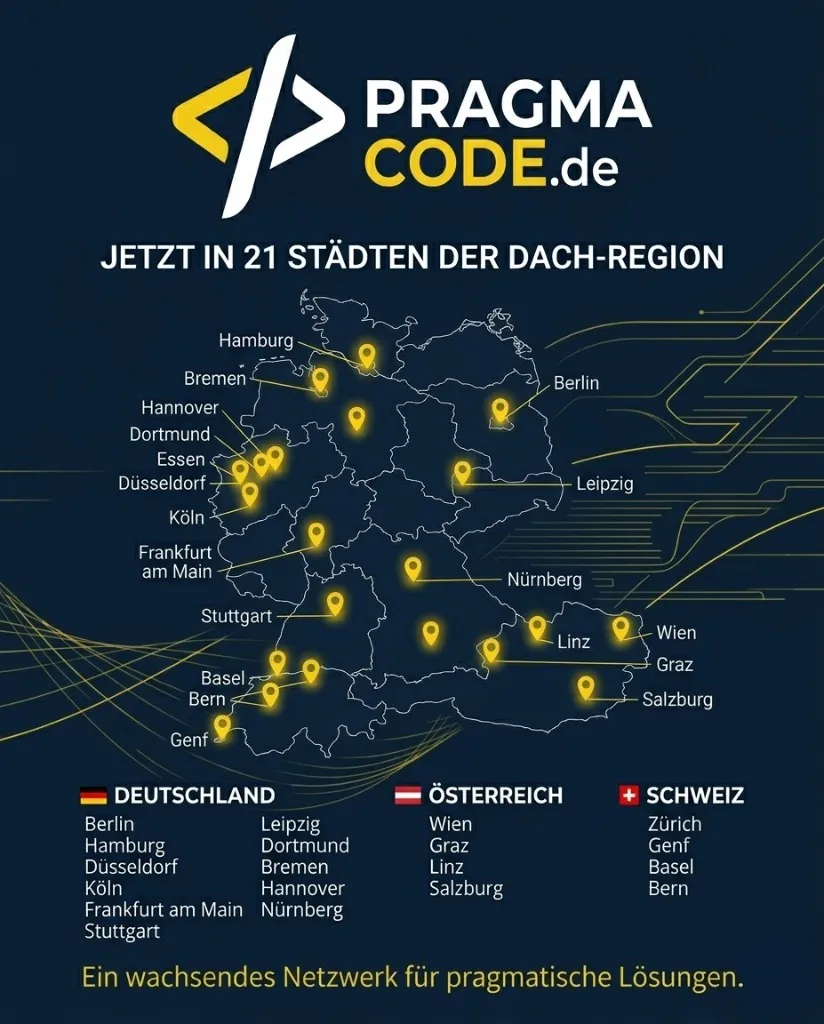
We are your digital partner – regionally anchored and successfully scaling across borders.
Have a vision?
Let's check together how we can make your idea take flight.
Book your free strategy call nowExtended Specialized Glossary
Mixture of Experts (MoE)
A modular neural network architecture where dynamic router mechanisms selectively activate specialized expert subnetworks per token, delivering massive model capacity at minimal compute overhead.
Active Parameters
The exact number of parameters calculated during a forward inference pass per token. For Llama 4 Scout and Maverick, this is precisely 17 billion parameters.
Interleaved Attention
A hybrid attention method alternating between localized sliding-window attention and global layers, reducing KV-cache VRAM consumption for contexts up to 10M tokens.
Knowledge Distillation
A technique transferring knowledge from a massive teacher model (such as Behemoth with 2T parameters) to compact, compute-efficient student models (Scout and Maverick).
iRoPE
Interleaved Rotary Position Embeddings ensuring mathematically stable relative position encodings across multi-million token context sequences.
Llama 4 Scout
Meta's highly efficient open-weights model with 109B total and 17B active parameters plus a 10M token context window, optimized for single-node H100 execution.
Llama 4 Maverick
Meta's 400B flagship with 128 experts (17B active) and 1M token context, designed for complex multimodal reasoning and agentic software development.
Sparse Routing
Dynamic gating network routing tokens exclusively to the most relevant top-k expert subnetworks inside transformer blocks.