


Most AI chatbots on corporate websites are over-engineered, expensive to run, and legally vulnerable under data protection laws. Discover why a rule-based in-browser assistant with 14 KB Vanilla JS, a static search index, and an integrated price calculator is the more economical, reliable, and GDPR-safe choice for 95% of all businesses.
This article is an in-depth expert contribution from our content cluster. Discover the complete overview on our main page: Rule-based Website Assistant →
- €0 Ongoing Token Costs: Completely bypassing external AI model providers eliminates variable API bills – even with 100,000 monthly sessions, operational costs remain strictly zero.
- 100% GDPR Compliance & Data Sovereignty: All intent classification and search logic execute as
Client-Side Executioninside the visitor's browser; no user text ever leaves the local device. - Ultra-Lightweight 14 KB Architecture: Pure Vanilla JavaScript with zero framework overhead ensures execution speeds below 50 milliseconds and protects Core Web Vitals.
- 1. The Chatbot Dilemma: Why LLMs Often Fail on Company Websites
- 2. The In-Browser Architecture: 14 KB Vanilla JS Instead of Cloud Servers
- 3. Direct Operational Comparison: LLM Bot vs. Rule-Based Assistant
- 4. The 4 Production Modules: From Curated Answers to Price Calculators
- 5. Platform Compatibility & Performance Integration
- 6. Economic Feasibility & ROI for SMB Decision-Makers
- 7. Conclusion & Strategic Decision Matrix
1. The Chatbot Dilemma: Why LLMs Often Fail on Company Websites
Over the past three years, embedding a generative AI chatbot on the homepage was widely seen as the hallmark of forward-looking digital strategy. Companies quickly hooked lightweight JavaScript widgets to commercial LLM APIs like GPT-4 or Claude, configured a basic system prompt, and expected an autonomous customer support revolution. However, production experience in 2026 reveals a sobering reality: for the vast majority of corporate B2B websites and service providers, generative chatbots represent an expensive, unpredictable, and legally hazardous misstep.
When prospective B2B clients visit a company website, they are not seeking philosophical conversations or poetic summaries. They arrive with concrete, highly specific business questions:
Typical Deterministic Visitor Queries on B2B Websites
“Do you offer migrations from TYPO3 to Astro, and what is the estimated budget?”
“What does your onboarding and initial audit process look like?”
“Do you have case studies in industrial manufacturing?”
“Where can I read your technical article on NIS 2 compliance?”
Triggering a probabilistic language model with 70 billion parameters to answer deterministic queries introduces severe operational friction points, which we identify as the Chatbot Dilemma.
The Token Cost Trap at Traffic Scale
Every submitted message, loaded context window, and generated completion incurs API fees. For websites with 20,000 monthly visitors, token charges combined with proprietary SaaS widget subscriptions escalate to €300–€800 per month without guaranteed sales conversion.
Hallucinations & Commercial Liability
Generative models inherently produce unpredictable hallucinations. Fabricated pricing estimates, inaccurate service commitments, or contradictory legal statements can create commercial liabilities and erode trust among B2B buyers.
GDPR & US Cloud Data Privacy Pitfalls
When visitors type confidential project specs, corporate contact info, or personal queries into the chat, these payloads are transmitted to external third-party servers. This necessitates complex Data Processing Agreements (DPAs) and cookie consent banners.
This is precisely where the rule-based website assistant engineered by Pragma Code changes the game. It addresses a fundamental engineering question: Why take on the cost, latency, and compliance burden of a generative language model when the exact same user needs can be resolved deterministically, instantly, and with 100% GDPR safety directly in the visitor's browser?
Practical Engineering Insight
Empirical analysis of over 50,000 corporate website interactions demonstrates that more than 92% of all visitor queries on B2B platforms fall into fewer than 20 core thematic clusters. Curating these clusters editorially delivers far higher customer satisfaction and trust than an open-ended LLM prompt.
2. The In-Browser Architecture: 14 KB Vanilla JS Instead of Cloud Servers
At the core of the system lies a radically minimalist architecture. While mainstream AI chatbot plugins inject megabytes of heavy React runtimes, third-party tracking scripts, and bloated stylesheets into the critical rendering path, our complete assistant module weighs merely ~14 KB gzipped (roughly 42 KB uncompressed) across approximately 1,150 lines of clean, framework-free Vanilla JavaScript.
Deterministic Intent Recognition
Identifies user intents in real time via curated keyword matrices. Short keywords (up to 4 characters) enforce strict word boundaries, mathematically preventing false positives (e.g., ensuring "AI" does not fire inside "email").
Static In-Memory Blog Index
During the static site build, the knowledge base is exported as a lightweight JSON index. The assistant queries hundreds of articles client-side using weighted term-frequency matching—without any external search servers like Elasticsearch or Algolia.
Guided Price & ROI Calculator
A multi-stage finite-state machine guides visitors through project parameters. The calculator calculates realistic price and duration ranges and passes structured enquiry data straight to your CRM or contact form.
Asynchronous On-Demand Loading
The assistant never blocks the initial HTML render or Core Web Vitals. It loads into memory asynchronously via dynamic import upon first user interaction (button hover, keyboard focus, or click).
By decoupling the assistant completely from external cloud APIs, the system achieves total operational independence. If your website is accessible, your assistant works flawlessly—unaffected by API outages, rate limits, or latency spikes from commercial model providers.
3. Direct Operational Comparison: LLM Bot vs. Rule-Based Assistant
To evaluate the long-term impact on your business, examine how both architectural models perform across mission-critical enterprise metrics:
Comparison: Traditional LLM Chatbot vs. Rule-Based In-Browser Assistant
- Cost Per Conversation: Variable token pricing; monthly expenses grow unpredictably with website traffic.
- Data Privacy (GDPR): All visitor text inputs are sent to third-party model servers; requires DPA and US data transfer compliance.
- Answer Reliability: Probabilistic output; hallucinations and unverified claims can never be entirely eliminated.
- Latency & Speed: 800 to 2,500 milliseconds Time-to-First-Token due to cloud network hops and model inference.
- Performance Impact: Heavy vendor scripts (often 300–800 KB) degrade LCP, INP, and Total Blocking Time.
- Uptime Dependency: Dependent on the real-time availability and response times of third-party cloud APIs.
- Cost Per Conversation: Strictly €0 forever—whether 100 or 100,000 visitors interact with the assistant.
- Data Privacy (GDPR): 100% Client-Side Execution in the browser; not a single byte of user input leaves the device.
- Answer Reliability: Verified, editorially written answers linking directly to relevant service pages and case studies.
- Latency & Speed: 0 milliseconds latency; answers render instantaneously without network delay.
- Performance Impact: Only 14 KB gzipped; asynchronous on-demand loading preserves perfect PageSpeed scores.
- Uptime Dependency: 100% identical to your website's uptime; zero third-party service dependencies.
This comparison demonstrates that choosing a rule-based architecture is not a compromise, but a deliberate engineering decision prioritizing speed, legal safety, and cost certainty.
4. The 4 Production Modules: From Curated Answers to Price Calculators
A high-converting digital assistant must offer far more than static FAQ accordions. The Pragma Code architecture unifies four complementary functional modules into a seamless, accessible user experience:
1. Verified Topic & Service Explanations
15 to 25 curated thematic triggers cover your company's core competencies. Every answer is professionally structured, aligned with your brand guidelines, and guides visitors deeper into your service offering via direct deep links.
2. Instant Full-Text Blog Search in Chat
When users search for technical topics such as in-browser logic, static search indices, or accessibility standards, the assistant scans your entire article library in milliseconds, surfacing the top three matching posts with relevant summaries.
3. Guided Price & Scope Calculator
Rather than leaving prospects stranded with generic contact forms, the interactive calculator walks them through project type, scope, and add-on options. It generates an immediate, realistic price estimate and carries all selections into your inquiry form.
4. Native Bilingualism (DE/EN) & Dark/Light Mode
All dialogue flows, search results, and calculator algorithms are natively available in German and English. The assistant automatically matches the current page language and integrates seamlessly with light or dark brand themes.
This synergy transforms the assistant from a basic support widget into an active lead generation pipeline. Visitors receive immediate orientation without wait times and can scope their projects on the spot. You can experience this system in production directly on our dedicated service page for the rule-based website assistant or try our live interactive assistant under /assistent.
5. Platform Compatibility & Performance Integration
A common inquiry from IT directors and enterprise teams is: “Can this assistant be easily integrated into our existing CMS and web infrastructure?”
Because the assistant consists solely of pure Vanilla JavaScript, a standalone stylesheet, and a pre-rendered JSON index, it is 100% platform-agnostic. It requires no Node.js backend runtime and no relational database connection.
Integrated via child theme script or snippet plugin. The static blog search index is automatically refreshed through the WordPress REST API whenever new content is published.
Embedded inside theme templates (Shopify theme.liquid) or Twig theme extensions (Shopware 6). Product catalogs and category structures feed directly into the search index during build time.
Included in the NOVA child template or via Fluid template/TypoScript. The search index is served through a dedicated, cached page route.
Optimal synergy: The module is imported as a standard component. The search index is generated automatically during the build process, adding zero overhead to page response times.
For enterprise deployment, we follow a proven 4-stage onboarding process that brings your custom assistant to production within two to three weeks:
-
1. Question Audit & Data Collection
We analyze your team's actual communication channels: What do prospective clients consistently ask in sales emails, discovery calls, and search queries? From this data, we extract the 15 to 25 highest-impact topic clusters.
-
2. Editorial Drafting & Brand Approval
Every response is authored in your corporate tone of voice, linked with relevant landing pages, and formally approved by your subject matter experts—eliminating inaccurate statements entirely.
-
3. Technical Integration & Calculator Calibration
We embed the 14 KB script into your CMS, link the static blog index, and calibrate the pricing formulas to match your exact service and project tiers.
-
4. Production Launch & 14-Day Refinement
After two weeks of production traffic, we review anonymized fallback logs to identify unaddressed niche queries and refine the keyword matrices accordingly.
6. Economic Feasibility & ROI for SMB Decision-Makers
Every technical architecture must prove its commercial viability. While agencies routinely charge five-figure setup fees for complex LLM pipelines, vector databases, and ongoing maintenance retainers, our rule-based assistant operates under a clear, transparent fixed-price model with zero recurring platform costs.
The Typical Subscription Model
- SaaS platform subscription: €149 to €299 / month
- Token & API model fees: approx. €50 to €200 / month
- Ongoing prompt tuning & maintenance: approx. €1,200 / year
The One-Time Investment
- One-time implementation (Basis Package): €1,490 fixed price
- Full build with price calculator (Plus Package): €2,900 fixed price
- Monthly ongoing system fees: Strictly €0 forever
For an overview of all our service packages, fixed rates, and implementation scopes, explore our transparent Packages & Pricing directory. We stand for 100% pricing clarity from day one—no hidden licenses, no usage fees, and no lock-in traps.
7. Conclusion & Strategic Decision Matrix
Generative AI and large language models certainly hold immense value in modern enterprise computing: analyzing massive unstructured data lakes, enhancing internal knowledge portals, or accelerating code generation. On a company's public-facing website, however, what truly drives conversions is reliability, instant response times, GDPR compliance, and cost certainty.
A rule-based in-browser assistant delivers the ideal strategic balance. It answers visitor questions with zero hallucinations, respects user privacy under European data protection standards, and acts as a high-converting sales funnel through its integrated price calculator—all without recurring token invoices.
Quick-Check: Which Assistant Model Fits Your Business?
Ready to launch a smart, GDPR-compliant assistant on your website?
Schedule a Free Discovery SessionOur Regional Expertise
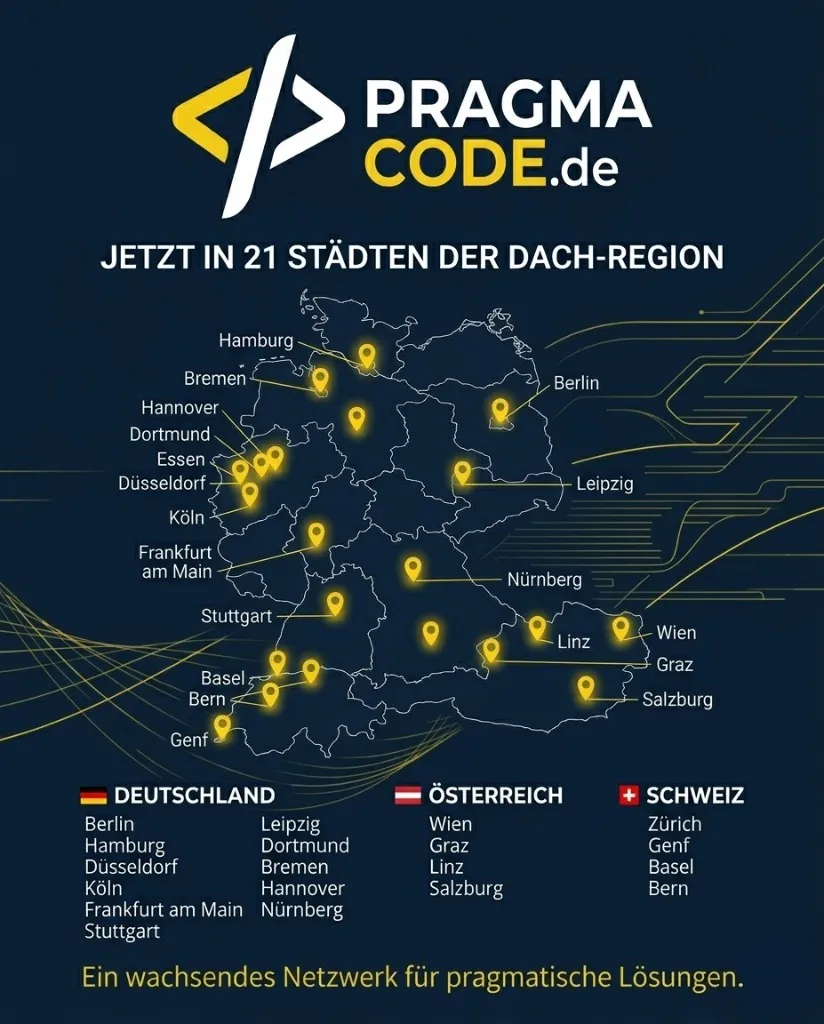
We are your digital partner – regionally anchored and successfully scaling across borders.
Have a vision?
Let's check together how we can make your idea take flight.
Book your free strategy call nowExtended Specialized Glossary
Rule-Based Website Assistant
A deterministic dialogue system on corporate websites that processes user inquiries using curated keyword matrices and decision trees instead of unpredictable generative language models.
In-Browser Logic
A software architecture where all application logic and data processing execute entirely within the client's web browser without transferring data to external servers.
Static Search Index
A pre-compiled JSON data structure generated during the static site build, enabling instantaneous full-text searches directly on the user's device without backend search servers.
Token Costs
Usage-based billing fees charged by commercial AI model providers for every processed unit of text (token) in prompts and model completions.
On-Demand Script Loading
A performance optimization technique where JavaScript bundles are fetched only upon explicit user interactions (click, hover, focus), protecting page load speed and Core Web Vitals.