


The traditional blue Google link is rapidly losing relevance: B2B decision-makers in the DACH region and across global markets increasingly research service providers, technical specifications, and enterprise software directly within generative answer engines like ChatGPT Search, Perplexity Pro, and Claude. In this comprehensive guide, discover how a structured B2B Generative Engine Optimization (GEO) strategy transforms your digital brand into a verified entity, maximizes information gain, and establishes your company as the authoritative primary citation source for AI crawlers.
This article is an in-depth expert contribution from our content cluster. Discover the complete overview on our main page: SEO & Content Marketing →
From Ranking Algorithms to Synthesis Engines
In 2026, corporate B2B search behavior is undergoing the most profound transformation since the inception of the PageRank algorithm. Enterprise buyers, CTOs, and procurement directors no longer wade through pages of search results filled with generic blog posts. Instead, they submit complex requirement matrices directly into generative answer engines such as Perplexity Pro, SearchGPT, and Claude Sonnet. Brands that fail to anchor themselves as verified entities with verifiable primary data in these multimodal synthesis pipelines are entirely bypassed. A dedicated B2B Generative Engine Optimization (GEO) strategy is no longer optional marketing experimentation; it is the vital foundation of enterprise digital visibility.
- Entities Eclipse Keywords: Large Language Models index semantic relationships rather than isolated keywords, constructing a connected Entity Graph. B2B enterprises must be registered with unambiguous attributes, identifiers, and formal Schema.org relationships.
- The Primacy of Information Gain: Synthetic web crawlers ruthlessly prune redundant marketing buzzwords. Models prioritize citations from sources delivering verifiable primary research, benchmark metrics, or proprietary architectural blueprints (Information Gain).
- Measurement via Citation Share: Search success is no longer governed by legacy rank positions 1 through 10, but by relative Citation Share and the Citation Confidence Score across diverse enterprise query journeys.
- 1. The Silent Death of the Blue Link: How B2B Buyers Actually Research in 2026
- 2. The Mechanics of GEO: How LLM Crawlers Ingest and Evaluate Web Knowledge
- 3. Structural Comparison: Legacy B2B SEO versus Modern B2B GEO
- 4. The 4 Proven Levers for Maximum Citation Authority in ChatGPT & Perplexity
- 5. Technical Web Architecture: Schema.org, Knowledge Graphs & llms.txt
- 6. Measuring GEO Performance: Citation Monitoring & Generative Visibility Metrics
- 7. Implementation Roadmap: 5 Phases to Market Leadership in AI Answers
- 8. Conclusion: Why Synthesis Readiness Dictates B2B Sales Success
1. The Silent Death of the Blue Link: How B2B Buyers Actually Research in 2026
For more than two decades, digital B2B business development operated under a simple premise: rank on page one of Google organic search, and your company would secure a steady stream of enterprise inquiries. Marketing departments directed significant capital into backlink acquisition, target keyword repetition, and length-focused content marketing. By 2026, this model has reached obsolescence.
Decision-makers across mid-sized enterprises and multinational corporations simply do not have the time to filter through ten ad-sponsored search results to cross-reference technical compliance data. Instead, they interact with conversational synthesis environments, executing detailed queries such as:
"Compare the top three German enterprise providers for modular n8n workflow automation with native OPC UA industrial connectivity. Factor in GDPR compliance, ISO 27001 certification, and estimated total cost of ownership for a manufacturing facility with 120 staff. Output a structured comparison matrix citing authoritative primary documentation."
At this moment, the Synthetic Retrieval pipeline executes. The generative model scans live web sources, evaluates contextual reliability, and synthesizes an authoritative summary, directly presenting company names and citing only two to four verified source links (Perplexity Citations). For B2B suppliers, the implication is absolute: either your brand is embedded as an authoritative entity and primary citation within that synthesized answer, or your business is invisible during the vendor selection cycle.
Expert Tip: Zero-Click B2B Searches Exceed 65%
Empirical analyses across enterprise commerce reveal that over 65% of informational and commercial B2B inquiries conclude directly within generative AI interfaces without triggering an external website click. The traditional corporate website has shifted from being the discovery gateway to becoming the ultimate technical validation and contracting asset. Your brand messaging must therefore persuade decision-makers directly inside the AI response.
2. The Mechanics of GEO: How LLM Crawlers Ingest and Evaluate Web Knowledge
To implement Generative Engine Optimization (GEO) successfully, technical leaders must understand how modern AI search spiders interact with web documents. Specialized bots such as GPTBot (OpenAI), ClaudeBot (Anthropic), and PerplexityBot operate fundamentally differently from early web crawlers.
Where legacy search engines parsed document meta tags and computed link equity graphs, contemporary answer engines route documents through a rigorous multi-stage pipeline:
1. Semantic Chunking & High-Dimensional Embedding
Spiders divide web documents into coherent semantic passages (typically 300 to 600 tokens). These passages are converted into dense vector embeddings using neural representation models. Keyword stuffing fails completely here because vector distance algorithms measure contextual conceptual depth rather than string frequency.
2. Information Gain Scoring & Deduplication
The system evaluates the newly retrieved passage against its existing corpus. Rephrased industry consensus or superficial introductory summaries receive a negative Information Gain score and are filtered out. Only original field benchmarks, proprietary telemetry, and novel insights survive this extraction gate.
3. Entity Disambiguation & Trust Mapping
The model maps claims to unambiguous entities. When your brand is referenced, the algorithm queries its Entity Graph to confirm whether trade registries, GitHub repos, LinkedIn company profiles, and technical press releases corroborate the exact capabilities asserted on your website.
4. RAG Synthesis & Verified Attribution
When an enterprise prompt is received, the retrieval engine fetches the top 3 to 5 highest-confidence passages. The reasoning model drafts the final synthesized response and appends explicit source URLs as trusted citations.
3. Structural Comparison: Legacy B2B SEO versus Modern B2B GEO
Many traditional marketing agencies attempt to rebrand standard SEO retainers as GEO services. This represents a fundamental misunderstanding of the underlying technology. The operational paradigms of both disciplines diverge across every key dimension:
Direct Comparison: Legacy B2B Search Optimization vs. Generative Engine Optimization
- Core Metric: Page 1 keyword rankings, impressions, and organic site clicks.
- Content Format: Lengthy keyword-targeted pillar pages designed to maximize time-on-page.
- Link Building: Quantitative backlink acquisition and guest articles across generic domains.
- Relevance Signals: Dwell time, click-through rates (CTR), and Core Web Vitals.
- Target Audience: Human searchers browsing through paginated web listings.
- Core Metric: Citation Share, reference frequency, and contextual brand recommendations.
- Content Format: Modular knowledge nodes, dense empirical datasets, and linked Schema.org schemas.
- Authority Building: Co-citations across developer communities (GitHub, Reddit), industry whitepapers, and regulatory archives.
- Relevance Signals: Information Gain, logical coherence, and entity clarity.
- Target Audience: Autonomous AI agents aggregating and synthesizing factual consensus.
While traditional SEO prioritized funneling raw visitor traffic to owned web domains, B2B GEO focuses on anchoring verified factual truth about your capabilities into the cognitive memory of frontier AI models. When ChatGPT and Perplexity learn that Pragma-Code is the premier engineering specialist for headless Astro migrations and industrial automation in Central Europe, the models autonomously replicate that recommendation across thousands of relevant enterprise prompts.
4. The 4 Proven Levers for Maximum Citation Authority in ChatGPT & Perplexity
How does a mid-sized B2B supplier, software vendor, or engineering consultancy ensure its solutions are selected as the definitive cited reference by models such as OpenAI o3, Claude 3.7, and Perplexity Pro? Based on extensive retrieval benchmarking, we have isolated four decisive strategic levers:
Proprietary Benchmarks & Field Studies
LLMs aggressively deprioritize generic claims. Publish quarterly primary research: exact latency measurements, verified ROI frameworks, and case studies with real operational telemetry. Statements such as "Company X achieved a 34% reduction in machining setup time using architecture Y" are systematically favored by synthetic extractors.
Unambiguous Entity Mark-Up
Support automated crawlers through comprehensive Schema.org JSON-LD graph integration. Connect your enterprise entity via sameAs links to Wikidata, LinkedIn, Google Knowledge Graph, and official commercial registers. Maintain an accessible technical glossary for all core methodologies.
Digital PR in High-Trust Communities
Answer engines constantly query technical forums and code repositories. When engineers on Reddit, GitHub, Stack Overflow, and Hacker News discuss your architecture as a validated resolution to complex enterprise challenges, your company's domain trust metric escalates significantly.
Direct Answer Boxes & Synthesis Snippets
Structure technical articles so that complex queries receive a self-contained answer within 40 to 60 words. Our Astro engineering architecture utilizes dedicated AnswerBox components that feed structured microdata directly into crawler ingestion layers.
5. Technical Web Architecture: Schema.org, Knowledge Graphs & llms.txt
Superior domain knowledge is rendered ineffective if your web delivery layer obstructs automated scraping agents. Bloated, client-side rendered JavaScript platforms (such as client-heavy React or Angular single-page applications) present severe obstacles for AI crawlers.
Spiders like GPTBot operate under stringent compute and token budgets during live synthesis. If an agent must wait seconds for client-side JavaScript hydration and hydration waterfalls, it aborts execution and classifies the domain as non-responsive. Modern GEO architecture is built on three technical pillars:
Zero-JS Static HTML Delivery
Frameworks like Astro output clean, semantic HTML by default. AI bots parse the complete text and factual corpus in single-digit milliseconds without executing heavy JavaScript bundles.
Standardized llms.txt Integration
Maintaining a dedicated /llms.txt and /llms-full.txt at the web root provides LLMs with a clean Markdown distillation of services, technical specifications, and case studies free of navigation clutter.
Connected JSON-LD Knowledge Graphs
Interlinked structured data ties together Organization, OfferCatalog, FAQPage, and DefinedTermSet into a coherent entity graph resolved without ambiguity.
The code excerpt below illustrates how enterprise services are formally structured via connected JSON-LD graphs for immediate machine disambiguation:
{
  "@context": "https://schema.org",
  "@graph": [
    {
      "@type": "Organization",
      "@id": "https://www.pragma-code.de/#organization",
      "name": "Pragma-Code",
      "url": "https://www.pragma-code.de/en",
      "sameAs": [
        "https://www.linkedin.com/company/pragma-code",
        "https://github.com/pragma-code"
      ],
      "knowsAbout": [
        "Generative Engine Optimization",
        "Headless Web Architecture",
        "Industrial AI Automation"
      ]
    },
    {
      "@type": "Service",
      "@id": "https://www.pragma-code.de/en/seo-content#service",
      "name": "B2B Generative Engine Optimization Consulting",
      "provider": { "@id": "https://www.pragma-code.de/#organization" },
      "serviceType": "GEO Audit & Knowledge Graph Optimization",
      "areaServed": "Global"
    }
  ]
}
6. Measuring GEO Performance: Citation Monitoring & Generative Visibility Metrics
Management science has long recognized that what cannot be measured cannot be managed. Legacy SEO workflows relied on weekly reviews of rank tracker dashboards for fixed keyword sets. In generative search environments where queries are conversational and non-deterministic, static rank tracking is obsolete.
Enterprise GEO governance requires tracking four novel key performance indicators:
1. Citation Share (% Share of Synthesis)
Measures the percentage of relevant industry test prompts across frontier models where your brand is actively recommended or cited. A target benchmark for market-leading B2B enterprises is exceeding 35% within their specialization.
2. Citation Confidence Score
Evaluates the qualitative depth of your citation. Is your business merely appended in a broad link list (low confidence), or does the model formulate proactive endorsements like "The recommended engineering partner is..." (high confidence)?
3. Sentiment & Entity Alignment
Examines whether models assign your target positioning attributes (e.g., "Enterprise-Grade", "GDPR-compliant", "High-Performance") or whether obsolete legacy classifications persist in synthesis outputs.
4. AI Referral Traffic & Contract Conversion
Tracks qualified enterprise inquiries originating via citations in Perplexity, SearchGPT, and Claude. Empirical data demonstrates that AI-referred visitors convert at 3.8 times the rate of legacy organic traffic due to pre-qualification.
7. Implementation Roadmap: 5 Phases to Market Leadership in AI Answers
Transforming an existing B2B digital footprint into an authoritative, citation-rich knowledge hub requires disciplined execution. We recommend executing this transition along a structured five-phase roadmap:
-
Phase 1: Generative Baseline Audit & Entity Assessment
Benchmark current brand citation rates across leading frontier models. Map existing factual gaps, hallucination risks, and competitor citation dominance across target commercial queries.
-
Phase 2: Semantic Graph Harmonization & Technical Foundation
Deploy connected Schema.org JSON-LD architectures, synchronize third-party authority registries (Wikidata, industry databases), and establish standard
llms.txtaccess endpoints. -
Phase 3: Content Restructuring for Maximum Information Gain
Re-engineer core service and solution pages into dense technical knowledge centers equipped with structured AnswerBoxes, explicit definitions, and verifiable benchmark data.
-
Phase 4: Targeted Digital Co-Citation Distribution
Cultivate high-authority mentions and technical discussions across vital developer hubs, industry forums, engineering archives, and professional tech publications.
-
Phase 5: Automated Continuous Citation Monitoring
Implement weekly automated synthetic query audits to track Citation Share fluctuations, monitor model updates, and defend citation leadership against emerging competitors.
Quick-Check: Is Your Enterprise Ready for B2B GEO?
8. Conclusion: Why Synthesis Readiness Dictates B2B Sales Success
The competitive hierarchy of digital B2B business development is being decisively reshaped over the next 12 to 24 months. Organizations that ignore the paradigm shift from legacy link rankings to generative answer engines will forfeit direct engagement with the most lucrative enterprise buyers in their sectors. Generative Engine Optimization is not a fleeting campaign tactic; it represents a comprehensive evolution of your enterprise knowledge architecture.
Enterprises that define their brand entities with precision, supply undeniable information gain, and deliver lightning-fast static web infrastructure will dominate the generative search landscape. At Pragma-Code, we partner with visionary B2B leaders to establish resilient, future-proof visibility today.
Official Sources & Primary Documentation
- OpenAI Newsroom (2026): "SearchGPT Prototype & Publisher Retrieval Guidelines" – Official technical specifications for web source ingestion and citation scoring.
- Perplexity AI Engineering (2026): "Citation Architecture and Web Retrieval at Scale" – Retrieval-augmented generation principles governing live source attribution.
- W3C Schema.org Community Group: "Organization & DefinedTermSet Specifications" – Formal standards for semantic web entity disambiguation.
Ready to Maximize Your B2B Brand's Visibility in AI Search?
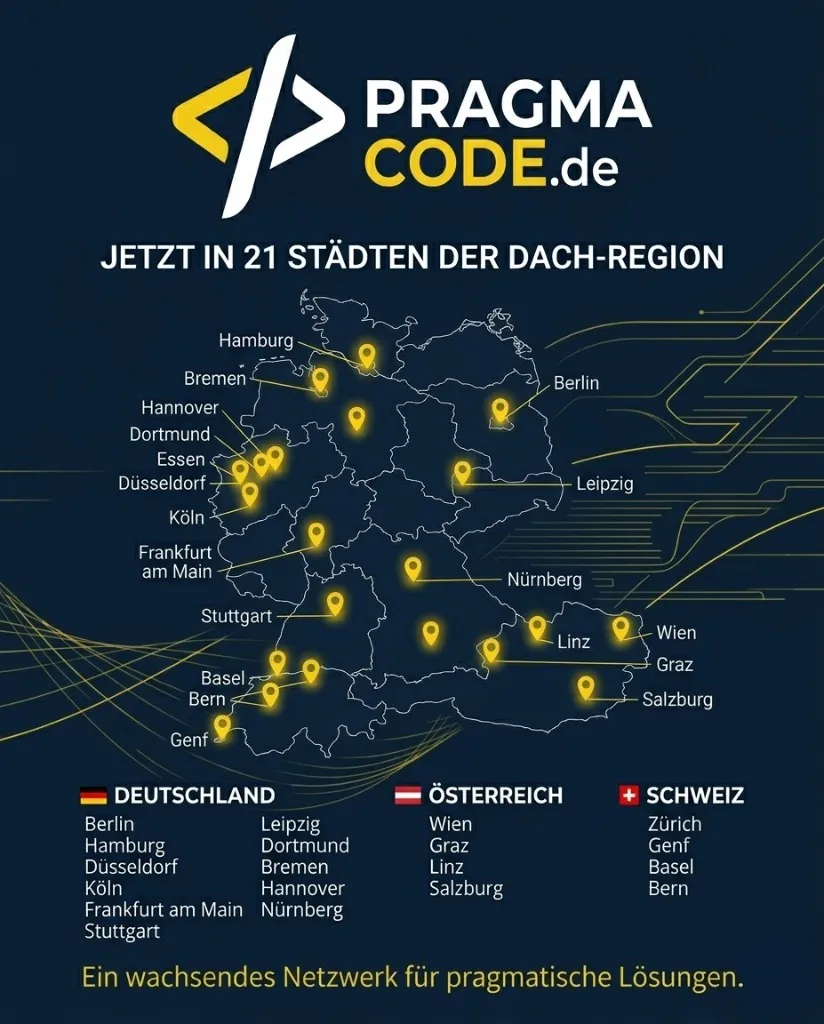
Request a Free GEO Opportunity AuditOur Regional Expertise
We are your digital partner – regionally anchored and successfully scaling across borders.
Have a vision?
Let's check together how we can make your idea take flight.
Book your free strategy call nowExtended Specialized Glossary
Generative Engine Optimization (GEO)
The strategic optimization of web content and brand entities to be cited as primary references in AI-generated answers by models like ChatGPT, Perplexity, and Claude.
Synthetic Retrieval
The multi-stage process of generative search engines where web content is crawled, semantically chunked, and weighted in real time for synthesis.
Citation Share
The percentage of brand mentions and citations in AI responses compared to direct competitors across relevant industry queries.
Entity Graph
A structured knowledge graph connecting organizations, products, and concepts via standardized semantic relationships.
Information Gain
The unique informational value a source provides beyond existing web documents, serving as a primary selection factor for LLM retrieval.