

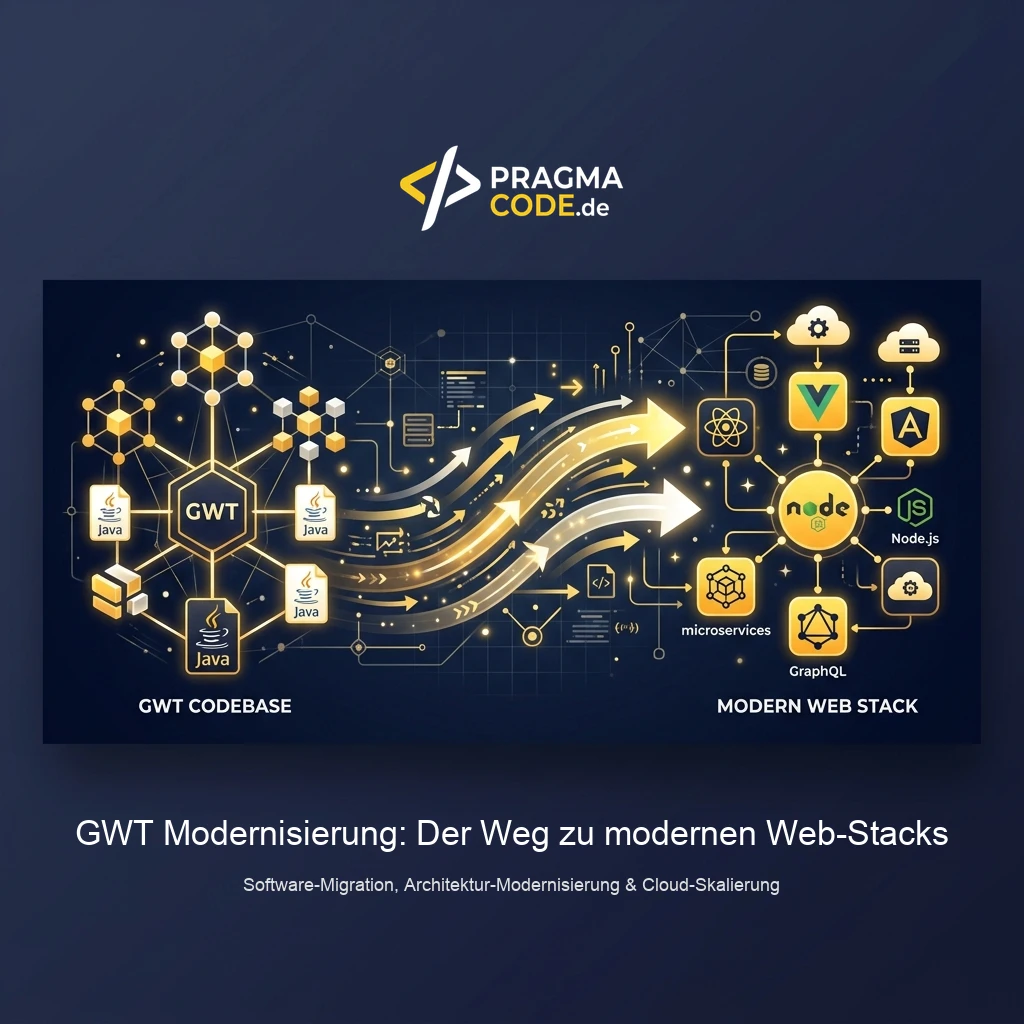
Google Web Toolkit (GWT) powered mission-critical enterprise web applications for over a decade. In 2026, however, this former Java web revolution has become a costly innovation bottleneck. This architectural guide provides CTOs, IT leaders, and senior engineers with a risk-free blueprint out of the legacy trap – from REST API decoupling to incremental migration with Angular, React, Vue, or Vaadin Flow.
This article is an in-depth expert contribution from our content cluster. Discover the complete overview on our main page:GWT Modernization →
GWT in 2026: Time to Act
For more than a decade, Google Web Toolkit (GWT) served enterprise teams well, enabling them to write complex web interfaces entirely in Java. In 2026, however, GWT has become a significant technical debt: compile times are sluggish, modern web APIs lack native support, and GWT talent is virtually non-existent. This guide outlines how CTOs and software architects can plan and execute a step-by-step modernization to Angular, React, Vue, or Vaadin Flow without downtime.
- The GWT Challenge: Extremely long compile cycles (Java-to-JS compilation permutations), outdated dependency ecosystems, incompatibility with modern browser APIs, and high recruitment barriers make GWT a critical liability.
- Key Target Frameworks:
- Angular (18+/19): Highly structured, TypeScript-based, features built-in dependency injection and modern Signals – ideal for enterprise Java engineering teams.
- React 19 + TypeScript: The global industry standard for maximal speed, component reuse, and ease of hiring.
- Vaadin Flow (24+): Keep writing 100% of UI controller code in Java on the JVM – perfect if your team wants to avoid JS/TS overhead.
- Vue.js 3: The progressive, lightweight alternative with an exceptionally gentle learning curve.
- Migration Strategy: Decouple the backend first (replace GWT-RPC with REST APIs) and execute an incremental transition using the Strangler Fig Pattern or Micro Frontends to mitigate risks.
- Introduction: The Decline of Google Web Toolkit
- 1. Why GWT Applications Pose an IT Risk in 2026
- 2. Choosing the Right Target Stack (Angular, React, Vaadin, Vue)
- 3. The Foundation: API Decoupling & Backend Modernization
- 4. The 6-Phase Migration Roadmap & Architecture Patterns
- 5. Real-World Code Refactoring: JSNI & GWT-RPC to TypeScript
- 6. Case Study: Costs, ROI, and Migration Economics
- 7. Quick-Check & Conclusion: Secure Future Viability
Introduction: The Decline of Google Web Toolkit
When Google introduced GWT in 2006, it was a game-changer. For Java backend developers, it abstracted the browser away: You wrote client interfaces in Java, and GWT's compiler spit out optimized JavaScript. It resolved browser compatibility quirks, making complex Web 2.0 RIAs accessible without requiring dedicated JavaScript specialists. It quickly became the default choice for banking, telecom, logistics, and internal ERP systems.
But web tech didn't stand still. Standardized HTML5 APIs, TypeScript, ES Modules, and modern browser engines eliminated the need for a heavy Java-to-JavaScript transpile process. In 2026, GWT is no longer an asset; it is a massive legacy burden. Tech leaders must now navigate the complexity of migrating these monolithic frontends to modern stacks within a structured software modernization initiative to retain agility, security, and developer productivity.
1. Why GWT Applications Pose an IT Risk in 2026
Continuing to host and maintain GWT frontend applications in 2026 creates significant security vulnerabilities and drags down operational efficiency. Software teams deal with four core risks:
Sluggish Compile Times & Permutations
Because GWT compiles Java into separate JavaScript permutations for different browser types, building can take 15 to 45 minutes for medium-to-large projects. The lack of modern Hot Module Replacement (HMR) severely hampers developer velocity and agility.
Talent Pool Drought
New software engineers train in React, Angular, and Tailwind. GWT has not been taught in universities for nearly a decade. Hiring developers willing or able to work on legacy GWT code is extraordinarily difficult and drives up contractor costs.
Vulnerable Dependencies & CSP Issues
GWT web apps often rely on deprecated libraries and outdated JS wrappers. Furthermore, GWT's inline script execution conflicts with strict Content Security Policies (CSP Level 3), creating compliance issues during security audits.
Monolithic Backend Coupling (GWT-RPC)
GWT projects typically rely on GWT-RPC (Remote Procedure Call) for client-server communication. GWT-RPC serializes Java objects directly between client and server over a proprietary binary format. This tightly binds the UI to the backend implementation.
If you change a class in the backend, the entire GWT frontend must be recompiled and redeployed. Furthermore, GWT-RPC is a closed protocol, preventing you from exposing the same backend logic to modern APIs, third-party integrations, or mobile apps.
Pitfall: Historically Grown UI & Server Logic (JSNI)
A major roadblock in legacy Code refactoring is the tight coupling of UI presentation and backend business logic. In legacy GWT codebases, responsibilities were often mixed, making automated migration tools useless. Another risk for software modernization risk management is the presence of JSNI (JavaScript Native Interface) blocks.
JSNI allowed developers to write inline JavaScript directly within Java class method comments using /*-{ ... }-*/. These historical hacks bypassed type checking and manipulated DOM nodes directly. During modernization, they must be isolated and rewritten into clean, typed TypeScript services.
2. Choosing the Right Target Stack (Angular, React, Vaadin, Vue)
When replacing GWT, several modern frameworks and architectures are available. The optimal choice depends on internal team competencies, application complexity, and performance goals.
Option A: Angular 18+ / 19 (The Corporate Enterprise Standard)
For teams with a heavy background in Java, Spring Boot, or Jakarta EE, Angular is the default recommendation.
Why it fits: Angular is highly structured and opinionated. It relies on TypeScript and implements object-oriented design patterns, modules, services, and built-in Dependency Injection (DI) that mirror Java server-side architectures. With modern features like Standalone Components and Signals, Java developers transition to Angular much faster than to unopinionated libraries.
Option B: React 19 + TypeScript (Maximum Ecosystem & Hiring Ease)
If you are looking to hire frontend-native developers, scale the frontend fast, or need absolute performance, React is the global industry leader.
Why it fits: React has the largest UI library market share. Any dashboard, grid, chart, or form library you require is readily available as an open-source package. By pairing React with TypeScript and modern bundlers like Vite, you gain instant hot-reloading and static type safety across enterprise codebases.
Option C: Vaadin Flow (Keep Your UI in Java)
What if your team consists entirely of backend Java developers with no desire to learn JavaScript, npm, or complex frontend tooling? Vaadin Flow (v24+) is the perfect answer.
Why it fits: Vaadin Flow lets you write all UI code directly in Java on the server. Vaadin takes care of rendering web components in the browser and handling client-server state synchronization automatically via WebSockets and XHR. This bypasses the need for client-side routing and separate JavaScript pipelines.
Option D: Vue.js 3 (The Progressive & Lightweight Alternative)
If you are looking for a clean, component-based solution that is simpler to master than Angular but more organized than React, Vue.js with the Composition API offers a wonderful developer experience and gentle adoption curve.
Option E: J2CL (Google's Internal Successor)
Google created J2CL (Java to Closure Compiler) to replace GWT internally in products like Gmail and Google Docs. While powerful as a low-level transpiler, J2CL lacks an out-of-the-box UI component framework. For most commercial software companies, the setup and maintenance overhead make it impractical compared to mainstream SPA frameworks.
Expert Tip: Architectural Decision – Vaadin Flow vs. Decoupled SPAs
Choose Vaadin Flow for complex internal dashboards, ERPs, and admin tools where your backend team needs to deliver rapid updates without UI overhead. However, keep in mind that Vaadin Flow maintains the entire UI state in the server session (RAM). This increases server RAM consumption per active user, which can lead to scaling bottlenecks for high-traffic applications. For public portals, consumer-facing SaaS applications, or websites with strict SEO and initial page load requirements, choose a decoupled frontend with Angular or React.
Side-by-Side: GWT vs. Modern Frontend Architecture
- Tech Stack: Java compiled to JS (Legacy GWT Compiler)
- Compile Speeds: 15 to 45 minutes per build cycle
- Communication: GWT-RPC (Proprietary Java serialization)
- Talent Pool: Dwindling & hard to source
- Mobile & UX: Monolithic bundle size, sluggish load times
- Tech Stack: TypeScript & ESM (Global web standards)
- Compile Speeds: Sub-second (Vite / HMR)
- Communication: OpenAPI / REST JSON / GraphQL
- Talent Pool: Ubiquitous and easy to hire
- Mobile & UX: Code-splitting, lazy loading, full responsiveness
3. The Foundation: API Decoupling & Backend Modernization
A GWT migration is not just a UI reskinning; it is a comprehensive architectural modernization. The most critical foundation to successfully accomplish a Java web development modernization is strict Frontend-Backend decoupling.
Before writing frontend code, migrate GWT-RPC endpoints to standardized JSON RESTful APIs (Spring Boot REST controllers or Quarkus / Jakarta REST). Documenting these endpoints with OpenAPI (Swagger) creates a robust contract between server and client.
Once the backend communicates via standard JSON, frontend teams can generate TypeScript interfaces automatically with tooling like openapi-generator. This allows frontend and backend teams to develop and deploy independently.
Monolithic GWT Architecture (Legacy)
Decoupled API Architecture (Modern)
4. The 6-Phase Migration Roadmap & Architecture Patterns
Rebuilding a massive enterprise frontend in one go ("Big Bang Relaunch") is fraught with operational risk. We recommend a structured 6-phase approach utilizing the Strangler Fig Pattern and modern Micro Frontends.
By deploying a reverse proxy (such as NGINX or Spring Cloud Gateway) in front of the existing application, newly developed SPA routes (built with Angular or React) can be seamlessly delivered alongside the existing GWT application. Over time, more modules are migrated until the legacy container is decommissioned.
Phase 1: UI Audit & Code Analysis
Audit all active screens and user roles. We often find that 20–30% of views in legacy software are deprecated. Clearing this clutter reduces your overall migration scope and saves budget.
Phase 2: API Relaunch & REST Migration
Begin exposing backend services through standard REST endpoints using Spring Boot or Jakarta REST, backed by OpenAPI specifications for automated client generation.
Phase 3: Component Design System
Establish an accessible (BFSG/WCAG-compliant), responsive UI component library in the target framework (Angular, React, or Vue). This ensures visual consistency and speeds up development.
Phase 4: Incremental Rollout (Strangler Fig Pattern)
Deploy modern SPA modules incrementally behind an API gateway. Pilot modules go live first while mission-critical legacy modules continue running on GWT during the transition.
Phase 5: Session, Authentication & State Sync
Ensure that active user authentication and session contexts transfer seamlessly between GWT and the new SPA pages using centralized OAuth2 / OIDC Single Sign-On.
Phase 6: Deprecation & Decommissioning
Once all views have migrated, remove GWT compile configurations from your CI/CD pipelines, decommission old GWT servlet paths, and clean up the repository.
5. Real-World Code Refactoring: JSNI & GWT-RPC to TypeScript
To understand what the transition looks like in practice, here is a comparison of typical GWT patterns against modern TypeScript equivalents.
Pattern 1: GWT-RPC Service vs. Typed TypeScript REST Client
In GWT, every server call required a synchronous interface, an asynchronous interface with AsyncCallback, and a dedicated servlet implementation:
// LEGACY: GWT-RPC Async Service Call (Java)
public interface CustomerServiceAsync {
    void getCustomerDetails(long customerId, AsyncCallback<CustomerDTO> callback);
}

// Invocation inside a GWT Presenter / View:
CustomerServiceAsync customerService = GWT.create(CustomerService.class);
customerService.getCustomerDetails(42L, new AsyncCallback<CustomerDTO>() {
    @Override
    public void onFailure(Throwable caught) {
        Window.alert("Error loading customer: " + caught.getMessage());
    }

    @Override
    public void onSuccess(CustomerDTO result) {
        customerNameLabel.setText(result.getFirstName() + " " + result.getLastName());
    }
});
In a modern stack (e.g., React with TanStack Query or Angular with HttpClient and Signals), the REST endpoint is consumed through a typed interface with built-in caching, retry logic, and error boundaries:
// MODERN: Type-Safe REST Client in TypeScript & TanStack Query
export interface CustomerDTO {
  id: number;
  firstName: string;
  lastName: string;
  email: string;
}

// API Service:
export async function fetchCustomer(id: number): Promise<CustomerDTO> {
  const response = await fetch(`/api/v1/customers/${id}`, {
    headers: { 'Accept': 'application/json' }
  });
  if (!response.ok) throw new Error(`HTTP Error ${response.status}`);
  return response.json();
}

// Usage in React Component:
export function CustomerView({ customerId }: { customerId: number }) {
  const { data, isLoading, error } = useQuery({
    queryKey: ['customer', customerId],
    queryFn: () => fetchCustomer(customerId),
  });

  if (isLoading) return <div class="spinner">Loading customer data...</div>;
  if (error) return <div class="error-alert">Error: {error.message}</div>;

  return <h2>{data?.firstName} {data?.lastName}</h2>;
}
Pattern 2: JSNI Native JavaScript vs. Clean TypeScript Module
Legacy GWT projects often used JSNI blocks to integrate browser APIs or external JavaScript libraries directly inside Java methods:
// LEGACY: JSNI Block in Java (GWT)
public class StorageHelper {
    public static native void saveToLocalStorage(String key, String value) /*-{
        $wnd.localStorage.setItem(key, value);
    }-*/;
}
With TypeScript, browser APIs are natively typed and can be cleanly abstracted with error handling:
// MODERN: Type-Safe Storage Service in TypeScript
export class StorageService {
  public static setItem<T>(key: string, value: T): boolean {
    try {
      const serialized = JSON.stringify(value);
      window.localStorage.setItem(key, serialized);
      return true;
    } catch (error) {
      console.error('LocalStorage write failed:', error);
      return false;
    }
  }
}
6. Case Study: Costs, ROI, and Migration Economics
The following model calculation represents a typical mid-sized B2B software vendor modernizing a core enterprise web portal:
Enterprise Software Provider (~80 Employees)
Legacy Stack: GWT v2.8 (Monolith on Apache Tomcat, Java 8, 120 Views)
Initial Challenges
- Build times of 20–35 minutes wasted hours of developer time daily across a 12-person team.
- No mobile responsiveness and dated visual design (originated around 2012).
- New developer onboarding took 3–6 months due to legacy GWT compilation quirks.
- Security audits flagged unpatched dependencies and CSP non-compliance.
Investment Scope
Phased Strangler Fig Migration: Modular entry for API gateway & pilot modules from 40,000 €, full enterprise migration typically ranging from 120,000 € to 280,000 € over 6–12 months.
Measurable ROI After 12 Months
Economic Bottom Line: The company recouped over 90,000 € annually in reclaimed developer productivity, halved employee onboarding time, and accelerated client feature delivery from months to days.
Would you like to analyze the modernization potential of your GWT application?
We audit your codebase for JSNI bottlenecks, evaluate GWT-RPC dependencies, and deliver a tailored, risk-free migration roadmap.
7. Quick-Check & Conclusion: Secure Future Viability
Migrating from GWT is a major architectural endeavor, but it is necessary to future-proof your software assets in 2026. Sticking with GWT locks you out of the web ecosystem, blocks developer hiring, and limits your UI performance.
Quick-Check: Is Your GWT App Ready for Migration?
Whether you choose the structured OOP path of Angular, the flexible ecosystem of React, or the pure Java simplicity of Vaadin Flow, moving away from GWT ensures your app remains performant and maintainable. Pragma-Code provides the architectural planning, API design, and frontend implementation needed to deliver a risk-free modernization.
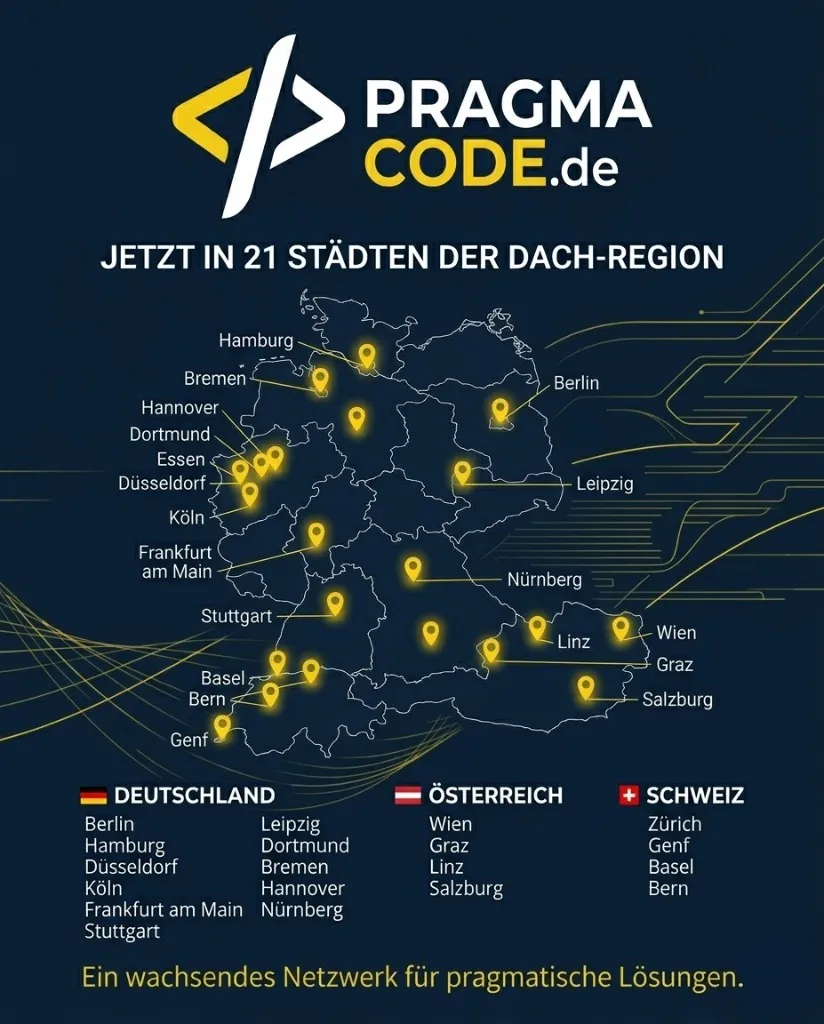
Our Regional Expertise
We are your digital partner – regionally anchored and successfully scaling across borders.
Have a vision?
Let's check together how we can make your idea take flight.
Book your free strategy call nowExtended Specialized Glossary
GWT-RPC
Remote Procedure Call. GWT's proprietary serialization protocol allowing client and server to exchange Java objects directly over HTTP.
Vaadin Flow
A modern web framework for Java that enables developers to build rich web UIs entirely in server-side Java. It renders web components in the browser and synchronizes UI state automatically.
Strangler Fig Pattern
A software migration strategy where a legacy system is incrementally replaced module-by-module with new services or SPA pages until the old monolith can be safely decommissioned.
TypeScript
A typed superset of JavaScript developed by Microsoft that compiles to standard JavaScript, providing robust static typing for enterprise web applications.
J2CL
Java to Closure JavaScript Compiler. A transpiler developed by Google that translates Java source code into clean, optimized JavaScript for modern browser runtimes.
JSNI
JavaScript Native Interface. A legacy GWT mechanism allowing developers to embed and execute raw JavaScript snippets directly inside Java source classes.
Micro Frontends
An architectural pattern where a monolithic frontend web application is decomposed into smaller, independently deliverable and deployable modules.