

In the era of AI Overviews, SearchGPT, and declining organic click-through rates, ticking off simple keyword checklists is no longer enough. Modern B2B SEO landing pages must operate as high-velocity conversion engines: Technically flawless, infused with authentic Information Gain for AI crawlers, and psychologically engineered to convert demanding decision-makers immediately.
This article is an in-depth expert contribution from our content cluster. Discover the complete overview on our main page:SEO Landing Pages & Conversion →
The Shift from Click-Chaser to Authoritative Answer Entity
In the landscape of Google AI Overviews, SearchGPT, and Perplexity, achieving a high keyword ranking is merely table stakes. If an SEO landing page fails to provide tangible Information Gain and captivate decision-makers within 1.5 seconds, it will be skipped by both generative AI crawlers and B2B buyers. Welcome to the era of Generative Engine Optimization (GEO) and High-Velocity Conversion Engineering.
- Intent-First & Information Gain: Rankings in 2026 are earned not by keyword frequency, but through original data, proprietary frameworks, and precise alignment with B2B User Intent.
- Sub-Second Edge Performance: Modern static architecture (such as Astro with Zero JS Hydration) ensures pristine Core Web Vitals (LCP under 1.2s, INP under 150ms), drastically reducing the Bounce Rate.
- Psychological Trust Architecture: High-intent landing pages guide visitors through crystal-clear Above-the-Fold value, verified Social Proof, and frictionless micro-conversions.
- Semantic Machine Readability: Fully structured Schema.org JSON-LD and entity-graph integration make your offerings seamlessly citable by AI agents and LLMs.
- 1. The 2026 Paradigm Shift: Why Legacy Landing Page Models Fail
- 2. The Psychology Behind High-Intent B2B Landing Pages
- 3. Information Gain & GEO: What AI Search Engines Demand
- 4. B2B Comparison: PPC/Ad Landing Pages vs. High-Intent SEO Landing Pages
- 5. The 4 Architectural Pillars of a High-Performance SEO Landing Page
- 6. Technical Excellence: Core Web Vitals, INP, and Edge Rendering
- 7. The 3 Most Expensive Landing Page Pitfalls for B2B Enterprises
- 8. The Anatomy of a High-Converting B2B SEO Landing Page
- 9. The 5-Step Blueprint for Building High-Converting SEO Landing Pages
- 10. Landing Page Evolution: From Keyword Stuffing (2015) to GEO (2026)
- 11. Conversion Rate Optimization (CRO) & Interactive Lead Qualification
- 12. Quick-Check: Is Your SEO Landing Page Ready for 2026?
- 13. Conclusion: SEO Landing Pages as a Sustainable Acquisition Engine
1. The 2026 Paradigm Shift: Why Legacy Landing Page Models Fail
For more than a decade, creating an SEO landing page followed a formulaic script: Select a target transactional keyword, write 800 to 1,200 words with a 2–3% keyword density, place a generic contact form in the sidebar, and acquire a handful of backlink packages. In today's competitive B2B arena, this legacy approach has become completely obsolete.
The organic search ecosystem has undergone a fundamental transformation. With the widespread adoption of AI-driven answer engines—most notably Google AI Overviews, SearchGPT, and Perplexity AI—searchers receive direct answers to basic questions immediately on the search results page (Zero-Click Searches). Today, decision-makers only click through to organic websites when seeking comprehensive solution architectures, verified empirical benchmarks, or direct commercial engagements.
At the same time, B2B executives have zero tolerance for generic marketing fluff. If a landing page does not immediately prove deep domain expertise and technical rigor, visitors bounce in seconds—sending a negative signal to modern search algorithms that prioritize dwell time, interaction depth, and user satisfaction as core ranking criteria.
The Reality of Modern B2B Search Marketing
Industry data reveals that over 58% of informational queries now resolve without a single click to external websites. To achieve sustainable organic growth, B2B companies must align their SEO landing pages with Commercial & Transactional High-Intent Queries and deliver an exceptional informational and conversion experience.
2. The Psychology Behind High-Intent B2B Landing Pages
Before writing code or drafting wireframes, understanding the psychological landscape of the B2B decision-maker is paramount. Unlike B2C consumers, enterprise buyers face significant professional and financial risks. Choosing the wrong IT consultant, software vendor, or development partner can derail critical roadmaps, burn budgets, and endanger executive reputations.
A high-performing SEO landing page acts as a digital trust anchor. Grounded in the Fogg Behavior Model, a conversion occurs when three elements converge simultaneously: Motivation, Ability (minimal friction), and a clear Prompt (Call-to-Action).
Every element must eliminate cognitive friction. Within the first 5 seconds of landing on the page ("Above the Fold"), the layout must answer three critical questions with absolute clarity:
1. Relevance: Precise Problem Alignment
Am I in the exact right place for my specific commercial challenge, timeline, and technical objectives?
2. Authority: Verifiable Track Record
Does this provider possess the proven engineering competence and domain depth to deliver the project without risk?
3. Next Step: Frictionless Action
What is the transparent, low-commitment immediate action I should take to initiate an exploratory consultation?
"Your SEO landing page is the first digital handshake with your prospective enterprise client. If that handshake feels hesitant, cluttered, or bureaucratic, the opportunity vanishes instantly."
3. Information Gain & GEO: What AI Search Engines Demand
In modern search architectures, pure word count has been replaced by the metric of Information Gain. This patented scoring principle evaluates how much novel, incremental information a webpage introduces beyond what is already cataloged in Google's index.
For SEO landing pages, this marks the end of recycled content. AI search algorithms dissect content into semantic vector embeddings. Pages that merely echo textbook definitions are relegated to the bottom of the SERP and excluded from generative citations. To secure top-tier organic rankings and AI Overview placements, a page must offer distinctive value signals:
Service, OfferCatalog, FAQPage) enabling LLMs to parse offerings with mathematical precision.4. B2B Comparison: PPC/Ad Landing Pages vs. High-Intent SEO Landing Pages
Many organizations make the costly mistake of utilizing the same landing page templates for both paid Google Ads (PPC) and organic SEO campaigns. However, user intent and search engine dynamics are fundamentally different:
Comparison: Paid SEA / PPC Ads vs. Organic High-Intent SEO Landing Pages
- Core Focus: Radically stripped-down single page without navigation, built solely for ad-click conversion.
- Content Depth: Minimal copy (typically 300–500 words) designed to avoid distracting the paid visitor.
- Organic Value: Zero search index relevance; incurs continuous media costs for every single click.
- Trust Level: Low information gain; often perceived by enterprise buyers as an aggressive sales pitch.
- Lifecycle: Ceases generating pipeline immediately when ad budgets are paused or depleted.
- Core Focus: Demonstrating comprehensive technical mastery, topic cluster integration, and inbound capture.
- Content Depth: Deep information gain (> 2,000 words structured prose) tailored for humans and AI agents.
- Organic Value: Perpetual organic prominence across Google, SearchGPT, and Perplexity with zero ad spend.
- Trust Level: Exceptional E-E-A-T backed by technical breakdowns, live case studies, and engineering depth.
- Lifecycle: Sustainable digital asset with a compounding ROI over multi-year operational cycles.
5. The 4 Architectural Pillars of a High-Performance SEO Landing Page
Delivering high-converting B2B landing pages requires an advanced engineering foundation. At Pragma-Code, we build upon four core architectural pillars that combine blazing execution speed with seamless user experience:
1. Static Site Generation (SSG)
Pre-compiled HTML and CSS via modern frameworks like Astro eliminate runtime server bottlenecks. Content is served as pristine, lightweight HTML without heavy monolithic CMS overhead.
2. Zero JS by Default (Astro Islands)
Interactive widgets (calculators, FAQ accordions, contact modals) load as isolated client islands only when needed. The foundational article body remains completely free of client-side JavaScript bloat.
3. Global Edge Network CDN
Assets are distributed across global edge server nodes utilizing automated HTTP/3, Brotli compression, and WebP/AVIF responsive image formats right at the user's doorstep.
4. Entity-Graph JSON-LD
Deeply integrated Schema.org semantic annotations covering Services, Organizations, FAQs, Breadcrumbs, and HowTos make every section machine-readable for knowledge graphs and generative AI.
6. Technical Excellence: Core Web Vitals, INP, and Edge Rendering
Google considers technical user experience a primary ranking signal. Since March 2024, INP (Interaction to Next Paint) has served as the official Core Web Vital for responsiveness, replacing the legacy FID (First Input Delay) metric.
For B2B SEO landing pages, technical performance is the primary defense against user abandonment. When a mobile visitor taps an inquiry button or expands a feature breakdown and encounters a UI frozen by heavy client bundles, they leave immediately. Search engines interpret this drop-off as poor user satisfaction, systematically lowering the page's organic rank.
The three non-negotiable technical benchmarks for 2026 are:
LCP (Largest Contentful Paint) < 1.2s
The primary above-the-fold visual element must render instantaneously. Optimized WebP assets and self-hosted fonts configured with font-display: swap are mandatory.
INP (Interaction to Next Paint) < 150ms
Every click, tap, and keyboard interaction must provide immediate visual feedback without main-thread latency.
CLS (Cumulative Layout Shift) = 0
Zero unexpected layout shifts caused by asynchronous ad scripts, web fonts, or unreserved image dimensions.
Expert Tip: Why Legacy WordPress Page Builders Throttle B2B SEO
Standard WordPress configurations utilizing heavy page builders (such as Elementor or Divi) frequently load 30+ disparate CSS and JS files exceeding 3 MB per visit. Migrating to a clean Astro architecture typically reduces total page weight by 80% to 90%, driving Google PageSpeed scores to a consistent 100/100 and substantially lifting conversion rates.
7. The 3 Most Expensive Landing Page Pitfalls for B2B Enterprises
Throughout our consulting engagements at Pragma-Code, we regularly audit B2B websites that attract significant traffic yet fail to generate meaningful pipeline. Three systemic traps consistently emerge:
Trap 1: Thin Content & Isolated Keyword Silos
Publishing dozens of near-duplicate programmatic landing pages ("IT Consulting City A", "IT Consulting City B") lacking genuine local depth. Search engines classify these as doorway pages, penalizing overall domain trust. Modern strategies require deeply researched hub-and-spoke content clusters.
Trap 2: The "Buy Now" Barrier for High-Ticket B2B Services
Complex engineering projects or enterprise retainers valued between €20,000 and €100,000+ will never convert through an anonymous checkout form. Without low-friction micro-conversions (such as instant audits, architectural reviews, or ROI calculators), over 95% of qualified prospects bounce.
Trap 3: Missing E-E-A-T Signals & Anonymous Corporate Personas
Pages devoid of identifiable leadership profiles, technical accreditations, and verifiable client logos create immediate friction. B2B decision-makers engage with proven experts—transparent author credentials and client endorsements are essential.
8. The Anatomy of a High-Converting B2B SEO Landing Page
A systematically engineered SEO landing page guides prospects smoothly from initial problem recognition to committed conversion. These five architectural modules represent the gold standard:
1. Above-the-Fold Hero: High-Impact Value Proposition
A sharp H1 focused on business outcomes rather than generic service descriptors, supported by a concise sub-headline, 3 benefit bullet points, and a prominent primary Call-to-Action.
2. Problem Agitation: Mirroring Enterprise Friction
An articulate breakdown of the operational bottlenecks and commercial risks your target buyer encounters daily. This immediately demonstrates that you understand their industry reality.
3. Solution & Methodology: Transparent Delivery Roadmap
Presenting your services as a structured, modular process. Enterprise buyers avoid black-box solutions; they demand a clear implementation roadmap with verifiable milestones.
4. Verified Social Proof & Case Studies
Genuine client endorsements with full executive titles, enterprise logos, and concrete performance data (e.g., "+140% qualified inbound pipeline within 6 months") to solidify technical credibility.
5. Frictionless Conversion Funnel
A lightweight multi-step inquiry flow or seamless calendar booking integration. Keep mandatory input fields strictly minimal (Name, Work Email, Project Scope/Domain).
9. The 5-Step Blueprint for Building High-Converting SEO Landing Pages
To ensure consistent quality, rapid time-to-market, and measurable business ROI from initial keyword research to production deployment, follow this standardized 5-phase framework:
Intent Mapping & Keyword Cluster Analysis
Identify commercial and transactional high-intent search terms. Analyze SERP composition to dissect exact primary and secondary user objectives.
Information Gain Architecture & Copywriting
Craft authoritative content enriched with proprietary data, comparison tables, and structured answers to client challenges.
UX/UI Design & Conversion Optimization
Structure intuitive visual layouts featuring prominent trust seals, executive testimonials, and interactive pre-qualification elements.
Astro Implementation & Technical Verification
Develop the page using static site components with optimized Core Web Vitals, Schema.org JSON-LD, and accessible code.
Deployment, Fast Indexing & Iterative CRO
Submit URLs via indexing APIs and continuously optimize conversion funnels based on real user behavioral analytics.
10. Landing Page Evolution: From Keyword Stuffing (2015) to GEO (2026)
Reviewing the past decade of search engine optimization reveals how dramatically the criteria for high-ranking landing pages have evolved:
Rankings were driven primarily by text volume, rigid keyword densities (WDF*IDF), and raw backlink quantity. User experience and loading speed remained secondary concerns.
Google introduced Core Web Vitals. Mobile responsiveness, zero layout shifts, and rapid rendering speeds became baseline requirements across B2B search.
Algorithms began heavily penalizing generic AI-spun content lacking genuine experience. Demonstrable real-world expertise, practitioner authority, and brand trust emerged as decisive ranking signals.
AI answer engines aggregate solutions directly. Landing pages serve as high-authority answer entities enriched with proprietary information gain and dynamic pre-qualification funnels.
11. Conversion Rate Optimization (CRO) & Interactive Lead Qualification
Achieving top organic rankings delivers zero commercial value if prospects bounce without requesting an initial consultation. Systematic Conversion Rate Optimization (CRO) is the essential counterpart to technical SEO.
In modern B2B funnels, interactive self-service workflows dramatically outperform static lead forms. Instead of confronting visitors with an eight-field contact block, offer a dynamic 3-step solution audit:
Step 1 (Discovery): Prospect selects their primary objective (e.g., "Slow Website Speed", "Invisible in AI Search Engines", "Upcoming Enterprise Web Relaunch").
Step 2 (Technical Context): Input of current domain and tech stack infrastructure (e.g., WordPress, Typo3, Custom React).
Step 3 (Immediate Insights & Engagement): Instant performance assessment combined with a one-click invitation to schedule a complimentary 20-minute strategic consultation with a Senior Architect.
12. Quick-Check: Is Your SEO Landing Page Ready for 2026?
Use this executive audit checklist to evaluate current or upcoming B2B landing pages:
Quick-Check: High-Performance SEO Landing Page Scorecard
13. Conclusion: SEO Landing Pages as a Sustainable Acquisition Engine
In 2026, SEO landing pages are much more than a routine digital marketing tactic: They represent the core operational engine of your B2B inbound strategy. By integrating authentic Information Gain, ultra-fast Astro architecture, and high-conversion UX engineering, you build a sustainable acquisition asset that consistently generates high-caliber enterprise leads independent of rising ad prices.
Invest in depth, engineering excellence, and authentic value for your target audience—both AI search engines and enterprise buyers will reward your commitment with market-leading rankings and consistent business growth.
Ready to Transform Your B2B Landing Pages?
We audit existing digital properties or engineer bespoke, ultra-fast B2B landing pages built on modern Astro architecture — delivering maximum organic visibility and measurable enterprise inbound pipeline.
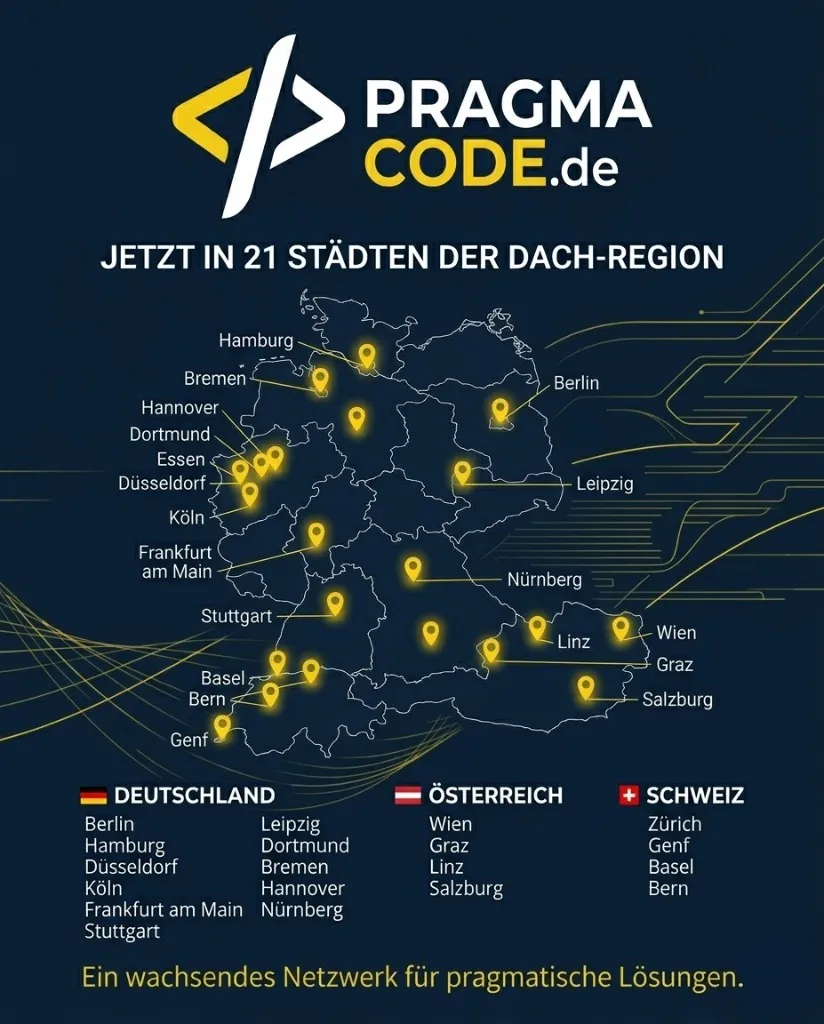
Request a Free Performance AssessmentOur Regional Expertise
We are your digital partner – regionally anchored and successfully scaling across borders.
Have a vision?
Let's check together how we can make your idea take flight.
Book your free strategy call nowExtended Specialized Glossary
Information Gain
The unique, novel information value that a piece of content delivers compared to existing web sources. A core ranking factor in modern AI search algorithms.
Conversion Rate Optimization (CRO)
The systematic, data-driven methodology of increasing the percentage of website visitors who complete a desired conversion action.
Core Web Vitals
Google's standardized user experience performance metrics assessing loading speed (LCP), visual stability (CLS), and interaction responsiveness (INP).
User Intent
The underlying motivation, goal, and practical objective of a searcher when entering a query into a search engine.
Social Proof
The psychological phenomenon where potential buyers rely on client reviews, case studies, and enterprise endorsements to validate trust.
Bounce Rate
The percentage of website visitors who navigate to a landing page and leave without taking any further action or viewing additional pages.