


First-class content falls flat when search engine crawlers encounter technical roadblocks. In this actionable guide, mid-market B2B companies learn how to systematically execute a technical SEO audit, uncover hidden indexation bottlenecks, and secure top rankings across Google and AI search engines.
This article is an in-depth expert contribution from our content cluster. Discover the complete overview on our main page: SEO & Content →
From Content Blind Spots to Engineering Precision – Why 60% of All SEO Bottlenecks Originate in Code
Many mid-market B2B enterprises invest heavily in high-caliber whitepapers, engineering documentation, and solutions pages—only to watch organic impressions flatline in Google Search Console. The frustrating reality: search algorithms do not merely evaluate copy quality; they ruthlessly grade the underlying digital infrastructure. If Googlebot runs into broken redirect chains, chokes on client-side JavaScript rendering, or burns its Crawl Budget across endless parameter traps, even world-class content remains invisible. A comprehensive technical SEO audit systematically surfaces and resolves these hidden friction points.
No Indexation Without Frictionless Crawling
Search engines operate along an immutable three-tier pipeline: Crawl → Render → Index. Faulty directives in your Robots.txt, orphan 404 pages, or misconfigured HTTP headers block bots long before they ever evaluate your copy.
Core Web Vitals Dictate Behavioral User Signals
Google's Core Web Vitals (LCP < 0.8s, INP < 100ms, CLS = 0.00) are non-negotiable ranking criteria. High-performance frontends, modern image pipelines, and eliminating Render-Blocking Resources are core software engineering imperatives.
Architectural Resilience Over Plugin Patchworks
A rigorous audit insulates organizations from organic visibility collapse during site relaunches. Robust Canonical Tags, validated XML sitemaps, and clean HTTPS/HSTS setups provide the foundation for sustainable search dominance.
- 1. What is a Technical SEO Audit and Why is it Indispensable for SMEs?
- 2. The 5 Core Pillars of Technical Website Diagnostics in Detail
- 3. The 2026 Technical Audit Checklist: A Step-by-Step Diagnostic Framework
- 4. Enterprise Audit Tool Matrix: Screaming Frog, GSC, Lighthouse & Sitebulb
- 5. High-Risk Technical SEO Traps in the Mid-Market & Troubleshooting Guide
- 6. References & Official Engineering Documentation
Context & Strategic Scope: While our dedicated service portal at Technical SEO Audit provides managed website audits for mid-market organizations, and our in-depth guide on SEO Landing Pages focuses on user conversion anatomy, this whitepaper serves as a complete, engineering-grade audit manual for software engineers, IT directors, and digital marketing leaders.
1. What is a Technical SEO Audit and Why is it Indispensable for SMEs?
In modern digital marketing, search engine optimization is commonly partitioned into three interdependent disciplines: Content SEO (keyword research, copy structure, and intent modeling), Off-Page SEO (backlink acquisition and digital brand authority), and Technical SEO (the underlying software, networking, and server infrastructure). While content creation is creative, technical SEO is the rigid physics of the web: if the server wire is cut, no ranking signal can pass through.
A technical SEO audit (often called a website audit or site audit) is an exhaustive, methodical inspection of all technical parameters governing how automated web crawlers discover, render, evaluate, and index your digital presence. The singular objective is to eliminate every point of friction between your web server and the algorithmic crawlers of Google, Bing, and generative AI search engines such as Perplexity and ChatGPT Search.
The 3 Sequential Phases of the Search Engine Lifecycle
Every single URL across your domain must successfully navigate three cascading gates before it has any realistic chance of capturing top rankings in organic search results:
1. Crawling & Discovery
Googlebot navigates the web via contextual hyperlinks and XML sitemaps. This requires uncompromising Crawlability free from server timeouts (504), access authentication barriers, or accidental robots.txt exclusions.
2. Rendering & Execution
Modern crawlers execute client-side HTML, CSS, and JavaScript inside a headless browser environment (Google's Web Rendering Service). If heavy script bundles time out, bots encounter an empty shell.
3. Indexation & Ingestion
Once content is parsed, the indexing tier evaluates whether the URL belongs in the global search index based on Canonical Tags, content uniqueness, and semantic depth.
2. The 5 Core Pillars of Technical Website Diagnostics in Detail
To audit a corporate web estate without getting bogged down in cosmetic noise, diagnostics should be segmented into five clearly bounded architectural pillars. This structured breakdown ensures complete coverage from server sockets to client rendering:
1. Crawlability & Bot Guidance (robots.txt, HTTP Status Codes)
The root-level robots.txt file serves as the definitive traffic sign for all automated web crawlers. A single stray character can trigger catastrophic enterprise downtime. In client relaunch projects, we frequently observe staging configurations carrying Disallow: / accidentally copied over to production servers. The result is a total organic traffic wipeout within 48 to 72 hours.
Equally critical is a granular inspection of your HTTP status codes across the entire domain:
200 OK – The Golden Standard
Every index-worthy landing page must respond directly with HTTP 200 OK—without intermediate routing scripts, interstitial delays, or client-side meta-refreshes.
301 Permanent Redirects – Clean URL Migrations
Legacy or retired URLs must permanently forward to their modern equivalents using HTTP 301. Never rely on temporary 302 redirects for structural URL changes, as 302s fail to cleanly pass link authority and historical ranking signals.
Eliminating Multi-Hop Redirect Chains
When URL A redirects to URL B, which in turn redirects to URL C, server response latency spikes and search bots deplete allotted crawl budgets. Every redirection must point directly to its terminal destination in a single hop (A ➔ C).
Governing 404 Not Found & 410 Gone Responses
Internal links terminating in 404 errors erode user trust and waste crawler bandwidth. Permanently deleted pages with no relevant replacement should emit an explicit HTTP 410 Gone header to trigger rapid index de-registration.
2. Indexability & Duplicate Prevention (Canonical Tags, Noindex, XML Sitemaps)
Just because Googlebot can request a URL does not guarantee it will be admitted into the search index. This is governed by Indexability. A common issue across B2B platforms involves faceted navigation, sorting toggles, and marketing campaign parameters (e.g., ?utm_source=..., ?sort=asc, or ?filter=category). Absent an unambiguous Canonical Tag, search algorithms evaluate each variant as duplicate thin content, diluting ranking signals.
A correct canonical tag must reside within the document <head> and always reference a fully qualified absolute URL:
<!-- Correct Implementation: Fully qualified HTTPS URL with consistent trailing-slash syntax -->
<link rel="canonical" href="https://www.example.com/services/technical-seo-audit" />
Engineering Best Practice: Self-Referencing Canonicals Are Mandatory!
Every unique primary page must feature a self-referencing canonical tag pointing precisely to its canonical URL. This prevents third-party scraper domains, session token parameters, and syndication copies from triggering accidental duplicate content penalties.
3. Rendering & JavaScript Architecture (SSR & SSG vs. CSR)
Over the past decade, modern web developers embraced client-rendered Single-Page Applications (SPAs) built with React, Vue, or Angular. However, when these platforms rely exclusively on Client-Side Rendering (CSR), search bots receive an empty HTML document containing little more than a <div id="root"></div> container on the initial HTTP handshake.
While Googlebot is capable of executing JavaScript, rendering occurs asynchronously in a resource-constrained secondary queue (the "Second Wave of Indexing"). Under heavy client script bundles, API call latency, or execution timeouts, crawlers abandon rendering before copy is exposed. The gold standard for mid-market B2B organizations is adopting Static Site Generation (SSG) using modern compilers like Astro or robust Server-Side Rendering (SSR) via Next.js:
# Terminal Diagnostic: What does Googlebot see on the initial HTTP payload?
curl -s -A "Googlebot" https://www.example.com/solutions | grep -i "<h1"
If this terminal command returns your primary H1 heading immediately, your core content is fully machine-readable without requiring browser JavaScript execution.
4. Core Web Vitals & Mobile PageSpeed (LCP, INP, CLS)
Following Google's full rollout of Interaction to Next Paint (INP) as an official Core Web Vital, search engines no longer evaluate raw download velocity in isolation—they measure user interface fluidity under real user conditions. As demonstrated in our analysis of PageSpeed Insights & AI Crawlers, slow sites suffer systemic penalties in modern search and agentic browsing.
Largest Contentful Paint (LCP) – Target: < 0.8s
Captures when the largest visual viewport element (typically the hero image or primary H1 block) finishes rendering. Convert hero assets to modern WebP/AVIF formats and assign the explicit HTML attribute fetchpriority="high".
Interaction to Next Paint (INP) – Target: < 100ms
Quantifies responsiveness latency from user interactions (such as button clicks, mobile drawer toggles, or input fields) to visual screen updates. Monolithic JavaScript bundles blocking the main thread represent the chief cause of poor INP.
Cumulative Layout Shift (CLS) – Target: 0.00
Measures unexpected layout movement during page loading. Enforce explicit width and height dimensions on every image and video element, and embed web fonts using font-display: swap.
5. Security, HTTPS & Internal Link Architecture
Search engines actively penalize domains lacking flawless SSL/TLS encryption. A rigorous site audit confirms that all HTTP requests enforce 301 redirection to HTTPS and checks that no mixed-content warnings (insecure HTTP scripts, fonts, or images loaded over an HTTPS page) trigger browser security warnings.
Furthermore, internal click depth (crawl depth) dictates organic performance: every mission-critical service page, product catalog branch, or case study must be accessible within three clicks from the homepage. Orphan pages lacking internal links receive negligible PageRank and linger in search obscurity.
3. The 2026 Technical Audit Checklist: A Step-by-Step Diagnostic Framework
To execute a comprehensive technical SEO audit systematically without overlooking critical infrastructure layers, we recommend following a battle-tested 5-phase roadmap:
-
Phase 1: Preparation & Full Crawler Scan
Initiate an exhaustive domain crawl utilizing tools like Screaming Frog SEO Spider or Sitebulb. Enable JavaScript rendering in crawler configurations to accurately capture dynamically injected links and DOM mutations. Configure the crawler User-Agent to Googlebot (Smartphone) to replicate Google's mobile-first indexing environment.
-
Phase 2: Indexation Analysis in Google Search Console
Examine the Page Indexing report inside GSC. Distinguish between benign exclusions (e.g., intentional redirects) and urgent operational defects such as "Crawled - currently not indexed" or "Duplicate without user-selected canonical". Execute real-time URL Inspections on disputed templates.
-
Phase 3: Link Topology & Click Depth Auditing
Filter crawler exports by click depth (> 3 hops) and detect orphan pages by cross-referencing XML sitemap inventories against crawled HTML documents. Purge internal 404 links and refine generic anchor texts into descriptive topical keywords (as outlined in our guide to Keyword Backlinks & Internal Link Topology).
-
Phase 4: Core Web Vitals Field & Lab Benchmarking
Correlate real-world field metrics from the Chrome User Experience Report (CrUX) with synthetic laboratory audits in Google Lighthouse. Address Render-Blocking Resources by deferring non-essential scripts via
deferattributes and inlining critical above-the-fold CSS. -
Phase 5: Prioritized Remediation Roadmap
Map identified defects into an actionable Impact vs. Effort engineering matrix. High-severity indexing blockers (such as accidental robots exclusions or broken canonical directives on core landing pages) require immediate remediation (Quick Wins). Broader architectural overhauls (such as headless CMS migrations) should be slotted into scheduled development sprints.
4. Enterprise Audit Tool Matrix: Screaming Frog, GSC, Lighthouse & Sitebulb
Selecting the right toolset determines the diagnostic depth and accuracy of your website audit. For mid-market B2B enterprises, four foundational diagnostic platforms stand out:
| Audit Tool | Screaming Frog | Google Search Console | Google Lighthouse | Sitebulb |
|---|---|---|---|---|
| Diagnostic Focus | Desktop Crawler Full URL scans & status code diagnostics | Verified Google Data Live indexing status & crawl anomalies | Lab Performance Core Web Vitals & code efficiency | Visual Crawler Interactive site graphs & issue insights |
| Licensing & Cost | Freemium / Paid License Free up to 500 URLs; ~£209/year for full license | 100% Free Official Google Webmaster Platform | 100% Free Open-source in Chrome DevTools | Commercial Subscription Monthly tiers starting at ~€35/month |
| JavaScript Rendering | Outstanding Built-in Headless Chrome rendering engine | Native Google Live URL inspection mirrors production bot | Browser Native Evaluates fully rendered client DOM tree | Excellent Detailed DOM diffing vs. raw HTML |
| Ideal Deployment Scope | Deep Technical Audits Bulk exports & status code diagnostics | Ongoing Health Tracking Real-time index coverage & alert triage | Developer Optimization Pre-deployment frontend tuning | Executive Stakeholder Reports Visual architecture diagrams for leaders |
5. High-Risk Technical SEO Traps in the Mid-Market & Troubleshooting Guide
Across hundreds of comprehensive code evaluations for industrial, manufacturing, and tech organizations, four recurring technical anti-patterns account for the majority of severe organic visibility drops:
Diagnostic Quick-Check: The 4 Deadliest Technical SEO Traps
X-Robots-Tag: noindex headers.
https://example.com/services/ and https://example.com/services, search engines treat them as distinct pages. Enforce rigid server-level 301 rules.
Enterprise Case Study: How an Industrial OEM Recovered +42% Organic Search Clicks
Consider an instructive real-world troubleshooting case from our technical advisory practice: A precision drive systems manufacturer hosting 1,200 specialized product spec sheets suffered flatlining organic traffic despite consistent content publishing. Our comprehensive technical audit surfaced two critical architectural flaws within 48 hours:
Diagnostic Finding: Global Canonical Tag Mispointing
An automated plugin update had overwritten canonical parameters across all product specifications, setting the canonical tag on all 1,200 distinct URLs to point directly to the domain's homepage. Google algorithmically classified all technical product pages as near-duplicates of the root page and de-indexed them sequentially.
Remediation & 30-Day Recovery Trajectory
Our engineering team deployed self-referencing canonical tags across all product pages and submitted an updated XML sitemap directly to Google Search Console. Within four weeks, Google completed full re-indexing of the catalog, lifting organic search clicks for targeted engineering model queries by +42%.
Ready to Benchmark Your Website's Technical Foundation?
Request a Free Technical Website Audit6. References & Official Engineering Documentation (As of October 2026)
- Google Search Central Documentation: Official engineering guidance on controlling crawling, indexation directives, and HTTP status codes (developers.google.com/search, Current as of October 2026).
- W3C Web Performance Working Group: Core Web Vitals specifications (LCP, INP, CLS) and Navigation Timing API standards (w3.org/standards, Current as of October 2026).
- HTTP Archive Web Almanac 2026: Annual comprehensive study on global JavaScript payloads, render-blocking resources, and PageSpeed benchmarks (almanac.httparchive.org).
- Screaming Frog SEO Spider User Guide: Architectural documentation for configuring headless JavaScript rendering crawls and XPath data extraction (screamingfrog.co.uk, Current as of October 2026).
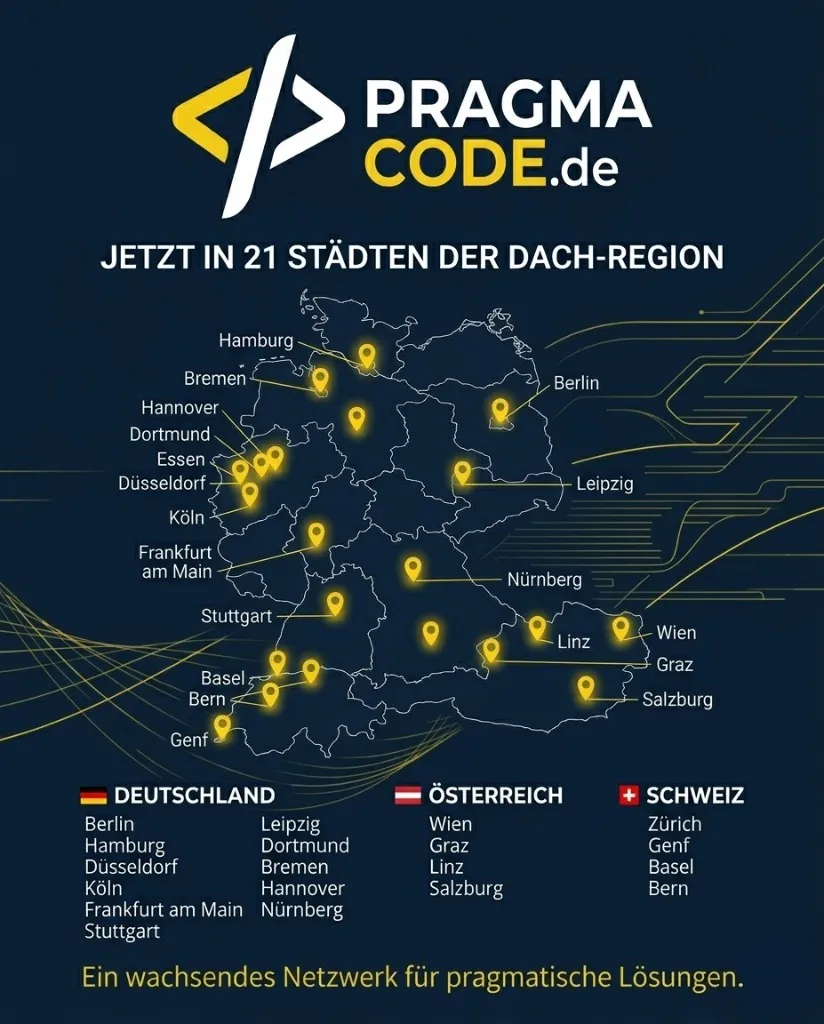
Our Regional Expertise
We are your digital partner – regionally anchored and successfully scaling across borders.
Have a vision?
Let's check together how we can make your idea take flight.
Book your free strategy call nowExtended Specialized Glossary
Crawlability
The technical accessibility of a website for search engine web crawlers, ensuring pages can be fetched without robots.txt blocks, server errors, or redirect loops.
Indexability
The qualification of a crawled URL to be admitted into a search engine primary searchable index based on canonical directives, noindex tags, and technical quality.
Canonical Tag
An HTML link element (rel='canonical') signaling to search engines which URL represents the authoritative original copy of duplicated or parameter-variant content.
Render-Blocking Resources
Critical CSS and JavaScript assets that pause initial browser rendering until fully downloaded and executed, directly degrading Core Web Vitals (LCP and FCP).
Crawl Budget
The finite allotment of HTTP requests and server capacity that search engines allocate to crawl a given domain within a specific timeframe.
Robots.txt
A root-level text file providing directives to automated search engine crawlers regarding which URL paths may or may not be requested.