


Search Engine Optimization is experiencing its most radical paradigm shift since the introduction of the PageRank algorithm. In an era dominated by Generative Engine Optimization (GEO) and Large Language Models (LLMs), marketing executives and business owners face a fundamental question: Are backlinks even relevant in 2026? The answer is: More relevant than ever. However, how search engines and AI agents evaluate links has transformed fundamentally — from a quantitative metric to an indispensable anchor of trust in the synthetic web.
This article is an in-depth expert contribution from our content cluster. Discover the complete overview on our main page:SEO Landing Page Optimization →
The Anchor of Truth in the Synthetic Web
In an era where synthetic AI content can be generated endlessly at near-zero marginal cost, pure textual relevance is no longer enough to differentiate market leaders. Large Language Models (LLMs), AI agents, and generative search engines like Perplexity, SearchGPT, or Google AI Overviews rely on external citations as non-negotiable certificates of authenticity. Backlinks are the cryptographic digital signature of real-world enterprises, human experts, and trusted institutions.
- From PageRank to RAG Citation Graphs: Backlinks no longer merely influence positions across the classic 10 blue links; they serve as primary verification sources determining whether generative AI systems synthesize and cite your brand as an authoritative fact.
- Entities Supersede Isolated Links: Semantic proximity, the verified E-E-A-T profile of the author, and topical node positioning in the Knowledge Graph vastly outweigh thousands of uncurated directory submissions.
- Content-Led Link Building as Standard: Only original empirical data, proprietary benchmarks, interactive calculation tools, and targeted digital PR consistently attract sustainable, penalty-proof editorial backlinks in 2026.
- 1. The Foundation: What Backlinks Really Mean in Modern Search
- 2. Backlinks in the AI Era: The Irreplaceable Anchor of Truth
- 3. Quality Metrics: What Defines an Elite Backlink in 2026?
- 4. Strategic Paradigm Shift: Traditional vs. GEO Link Building
- 5. Technical Aspects: Machine-Readable Link Attributes
- 6. Toxic Links and Algorithmic Penalties
- 7. The Enterprise Tool Stack for Backlink & GEO Audits
- 8. Step-by-Step Roadmap: 4 Phases to Sustainable Link Authority
- 9. Conclusion & Quick-Check: Your Path to Digital Sovereignty
1. The Foundation: What Backlinks Really Mean in Modern Search
At the fundamental code level, a backlink (inbound link) is simply an HTML hyperlink connecting an external web property to your domain. However, beneath this elemental syntax lies the core sociological architecture of the World Wide Web: validation through independent peer review.
When an established academic institution, a premier industry publication, or a leading market peer links to your digital assets, it signals genuine endorsement: your page provides unique data, methodology, or software solutions that add undeniable value to the author's readership. Modern search algorithms evaluate every genuine editorial reference as an algorithmic vote of confidence.
The Evolution of Link Algorithms: From PageRank to Neural Graphs
To grasp why backlinks remain paramount in 2026, understanding their algorithmic history is essential. What began in the late 1990s as a random web crawl algorithm has transformed into a sophisticated matrix of multidimensional semantic vector evaluations.
In the nascent era of web search, raw quantity ruled. The greater the volume of links pointing to a URL, the higher its PageRank climbed. This inevitably spurred industrial-scale link manipulation: automated comment spam, link farms, and private blog networks (PBNs) flooded the early web.
With Google's landmark Penguin update, manipulative link schemes were aggressively devalued and penalized. Search engines learned to detect rented footer links, artificial anchor distributions, and low-quality directories, establishing contextual relevance and trust as core ranking factors.
Hyperlinks became fully integrated into entity graphs. Search algorithms evaluated links not in isolation, but within the broader Knowledge Graph. A link gained maximum equity only when the referring entity possessed verified subject-matter authority (E-E-A-T) in that specific topical domain.
Autonomous AI agents, SearchGPT, and Perplexity utilize link profiles as foundational grounding anchors. In a web inundated with synthetic text, verified backlinks serve as truth filters to separate primary empirical sources from AI hallucinations and generic regurgitations.
2. Backlinks in the AI Era: The Irreplaceable Anchor of Truth
With the widespread adoption of generative AI search interfaces—including Google AI Overviews, OpenAI SearchGPT, Perplexity AI, and Claude Enterprise—user search behavior has shifted dramatically. B2B decision-makers increasingly consume direct, synthesized AI answers rather than manually browsing ten organic blue links.
In this transformed ecosystem, some wondered whether inbound links would lose their relevance. The reality is quite the opposite: backlinks have evolved into the single most critical anchor of truth in the digital sphere.
Retrieval-Augmented Generation (RAG) and the Anti-Hallucination Filter
Large Language Models are inherently prone to generating convincing yet factually inaccurate statements (hallucinations). To eliminate this risk in enterprise search, modern AI systems rely heavily on Retrieval-Augmented Generation (RAG). Instead of generating answers solely from static weights, the AI dynamically retrieves authoritative live web documents and synthesizes findings in real time.
Which documents does the RAG pipeline select? The underlying link graph is the determining factor. Web properties backed by robust networks of editorial citations, academic references, and verified Topical Authority receive premier retrieval priority in the vector embedding space. An authoritative backlink profile dictates whether your organization is cited as a prime source with direct citation cards or ignored entirely.
E-E-A-T: Why Generative AI Enforces External Validation
Google's Quality Rater Guidelines prioritize four pillars: Experience, Expertise, Authoritativeness, and Trustworthiness (E-E-A-T). While first-hand experience and technical expertise can be demonstrated through in-depth OnPage content, true authority and trustworthiness can never be self-proclaimed.
External Validation
Any company can claim market leadership on its own homepage. Only when recognized trade journals, research institutes, and industry leaders cite your whitepapers do algorithms and AI models accept your authority as verified fact.
Semantic Graph Clustering
Inbound links connect your brand with related nodes across the global Knowledge Graph, clearly mapping out the specific subject clusters where your domain holds undisputed topical dominance.
High-Intent Referral Traffic
Top-tier editorial placements deliver more than algorithmic link equity—they channel high-intent B2B buyers directly to your landing pages. Strong engagement signals (long dwell time, low bounce rates) reinforce your organic authority exponentially.
"In a world where anyone can generate 100 blog posts in seconds with AI, text alone is no longer a sustainable moat. Genuine editorial citations from established industry titans are the only currency protecting search engines and AI models from manipulation." – Alexander Ohl, Founder & Lead Architect Pragma-Code
3. Quality Metrics: What Defines an Elite Backlink in 2026?
The era of measuring SEO success by the raw volume of acquired backlinks is over. A single contextual link from a Tier-1 industry publication holds far greater ranking velocity than thousands of automated directories. But what specific metrics determine link excellence today?
The most decisive metric. A backlink from a culinary portal pointing to an AI automation firm carries negligible authority. The linking domain and destination URL must occupy the same or closely adjacent semantic vector space.
The historical integrity of the referring domain. Does the site maintain genuine organic search traffic, a pristine outbound link profile, and established topical authority in major search indices?
Links integrated organically within the main editorial body of a comprehensive article transmit vastly higher link juice than disclaimers, sidebars, or boilerplate footer elements.
Repetitive, exact-match keyword anchors (e.g., 100 identical links for "Best SEO Agency") immediately trigger algorithmic spam alerts. Healthy link profiles feature a balanced blend of brand names, executive author mentions, raw URLs, and conversational phrases.
Expert Tip: The Reasonable Surfer Model & Dwell Time
Search engines evaluate hyperlinks according to the Reasonable Surfer model: the higher the probability that a real human reader clicks an anchor (prominent positioning high in the body, visual contrast, informative anchor copy), the greater the authority transferred. Never bury your key linkable assets in footers—embed them organically within your opening sections.
4. Strategic Paradigm Shift: Traditional vs. GEO Link Building
Link acquisition strategies have evolved significantly. While legacy SEO relied heavily on reciprocal exchanges, link networks, and marketplaces, capturing visibility in modern AI ecosystems demands a sophisticated convergence of empirical PR, thought leadership, and technical excellence.
Comparison: Traditional Link Building vs. Generative Engine Link Building (2026)
- Focus: Raw link volume and vanity third-party metrics (DR/DA).
- Method: Cold email mass outreach, paid link networks, reciprocal trades.
- Anchor Strategy: Heavy reliance on exact-match commercial money keywords.
- Target Surface: Exclusively classic Google 10-blue-link SERPs.
- Risk Profile: High exposure to algorithmic spam updates and manual actions.
- Focus: Verified entity authority, RAG citation inclusion & E-E-A-T depth.
- Method: Proprietary data studies, interactive tools & digital thought leadership PR.
- Anchor Strategy: Natural brand, author attribution, and conversational context links.
- Target Surface: Google SERPs, AI Overviews, SearchGPT, Perplexity & Claude.
- Risk Profile: 100% White-Hat, reputationally sound, and future-proof.
5. Technical Aspects: Machine-Readable Link Attributes
To enable search crawlers and AI parsers to correctly interpret hyperlink relationships within HTML documents, the W3C and major search engines standardized relationship attributes (rel). Ensuring accurate attribute deployment is vital to prevent ranking devaluation or non-compliance penalties.
rel="dofollow"
Standard (Dofollow)
The default hyperlink state (no explicit attribute tag needed). It passes maximum authority, trust signals, and ranking equity (link juice) directly to the target URL.
rel="nofollow"
Nofollow
Historically instructed engines not to follow the link; today it serves as an algorithmic hint. Essential for protecting domain reputation when linking to unverified third-party content.
rel="sponsored"
Sponsored
Mandatory by law and search engine guidelines for all commercial partnerships, advertorials, paid placements, and affiliate links. Prevents manual penalties for illicit link purchasing.
rel="ugc"
UGC (User Generated Content)
Designed specifically for community-driven contributions such as forum threads, blog comments, and open user profiles. Prevents spammers from degrading your site's trust score.
6. Toxic Links and Algorithmic Penalties
Not all inbound links benefit your organization. In our enterprise audits, we frequently encounter websites whose organic ranking trajectory is throttled by legacy spam networks, negative SEO campaigns, or historic low-quality link building.
Organic Quality Links
Genuine editorial citations, whitepaper references, and organic endorsements from established industry peers.
Ranking & Trust BoostSustainable acceleration of Domain Trust, dominant SERP placements, and guaranteed integration into RAG citation matrices across AI engines.
Toxic & Manipulative Links
Purchased forum signatures, automated directory blasts, link networks, and artificial PBN schemes.
Penalty RiskAlgorithmic devaluation via Google's AI SpamBrain systems, leading to severe visibility loss or complete index removal.
If your domain is targeted by aggressive spam attacks, Google provides the Disavow tool to formally discount harmful backlinks at the domain or URL level. However, disavow submissions should only be executed following rigorous forensic data analysis by an experienced SEO architect.
7. The Enterprise Tool Stack for Backlink & GEO Audits
Executing a data-driven link intelligence strategy requires industry-standard diagnostic software. In our daily client engagements, we utilize a unified suite of enterprise platforms alongside modern AI visibility crawlers:
Ahrefs & Semrush
Industry-leading platforms providing global backlink databases, historical link velocity metrics, competitor gap analysis, and toxic link detection.
Google Search Console
The only direct primary source from Google, revealing precisely which external links the Googlebot has crawled, indexed, and integrated into its link graph.
Majestic SEO (Trust Flow & Citation Flow)
Specialized topological link graph analysis evaluating network neighborhood quality and mathematical proximity to verified trusted seed sites.
GEO & LLM Visibility Intelligence
Proprietary monitoring architecture tracking brand citations, entity mentions, and citation card frequencies across SearchGPT, Perplexity, and Google AI Overviews.
8. Step-by-Step Roadmap: 4 Phases to Sustainable Link Authority
High-impact link building in 2026 is not an ad-hoc sprint, but a structured, sustainable business process. For mid-market enterprises and B2B organizations, we recommend the following 4-phase framework:
-
Phase 1: Comprehensive Backlink & Hygiene Audit
Aggregate full backlink datasets via Google Search Console, Ahrefs, and Semrush. Identify toxic anomalies, evaluate anchor distribution patterns, and prepare targeted disavow cleanups where necessary.
-
Phase 2: Competitor Gap & Entity Analysis
Systematically analyze your top 3 market competitors: Which industry publications, academic portals, and professional associations reference your peers, but have not yet cited your domain?
-
Phase 3: Engineering Linkable Data Assets
Develop and publish proprietary assets engineered for high citation velocity: empirical industry reports, interactive calculation tools, benchmark datasets, or open-source utilities that trade journalists reference naturally.
-
Phase 4: Personalized Digital PR & Outreach
Conduct tailored outreach to targeted industry editors, trade journalists, and keynote curators, providing proprietary expert commentary and exclusive research instead of generic mass mailings.
9. Conclusion & Quick-Check: Your Path to Digital Sovereignty
Backlinks remain the indispensable backbone of the digital web. In 2026, their role has shifted from crude quantity metrics to vital certificates of real-world authenticity. Organizations that view backlinks not as isolated tactical tricks, but as strategic cornerstones of an integrated E-E-A-T and GEO framework, will dominate both organic Google rankings and generative AI answers.
Ready to benchmark your current domain authority and backlink profile with mathematical precision? Our technical SEO audit delivers deep insights and clear strategic roadmaps to accelerate your enterprise visibility, supported by our comprehensive SEO agency services across international markets.
Quick-Check: Backlink Profile Checklist for 2026
Ready to scale your link authority and generative AI visibility?
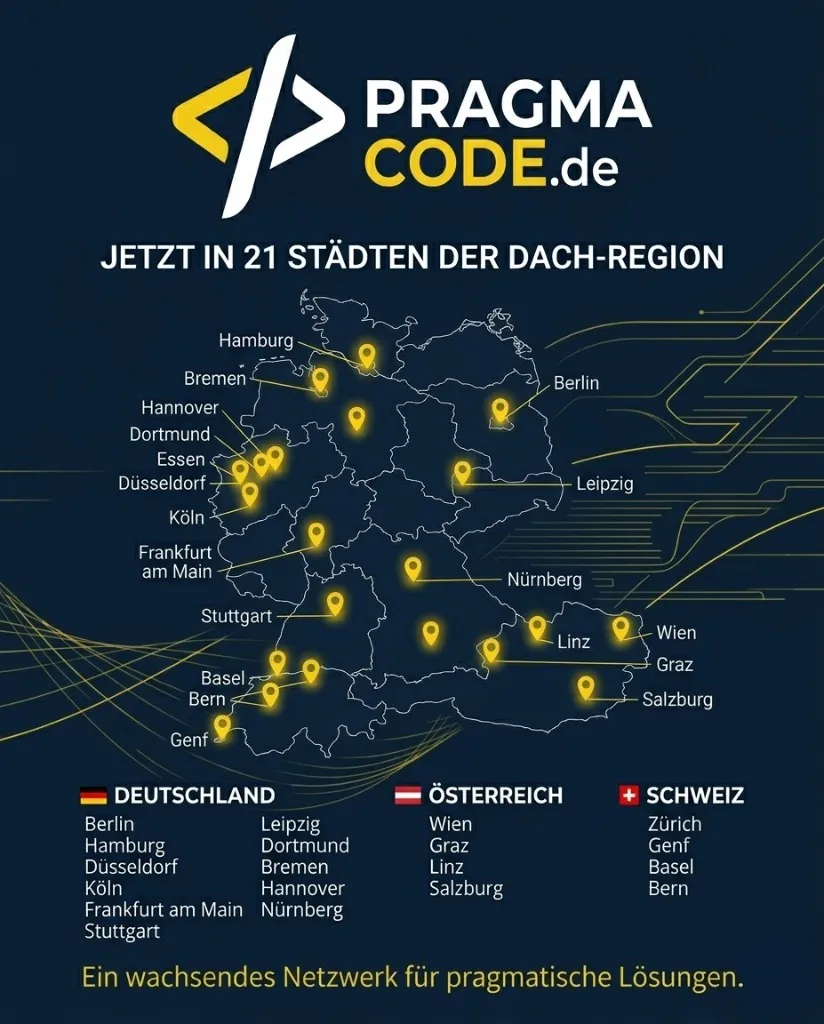
Schedule your free consultation nowOur Regional Expertise
We are your digital partner – regionally anchored and successfully scaling across borders.
Have a vision?
Let's check together how we can make your idea take flight.
Book your free strategy call nowExtended Specialized Glossary
Link Juice
The value or authority passed from one web page to another via a hyperlink.
Disavow
Google's official webmaster tool to discount toxic or manipulative inbound links.
Editorial Link
A link placed naturally within the editorial body of a page as a genuine citation without monetary compensation.
Domain Authority
A search metric estimating the comparative ranking strength and trustworthiness of an entire domain.
Topical Authority
A website's recognized subject-matter expertise within a specific niche, supported by semantic depth and authoritative niche backlinks.