

In 2026, maintaining a passive digital website is no longer sufficient to achieve scalable growth in competitive B2B and B2C markets. Discover how SMEs can combine Google Ads and Meta Ads with server-side tracking and AI-driven Smart Bidding to capture high-intent demand, eliminate ad spend waste, and sustainably maximize their Return on Investment (ROI).
This article is an in-depth expert contribution from our content cluster. Discover the complete overview on our main page:SEO & Content →
The Paradigm Shift in Paid Digital Marketing
In 2026, generative AI search engines, autonomous buying agents, and the complete sunset of third-party cookies have rewritten the playbook of digital marketing. Generic ad setups simply burn capital; only businesses that orchestrate active search intent (Google Ads) and visual demand generation (Meta Ads) on a resilient first-party data foundation (Server-Side Tracking) capture sustained market dominance.
- Synergy of Demand Capture & Demand Generation: Google Ads captures acute, bottom-of-funnel purchase intent, while Meta Ads stimulates top-of-funnel awareness and demand through psychologically crafted video and carousel creatives.
- Zero Data Loss via Server-Side Infrastructure: By implementing Server-Side Tracking (SST) via Google Tag Manager Server Containers and Meta CAPI, 100% of conversion signals are routed cleanly to ad algorithms—bypassing browser ad blockers and Safari ITP.
- Hard Business Metrics Over Vanity Signals: Pragma-Code focuses exclusively on actionable financial metrics: ROAS, Customer Acquisition Cost (CAC), Customer Lifetime Value (CLV), and final ROI.
- 1. The Digital Transformation of SME Marketing in 2026
- 2. The Pragma-Code Approach: Deep, Data-Driven Performance Marketing
- 3. Google Ads: Mastering Active Search Intent
- 4. Meta Ads: The Engine for Brand Awareness and Demand Generation
- 5. Systematic Comparison: Google Ads vs. Meta Ads
- 6. The Powerful Synergy: Pragma-Code's Omnichannel Dominance
- 7. The 2026 Tracking Foundation: Server-Side Tracking & First-Party Data
- 8. Strategic Scaling & Budget Allocation for SMEs
- 9. Conclusion: The Pathway to Predictable Revenue Growth
1. The Digital Transformation of SME Marketing in 2026
In an increasingly digitalized world dominated by artificial intelligence, autonomous agentic frameworks, and algorithmic content distribution, relying on a static, passive website is no longer sufficient for small and medium-sized enterprises (SMEs). The post-cookie era, tightening data privacy laws, and AI-driven search algorithms have radically and permanently reshaped the digital marketing landscape. If your business — whether operating in the B2B or premium B2C sector — is not running targeted, data-backed advertising campaigns, you are not only forfeiting digital market share day by day; you are also leaving substantial revenue potential on the table. This is where the two undisputed titans of paid advertising come in: Google Ads and Meta Ads.
As a highly specialized IT and digital agency, Pragma-Code is dedicated to helping SMEs demystify and master these complex platforms. We don’t stop at simply developing high-end software, ultra-fast web applications (e.g., utilizing Astro or Next.js), or scalable e-commerce systems. True entrepreneurial success only materializes when these top-tier digital products and services are placed directly in front of the exact, ready-to-buy target audience. Executing this requires a level of strategic and technological expertise that goes far beyond setting up standard, uninspired ad campaigns.
"A perfectly programmed website without effective, audience-focused performance marketing is like a brilliantly lit billboard hidden in a completely dark, deserted alleyway. Strategically engineered Google and Meta Ads campaigns are the switch that turns the floodlights on."
The online advertising environment has undergone an incredible metamorphosis over recent years. As of 2026, the traditional third-party cookie is essentially a relic of the past. Tech giants like Apple, through aggressive changes like App Tracking Transparency (ATT) and the constant hardening of iOS privacy controls, have drastically restricted frontend tracking. This is exactly why a fundamentally sound, methodologically rigorous, and AI-assisted approach to campaign management has become more valuable than ever before.
In this extraordinarily detailed guide, we take a deep dive into the mechanics, the hidden potential, and the powerful synergy effects of combining Google and Meta Ads. We will explain exactly why Pragma-Code is your ideal partner for sustainable corporate growth and demonstrate how SMEs can achieve measurable, significant revenue increases through the intelligent deployment of budget and smart campaign architectures. Furthermore, as an exceptional starting bonus, we will break down a unique opportunity: the massive €1200 Google Ads promotional voucher, accessible for qualified new clients through our certified expert status.
2. The Pragma-Code Approach: Deep, Data-Driven Performance Marketing
Let us begin by agreeing on one unequivocal premise: modern advertising campaigns are not a game of chance, nor are they a matter of "trial and error." They are the direct result of strict empirical analysis, precision engineering, and continuous technological iteration. Our approach at Pragma-Code is fundamentally built on granular data analysis, highly structured A/B Testing, and psychologically backed Conversion Rate Optimization (CRO).
The single biggest mistake many SMEs make when navigating digital advertising is focusing on so-called "Vanity Metrics." These are numbers like raw impressions, social media likes, or general page views that might look impressive on a monthly report but provide absolutely no reliable insight into the actual monetary value the campaign is generating. At Pragma-Code, we aim the crosshairs exclusively at the metrics that directly influence your bottom line:
Precise, AI-Assisted Targeting
By analyzing massive datasets and applying advanced Machine Learning algorithms, we fully leverage AI-driven audience analysis. This allows us to radically minimize budget wastage, focusing your marketing dollars precisely on user cohorts with acute buying intent.
Real-Time Analytics & Server-Side Tracking
Tracking is the central nervous system of any digital advertising operation. Thanks to Server-Side Tracking (SST) via Google Tag Manager Server Containers, we measure conversions reliably, bypass ad blockers, and guarantee maximum data security under GDPR.
Creative Intelligence & Copywriting
Data alone doesn't compel a user to convert. We combine data-driven insights with attention-grabbing, psychologically refined creatives for Meta, alongside highly relevant, search-intent-driven ad copy for Google Ads.
The technological foundation upon which our campaigns operate is just as robust and sophisticated as our architectural approaches in web development. As outlined in our web stack philosophies, we believe in maximum performance. An ad that directs traffic to a lightning-fast, highly converting landing page has infinitely better chances of success. The technical excellence of the landing pages we manage slashes bounce rates, drastically boosts your Google Ads Quality Score, and subsequently lowers your Cost Per Click (CPC) significantly. This creates a powerful, positive feedback loop of technical superiority, precise targeting, and high conversion.
3. Google Ads: Mastering Active Search Intent
When it comes to pure performance marketing and capturing immediate demand, Google Ads remains universally unparalleled. But what makes Google Ads so incredibly effective at its core? The simple answer is: it capitalizes on the highly concentrated search intent of the individual user at the very bottom of the marketing funnel.
When an executive actively types queries like "Enterprise Cybersecurity IT Services London" or "B2B Custom Software Development Agency Frankfurt" into the search bar, that person doesn't just have a latent interest. They have an acute, immediate pain point for which they are actively seeking a solution right now. If your business — structured and optimized perfectly by Pragma-Code — appears at the very top of their screen (Top-of-Page) in that exact micro-moment, the probability of them clicking and submitting a qualified inquiry is exceptionally high. Marketers refer to this psychological state as the moment of maximum buying motivation.
3.1 Campaign Architecture and Keyword Strategies in 2026
By 2026, Google Ads has evolved massively from rigid, manually bidded campaigns into highly sophisticated, algorithmically optimized Smart Bidding ecosystems. The primary value brought by a specialized agency like Pragma-Code is no longer spending hours adjusting manual penny-bids on tens of thousands of keywords. The true value lies in the intelligent structuring of campaigns, feeding the system perfect first-party data signals, and delivering creative excellence.
1. Performance Max (PMax) Campaigns
This heavily AI-driven format utilizes Google’s full inventory (Search, YouTube, Display, Discover, Gmail, Maps) to maximize multi-channel conversions. Pragma-Code structures PMax campaigns with surgical precision, supplying rich audience signals and excluding low-intent placements.
2. Search Campaigns with Broad Match & Smart Bidding
While exact match keywords were once the holy grail, in 2026 we deploy Broad Match keywords combined with value-based bidding (Target ROAS / Target CPA). Google’s Gemini-powered algorithms recognize complex B2B search semantics that human keyword planners could never predict manually.
3. Negative Keyword Lists as a Profit Lever
The secret to high profitability lies not just in what you bid on, but crucially in what you exclude. We deploy comprehensive negative keyword lists containing thousands of wasteful terms (e.g., free, internship, salary, PDF download, jobs) to protect your budget from day one.
Exclusive Head Start: Up to €1200 Google Ads Credit for New Clients
As an authorized digital marketing agency, we offer qualified new clients a decisive competitive edge: Google will provide up to €1200 in additional promotional advertising credit for the first campaign we launch together. This drastically minimizes initial entrepreneurial risk, allowing you to validate market demand and acquire high-value leads without shouldering the full financial burden alone.
4. Meta Ads: The Engine for Brand Awareness and Demand Generation
While Google Ads is flawless at capturing existing demand for a specific product or service (Demand Capture), Meta Ads (spanning Facebook, Instagram, WhatsApp, and Messenger) accomplishes an equally vital but fundamentally different feat: It generates demand out of thin air (Demand Generation).
Users on Meta platforms are rarely in active search mode for B2B enterprise software or cybersecurity audits. They are passively scrolling through feeds, viewing stories from peers, and consuming entertaining short-form video via Reels. This is where the technique of "Interruption Marketing" comes into play: Through visually outstanding, psychologically compelling ad formats, we short-circuit the user's habitual scrolling pattern, seize their attention (the Hook), build problem awareness (the Story), and compel them to take a specific action (the Call-to-Action).
4.1 Audiences, First-Party Data, and Algorithm Training
Meta's advertising engine is one of the most powerful conversion machines in history. At Pragma-Code, we deploy structured audience frameworks to maximize targeting precision:
1. Core & Advantage+ Audiences
Precision targeting based on verified professional interests, industry verticals, and digital behavior patterns tailored specifically to B2B and high-ticket B2C segments.
2. Custom Audiences (First-Party Data Integration)
Encrypted ingestion of CRM and customer lists via privacy-compliant interfaces. Feeding the algorithm with high-value historical customer data provides the foundation for machine learning optimization.
3. Lookalike Audiences (LAL) & Statistical Twins
Meta scans its global user database to identify statistical twins matching your most profitable clients. An indispensable growth engine for scaling into adjacent market segments.
4.2 The Phased Model of Pragma-Code Campaigns on Meta
To ensure ad spend is deployed with surgical efficiency, we execute a rigorous 4-phase framework:
Strategy & Technical Setup
In-depth audience research, buying persona definitions, and crystal-clear KPI architecture. Implementation of end-to-end Server-Side Tracking via Meta CAPI and Consent Mode v2.
Asset Production & Copywriting
Creation of persuasive ad copy, high-end display banners, dynamic carousels, and native 9:16 mobile-first video reels designed specifically to tackle customer pain points.
Structured A/B & CBO Testing
Scientific testing of diverse creative hooks, value propositions, and audience clusters using Campaign Budget Optimization (CBO) to statistically identify winning ad combinations.
Scaling & Horizontal Expansion
Controlled budget increases on winning ad sets to maintain algorithmic stability, paired with horizontal expansion into new geographic regions and lookalike tiers to elevate ROAS.
5. Systematic Comparison: Google Ads vs. Meta Ads
To allocate your media budget effectively, understanding the operational mechanics of each advertising network is essential. The following comparison highlights the unique strengths of both platforms within a modern marketing mix:
Comparison: Google Ads (Demand Capture) vs. Meta Ads (Demand Generation)
- User Mindset: Active problem-solving with acute transactional intent
- Funnel Position: Bottom-of-Funnel (Demand Capture)
- Core Formats: Search Text Ads, Shopping, PMax, YouTube Search
- Optimization Focus: Quality Score, Cost Per Click (CPC), Search Query Quality
- Primary Goal: Immediate lead generation and direct sales conversions
- User Mindset: Passive media browsing, discovery and inspiration mode
- Funnel Position: Top- & Middle-of-Funnel (Demand Generation)
- Core Formats: 9:16 Reels Video, Carousel Ads, Native Lead Forms
- Optimization Focus: Hook Rate, Creative Fatigue, First-Party Audience Signals
- Primary Goal: Brand awareness, lead nurturing, and retargeting
6. The Powerful Synergy: Pragma-Code's Omnichannel Dominance
Many traditional agencies treat advertising channels as isolated silos. At Pragma-Code, we build integrated architectures: True sustainable growth for SMEs materializes when search engine marketing and social media advertising reinforce each other in real-time.
In practice, we deploy the massive visual reach of Meta Ads to introduce your brand to relevant decision-makers. Even if a user doesn't purchase immediately on Instagram, your brand is firmly anchored in their awareness. Days later, when they experience the acute need for a solution, they open Google. They either search for general industry terms or directly type in your company name.
In that exact micro-moment, our calibrated Google Ads Search and Retargeting campaigns take over. We intercept the pre-warmed prospect right when their buying readiness is at its peak. Furthermore, we deploy multi-platform remarketing: Prospects who visit your service page without submitting an inquiry will receive sequential touchpoints across YouTube, the Google Display Network, and Instagram Reels—steadily elevating brand trust until conversion becomes inevitable.
7. The 2026 Tracking Foundation: Server-Side Tracking & First-Party Data
No performance marketing strategy in 2026 can survive without an unshakeable, privacy-compliant tracking architecture. Due to native browser ad blockers, Apple Safari ITP, and stringent privacy regulations, conventional client-side browser tracking loses between 30% and 60% of all conversion events. When ad algorithms are starved of conversion signals, machine learning fails and campaign ROAS inevitably deteriorates.
Pragma-Code eliminates this vulnerability with an enterprise-grade server-side tracking stack built upon four pillars:
1. Server-Side Google Tag Manager (sGTM)
Processing of all user interactions on a dedicated first-party cloud server hosted in European data centers. Complete control over data flows, PII anonymization, and immunity to frontend browser ad blockers.
2. Meta Conversions API (CAPI)
Direct server-to-server transmission of purchase, lead, and behavioral events to Meta. Delivers top-tier Event Match Quality scores and robust retargeting independent of third-party cookies.
3. Google Enhanced Conversions
Secure, hashed transmission of first-party customer data upon form completion to Google Ads. Bridges conversion tracking gaps and significantly improves Smart Bidding precision.
4. Google Consent Mode v2
Full adherence to EU & EEA data privacy requirements. Dynamic tag execution based on user consent preferences, combined with machine learning conversion modeling for unconsented sessions.
8. Strategic Scaling & Budget Allocation for SMEs
One of the most frequent questions posed by SME executives is: "How should we distribute our advertising budget between Google and Meta?" The answer depends on your digital maturity and immediate corporate priorities:
For organizations prioritizing immediate B2B inquiries and rapid cash flow, we typically initiate with a 70/30 split (70% Google Search for immediate demand capture, 30% Meta for retargeting and brand introduction). Once primary high-intent search terms are captured profitably, budget allocation shifts toward a balanced 50/50 or 40/60 split, positioning Meta Ads as the dominant vehicle for market penetration and pipeline expansion.
Quick-Check: 5 Steps to a Profitable Ad Machine
9. Conclusion: The Pathway to Predictable Revenue Growth
Achieving competitive digital visibility in the fast-evolving landscape of 2026 is no longer an optional luxury for large corporations; it is an existential necessity for SMEs. However, throwing ad spend blindly at platforms in the hope of accidental clicks is entrepreneurial negligence.
Sustainable performance marketing requires a clear, engineered architecture: uniting active search intent on Google with visual demand generation on Meta, backed by ultra-fast web technologies and a bulletproof server-side tracking foundation. With Pragma-Code as your dedicated technology partner, you secure a tailored growth engine — transparent, data-driven, and relentlessly optimized for maximum Return on Investment. Take advantage of our expert status and claim your €1200 Google Ads promotional voucher during a free strategy consultation.
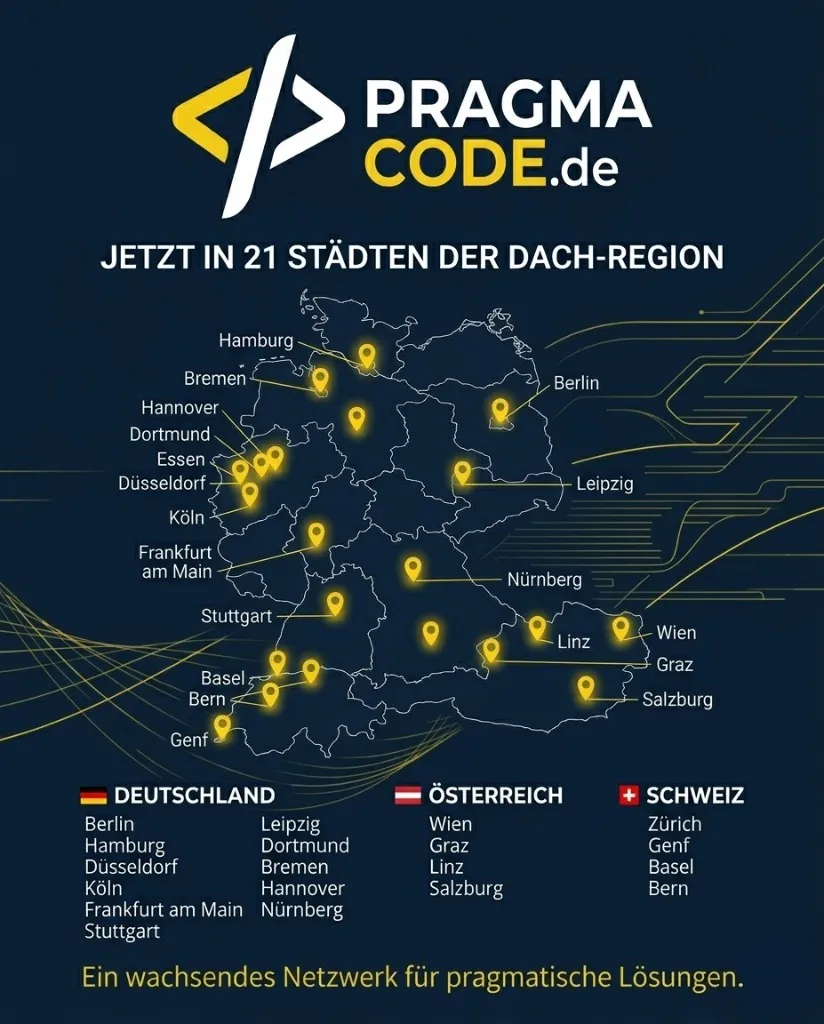
Our Regional Expertise
We are your digital partner – regionally anchored and successfully scaling across borders.
Do you have a vision for scalable, aggressive growth?
Let us architect your success together. During a no-obligation Deep Dive Consultation, we will comprehensively analyze your current market positioning, identify critical blind spots, and discuss exactly how we can permanently maximize your digital reach through the powerful synergy of Google Ads, Meta Ads, and modern web technologies.
Book your free Strategic Analysis Call nowExtended Specialized Glossary
ROAS (Return on Ad Spend)
A key financial metric measuring the direct ratio between gross revenue generated by an advertising campaign and pure advertising spend.
ROI (Return on Investment) & ROAS
Executive business metrics. While ROAS strictly tracks ad-spend efficiency, ROI incorporates all associated agency, software, personnel, and operational costs.
Server-Side Tracking (SST)
A data collection methodology where user interactions are captured and encrypted on a controlled first-party server rather than in the client's browser before forwarding.
Conversions API (CAPI)
Meta's direct server-to-server data pipeline that transmits marketing events reliably, bypassing browser cookie restrictions and frontend ad blockers.
Consent Mode v2
Google's mandatory EEA compliance framework that dynamically adjusts tracking tags based on user consent and models missing conversion data with machine learning.
Performance Max (PMax)
Google's AI-driven campaign type that programmatically maximizes conversions across all channels (Search, YouTube, Display, Discover, Maps, and Gmail).
Conversion Rate Optimization (CRO)
The systematic, data-driven optimization of websites and landing pages to maximize the percentage of visitors who complete a desired business action.
Retargeting (Remarketing)
The strategic re-engagement of users who have previously interacted with your website or social media channels using personalized, sequential ad messaging.
First-Party Data
Proprietary customer data collected directly through your own business channels (CRM, website, e-commerce), forming the cornerstone of AI ad performance in 2026.
A/B Testing (Split Testing)
A scientific methodology where two or more variations of ads, creatives, or landing pages are tested against each other to identify the highest-converting variant.